Can hypocrites save the world?

wolf2_3248542b
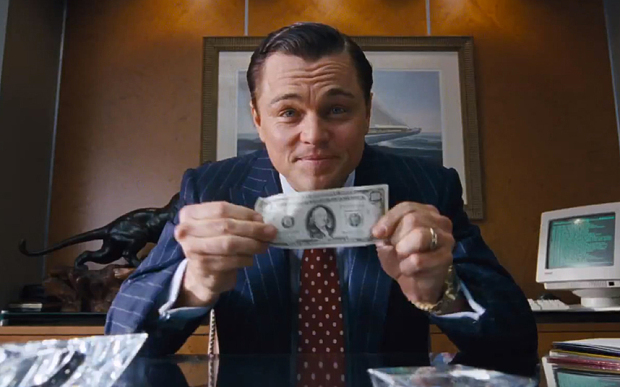
via The Wolf of Wallstreet

DiCaprio gets heat for extravagant privileges while preaching eco-friendliness

By Elliot Chan, Opinions Editor
Formally published in the Other Press. March 9, 2016

When Leonardo DiCaprio won his long-awaited Oscar for his role in The Revenant, we all cheered for his deserved award. But it was the subject matter of his long speech that caused some people to roll their eyes. DiCaprio has been a long-time activist. Time and time again we see him appearing on screen—not dressed in a tuxedo, but in a “regular” jacket or sweater, in boots, with a rugged beard—talking about the destruction of our environment.

His most notable cinematic contribution to that cause is his producer, narrator, and writer roles in the environmental documentary—an unofficial epilogue to Al Gore’s An Inconvenient Truth— The 11th Hour.

We don’t need movies or movie stars to tell us about the environment. We all feel the change. This has been one of the warmest winters of my life. I’m concerned, but I don’t have time to be both an advocator and fulltime employee, making money to live. Many people feel the same way and are insulted when big shot celebrities rub it in. And when the Best Actor winner, some big shot multi-millionaire, is only talking the talk instead of walking the walk, people have the right to be angry.

DiCaprio was specifically called out for having a 16,000-horsepower private yacht, the Topaz. For someone who cares so much for the environment, sailing the seas on a luxurious, diesel-gas-guzzling vessel is surely counter-productive, right?

Now, I could go on about how DiCaprio is a hypocrite—and how the movie The Revenant did nothing to improve the lives of First Nations people, the very people DiCaprio sought to empower, but in fact marginalized them more—but I won’t. Because, as rich and arrogant as I’m sure Leo is, he is at least putting his free time into advocating good. Is he good? No. He’s a hypocrite. But I would rather take a hypocrite actor over one who is a woman-beating bigot. What can I say? I have low standards for my celebrities.

There are many bad traits in the world, and being hypocritical is a minor one. With that being said, is there any more DiCaprio could do without giving up his fortune? Probably. But why should he? He’s not God. He’s just a servant of God. Sure, in the grand scheme of things, he is doing very little, but he is still doing it. When you are one of the most powerful actors in the world, you can merely sit back and accept awards, or you can use your clout to announce a concern. Some people choose racial equality, other chooses gender equality, but Leo chooses nature conservation.

DiCaprio is not committing to his cause 100 per cent, we can all agree on that, but he is dedicating some of his time to it. That is more than what I can say about me… or even you. How much have you committed to saving the world, or any other cause?

Take a look at yourself the next time you criticize someone for wanting better in the world. The old idiom “Do as I say, not as I do” is one every parent has once evoked if not said. If the heart is in the right place, then the person is moving in the right direction. We humans are not perfect, and that is the very reason why the world will end with a hopeful whimper, or like The Departed.
The grief of giving

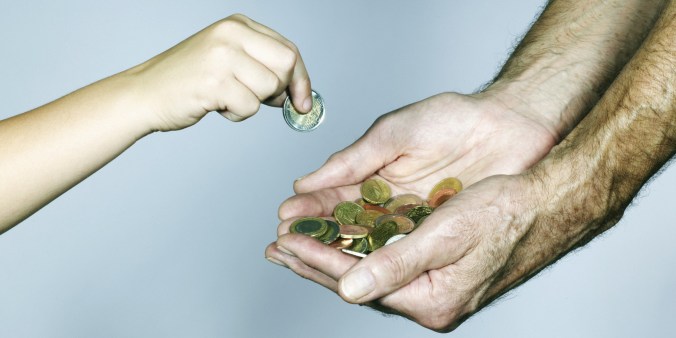
o-GIVING-MONEY-facebook.jpg

Don’t lend if you don’t want to lose

By Elliot Chan, Opinions Editor
Formerly published in The Other Press. Mar 2, 2016

I learned my lesson when I was young. I was old enough to know what was mine, but also had the teachings of generosity instilled in me. So, now and then, when someone expressed interest in something that I had, I would let them borrow it. Be it a book, a toy, a video, or a game, as long as they took care of it, I would lend it. The thing is, they wouldn’t take care of it. They would forget about it. I never issued a return date, so if I never asked, it would never be heard of again.

For a while, I thought such a lending process between friends and family is only flawed because my friends and family were irresponsible and inconsiderate. Turns out, the majority of the world is like this. And it makes sense. Since you yourself are not a library, you do not have the capacity to keep track of everything you’ve lent to people, or have any means of enforcing timely returns. Therefore, people do not fulfill their end of the deal.

I learned this when I was young, and today, I am hesitant to let anybody “borrow” anything that I wouldn’t instinctively give as a gift.

The lending between friends and family model is made more complicated in adulthood. Rather than borrowing toys, games, or other tangible crap, they are borrowing money. Which is fine, there is nothing better than treating your friends to a dinner or paying for their ticket to the movie—if it is a gift. However, when the exchange is referred to as “borrow” or “lending” it makes the lender wonder if they will see that money ever again.

What’s a few bucks between friends, right? I agree. I would never let $100—or even $200— ruin my friendships. Who knows, maybe one day I’ll be in dire need and would like to “borrow” a couple hundred bucks from them to sustain my extravagant lifestyle. For now, I’ll just treat is as a gift. Enjoy.

Nevertheless, if that’s how the wheels are turning, every once in awhile, I’d expect it to roll the other way. You pay this time; I’ll pay the next. Unless you are my Turtle from Entourage, I am not going to pay for everything you do. After all, you haven’t returned what you have borrowed.

We can bitch and moan about people not paying us back or having a ridiculous friendship-debt, but I believe the onus always fall on the lender. If a bank keeps lending money to degenerates, it wouldn’t be cool; it would be an unsuccessful bank. So I say this: whatever you are paying for people, whatever you are lending to people, whatever extra step or measure you take for someone else, make sure it is either respected as a debt that must be paid, or as a gift that can be received gratefully.

If you don’t want to lose something, don’t give it away. You are not the bank. You are not the store. You are not the library. You are a person. If it’s not a gift, don’t treat it as such.

In rage or outrage

CbNkKJ-W8AEuzhU

How celebrities continue to bait the public on social media

By Elliot Chan, Opinions Editor
Formerly published in The Other Press. Feb 24, 2016

When you are a celebrity trying to promote yourself, no news is not good news. It’s better to receive hate from some than go completely unnoticed. That has been the philosophy of many celebrities who have taken to Twitter to make a big splash before sinking back into the depths of their wealth and sorrow.

But the barrage of outrage has become too much for British comedian Stephen Fry, who rage-quit Twitter after the criticism he received for a joke he made at the BAFTA Awards show. Or was it just another publicity ploy? While hosting, Fry zinged costume design winner Jenny Beavan for dressing like “a bag lady.” The Internet rose to Beavan’s defence, calling out Fry’s “offensive” comment on Twitter. Comedians defending their jokes on Twitter is not anything new, what’s surprising is that they continue to respond to those faceless voices even though they know they cannot fight the trolls.

I don’t believe Fry was harmed by the comments, I believe Fry was doing what celebrities do best, which is making the PR move that will garner them the most press. Quitting Twitter was the apt solution. It silenced the critics and made his fans appreciate him more. It also got him trending, which is rare for the BAFTA host.

Ricky Gervais, another fellow British comedian, is also no stranger to online outrage. As the host of the Golden Globes this year, Gervais made it his sole purpose to poke Hollywood celebrities and the Internet bear that defends them. Why? He openly admitted it. The more people bitching and moaning about how offensive he was on the show, the more publicity he gets. The more you get people talking about you, the higher you rise up on the Internet’s relevancy meter.

Celebrities have a powerful voice. When they speak, people listen, even when what they are saying is complete garbage. How has Donald Trump gone as far as he has on the presidential campaign? Shock factor. You cannot ignore it or pretend it wasn’t said because everyone will be talking about it days later. Simple yet ridiculous ideas that go against the grain are bound to evoke more attention than playing by the rules, nodding to what everyone else is saying, and conforming with the crowd.

Lastly, there is Kanye West. Does he have a new album coming out? Of course he does. But he didn’t market his new work as the latest Kanye West album, he marketed himself as a brand—a brand that’s so good it doesn’t give a fuck what you think. He sided with Bill Cosby, called out Taylor Swift, asked Mark Zuckerberg for money, and compared himself to Michael Jordan and Stephen Curry. Think about all the demographics he hit with those comments. Think of all the people he offended and honoured. He’s tapped into the Internet’s pathos and has manipulated it to do his album’s marketing for him.

So the next time you hear about celebrities saying something outrageous on a public platform, ask yourself: Do they want me to retaliate, or repeat what they said like some sort of megaphone?

When 2016 could have been like 1984

Opinions_Apple-768x512

Apple standing up against the pressure of FBI is a critical moment for our future

By Elliot Chan, Opinions Editor
Formerly published in The Other Press. Mar 2, 2016

Flash back to New Year’s Eve 1983, when Apple released one of the most monumental and memorable commercials to date. The ad depicted a heroine charging at a Big Brother-like figure, an homage to George Orwell’s dystopian novel Nineteen Eighty-Four, with a hammer. The heroine ends up throwing the hammer at the figure and the figure erupts, and then words appeared on the screen: “On January 24th, Apple Computer will introduce the Macintosh. And you’ll see why 1984 won’t be like Nineteen Eighty-Four.

We all celebrated.

On February 16, 32 years after the commercial aired, Apple CEO Tim Cook wrote a letter to his customers, raising a lot of concerns and showing how close we were to losing our privacy, just like the characters from Orwell’s fiction. The technology company was receiving external pressure from the US government to build a backdoor to customers’ personal devices. This backdoor would enable government officials—under specific protocol and significant measures—to access data by bypassing security. In another word, the FBI would have been able to access your iPhone if they were “suspicious” of you.

Cook wrote in his letter that such a backdoor does not currently exist, and that they don’t intend to build one, despite the government’s pressure—and pressure from many fearful citizens. The risk is far too great. The slope is far too slippery. One thing will lead to the next and before you know it, the government will have access to all the data we keep in our devices. We keep a lot of data in our devices.

Creating this backdoor is undoubtedly a knee-jerk reaction to the countless terrorist attacks that have taken place on US soil recently, because terrorists use the same technology we do and need to communicate with each other to orchestrate attacks. However, to simply give up our rights to privacy within our personal communication channels would be a victory for the terrorists. They want us to take extreme measures. They want us to turn the lens upon ourselves. The world does not become safer because of heightened monitoring. It becomes more paranoid.

I remember years ago when cameras in public places was a big controversy. Now, it is the norm. But those cameras are stationary. They don’t travel with us. They are not an extension of who we are. We don’t share our intimate moments with those cameras. Our devices, on the other hand, are in a sense our other hand, and to have the government forcibly hold it wherever we go is a scary thought. It’s what Apple vowed not to do when they aired that commercial. It vowed not to turn our world into a dystopian place ruled by a mistrustful administration, and it is holding true to its word.

While the answer is not to build a backdoor, I do believe there is a solution, one that requires thought and careful calculation, and one that does not compromise the security and privacy of law-abiding citizens. We just need to think about it differently.

Chinese creative constructions must be within constraints

Opinions_ChineseBuildings-768x576

Does the world need more strange buildings?

By Elliot Chan, Opinions Editor
Formerly published in The Other Press. Mar 2, 2016

When it comes to art, there is nothing more impressive than a city that sparks imagination with its façade while also facilitating practicality. There are countless unique buildings of great significance in the world that we can identify in a flash: the Pentagon, the Burj Khalifa, and the Petronas Towers, for example. These aren’t monuments like the Statue of Liberty or the Eiffel Tower, these are functioning buildings where people work and live everyday. So what’s wrong with making them look interesting?

On February 21, China’s State Council announced that there would be stricter guidelines for urban planning. What does that mean? Well, in the past few decades, China has been erecting odd buildings all across the country, many without any links to cultural heritage or functionality. In another word, China was making buildings weird for the sake of being weird. Buildings shaped like pants, coins, and even a pile of debris can be found in China.

Now, I love art. I don’t always understand it, but I like the fact that it exists. I live in a city full of art instalations that serve no purpose but to take up a spot where a bench or a garbage bin could have been. But it gets people talking, so that is a positive.

However, I always question the monetary value of a piece of art. I know artists need to get paid and all that, but when the money is coming out of taxpayers’ pockets, there better be a damn good reason for the art. China, of course, is now faced with the same predicament. They want to construct interesting buildings, but when the production to make them “original” is costing more than the façades are worth, then the projects need to stop.

A building at its most basic is a box. No matter how interesting a building is, once you are inside, you are in a box. The world would be a pretty awful place if all the boxes looked the same. Take a look at suburban America, where every house is constructed from the same blueprint. That is something we must avoid at any cost… even if the cost is saving money.

Economically, keeping buildings cube-shaped makes sense. It saves room, and in a world with limited space, that’s important. But we need landmarks. Humanity is built upon landmarks; that is why we have the Great Wonders of the World. But greatness is not just about being strange or impressive, it’s backed with history.

It doesn’t matter how the world sees it, it matters for the people who walk in and out of those buildings every day. Yes, tourists will come and go. They’ll snap pictures, and they’ll share the image with people all around the world. Yet, for the people who work and live there, buildings need to be a structure of pride. We spend so many hours of our lives in buildings. Let’s create ones that aren’t just weird, let’s create ones we are proud of. And pride is worth paying a premium for.

Shouldn’t have brought that

Opinions_babies-768x794

Why babies don’t belong everywhere

By Elliot Chan, Opinions Editor
Formerly published in The Other Press. Mar 2, 2016

I get it: young parents need to have a life too. They want to go out to events, spend time on vacations, and have dinners at restaurants. But when you are bringing a baby with you, you are responsible for anything that happens, not the general public.

During a Montreal Canadiens open practice on February 21, a puck thrown into the stands by defenceman P.K. Subban struck a one-month-old baby. Throwing pucks into the crowd is a display of appreciation from the players. They are giving fans a souvenir for their experience. There is no fault on the players or the game. Even if the puck wasn’t tossed by a player, hockey is an inherently dangerous sport, not just for players, but for the fans too. Like foul balls at baseball games, the pucks often leave the playing field.

My sympathy goes out to the baby’s family, but it wasn’t like they didn’t know where they were going. They actually planned to bring the infant to the practice. The thing is, the baby doesn’t even know where she is—babies don’t understand the game of hockey—so why was she even there?

If you can’t find a babysitter, you shouldn’t go to an event. I’m sorry moms and dads. That’s just the way it is. Because if something bad happens, you put other people in a tight situation. In this case, it was Subban.

It seems many parents teeter back and forth between caring too much and not caring enough. I see moms riding their bikes with their baby in the back carriage, racing through a yellow light. I see parents bringing their baby to busy supermarkets with people and shopping carts moving this way and that. You want your child close to you, but you also want them to be safe. Sometimes you can’t have both. The world is rather dangerous, and babies are vulnerable in many ways.

I don’t know what the best parent in the world looks like. I don’t know what it’s like to have a newborn. But I do know the first few years of a baby’s life are pivotal. As parents, your baby depends on you to make the right decisions for them every day. It sucks, because that may mean missing out on a lot of fun activities. I’m sorry, you lost the privilege of doing whatever you want the day you brought another life into this world. I don’t know what the best parent in the world looks like, but I can tell you a good parent is one that understands that, and doesn’t resent their child for making them miss out on fun sometimes.

I guess, for those with children, it’s already too late to heed my caution. However, if you plan on having kids in the future, I hope you know that you should—will—miss out on some fun. Sorry.

How to live with Big Brother

Big_Brother_is_Watching_Wide

Understanding why privacy matters

By Elliot Chan, Opinions Editor
Formally published in The Other Press. February 17, 2016

While it isn’t necessarily the government that is tracking all your activity, the combination of all the data accumulated in day-to-day life is enough for them to know you better than your parents do. We can almost be certain that, although there is nobody watching us on a screen, our every action is recorded, filed away, and capable of being pulled out and evaluated by those with the credentials to do so. Most often those people aren’t people at all, they are just marketing algorithms designed to match your queries and daily behaviours with advertisements.

Now, Google isn’t out to embarrass you by exposing your search queries. TransLink will not send a message to your girlfriend if you decide to make a mysterious trip out to Surrey. Bell is not going to let your boss know that you’ve been trash talking him with your friends. These things don’t benefit the company, so don’t be paranoid.

It’s hard to trust the motives of big corporations, but I always bring it back to one question: Does such and such action cause them to lose or gain money? If your behaviour continues to benefit the business you get the service from, you can keep going merrily by—as long as you are not committing any heinous crimes.

There is no way around it; we need to trust companies to use our information ethically. However, we need to also be conscious of what information we are haphazardly giving away. See, privacy matters. Without privacy, you’ll lose control of your own life. The companies will own it.

Any sort of meaningful self-development does not happen in a group, or with Sauron’s eye watching you. It happens independently, not on Facebook and not while Googling. I’m not talking about education or improving your business skills or finding online romance, I’m talking about the growth that occurs when you are allowed room to breathe. This is the type of growth that has no deadlines and no guidance. This in essence is the life you’ll live.

We have become so obsessed with sharing our experiences on social media, telling everything we do to Big Brother, that we are forgetting the real point of our pursuits: to create memories that aren’t saved on any hard drive, except the one between our ears. We are scared of people listening in on us, but we have stopped listening to ourselves.

The season is changing. It’ll be a warm summer, I predict. This is an opportunity to get away from the information highway and do something nobody on the Internet will know. Big companies are constantly collecting data, and so should you. The good thing is, you get to decide what information you want to store: what’s spat out to you by those online or what you discover yourself. It’s up to you.

Flipping the bird and the house

forsalehouse-768x512

Take the corrupted business out of house owning

By Elliot Chan, Opinions Editor
Formerly published in The Other Press. February 17, 2016

I moved many times when I was growing up. It has always been a bittersweet memory. Those experiences of packing all my belongings, changing schools, and saying goodbye to old friends still make me reflect, wondering what life I could have had if I stayed in that neighbourhood. I never blamed my parents for moving, because I can be certain that moving wasn’t their first option either. They were doing it for financial reasons, not to punk me.

My family, like many, took their financial wellbeing seriously, and there are few investments more impactful than real estate. But above all else, a house should be a home. However, there are many—especially in Vancouver—who are trading real estate like Pokémon cards, another bittersweet childhood memory. But I digress. House flipping, the act of buying a house and re-selling it over a short period for profit, is a worrisome obstacle for young people entering the housing market.

For me, I see the place I live as a space where I spend my days relaxing, entertaining friends, and living my life. I don’t think of it as a denomination of a fluctuating market. Perhaps I should, but I don’t, because I never want to derail my life just to make money. Many people think differently. Many people would consider me a schmuck for living in an affordable neighbourhood.

In a recent announcement from BC Assessment, since 2014, 368 single-family (detached) homes have swapped owners twice or more. These houses, not surprisingly, are set in high-profile neighbourhoods: Dunbar, Heights, Point Grey, etc. But let’s be honest: every neighbourhood in Vancouver now is high profile, since nearly all single-family homes are valued in the millions.

Not only are these homes worth a lot, they are also in high demand. People are willing to pay more to live in Vancouver. So savvy—and rather despicable—people are willing to take advantage of that for a profit. That is the prime reason for house flipping, rich people trying to get richer.

Greed fuels the market in Vancouver and the people nourishing this corrupted form of business are the realtors, who are knowingly selling the properties for more than they were previously sold for. This way, the realtor and the brief owner make a profit. Here’s the kicker—it’s all completely legal in BC. While the asking price is visible, the sale price remains private, hidden from the public. This is one reason why it is a corrupted market. If there is no transparency, there cannot be any trust.

The province of BC is now intending to tax the house flippers not just through property tax but also a capital gains tax, but that does not solve the problem, it just makes house flipping a legitimate business. Yes, you can blame it on those who don’t flip houses, saying that they have zero business acumen, but just because you can do it doesn’t mean it is ethical or good practice.

A house is a home, and many people of my generation will go through most of their lives without having owned one. This is a tragedy. This is especially true when we see millionaires making easy money while overvaluing the market, and creating an unstable place for all of us to live.

Those were the dates

Opinions_dating-768x512

Six reasons why you need to change your outlook of dating

By Elliot Chan, Opinions Editor
Formerly published in The Other Press. February 3, 2016

It’s been years since I’ve dated. If you dropped me back into the dating scene, I wouldn’t turn cool, confident, and desirable; I would become feral, become the creepy guy at the club, or become a loner who waits around until one of my other single friends calls me up to hang out. That’s because the term “dating” is scary.

I don’t know how to date. I never did. I never had an online dating profile or anything like that. I don’t believe dating, in the traditional dinner and a movie sense, is the way to meet people. At least, it shouldn’t be the origin of a relationship. Dating is like gambling. You are betting on a person, on a night, or on an event to turn out in your favour—which is selfish. Dating can be any activity, but dating itself should be invisible. It shouldn’t be quantified (ex. first date, second date, etc.).

Because of conventional thinking, dating garnered this negative connotation and it plants a bad seed in our minds, psyching us out. In this article, I’ll look at six different ways to look at dating that will give you a more positive outlook on your prospective love.

1) A relationship is a friendship, so start with a friendship. If you are having trouble even getting your friends to hang out with you, you need to reevaluate. There is nothing wrong with hanging out with a friend. Having someone loyal—even if they have put you in the friend zone—helps people understand you. Don’t look for a spouse, look for a friend.

2) New experiences offer new opportunities. Do what you want to do and invite people who want to join you. Don’t make plans around people; make plans for you. If someone wants to join you, they are more than welcome, but regardless, you will have an experience. If you go alone, you might even meet someone along the way.

3) Learn something and work together. Take a class or invest yourself in a project. A relationship is all about learning and collaborating together. By participating in an educational experience with someone, you can determine whether you can function together.

4) Find an anchor. Don’t be persistent; be steady. Romantic comedies have ruined many people’s understanding of romance. The never-say-die attitude is poison in a sprouting relationship. Romance, after all, is not something you commit 100 per cent of your life to. You have to steady your own ship before other people will hop on. Get an education. Get a job. Move out of your parents’. Focus on more than romance. If you are unrelenting with finding dates, you are merely pushing people onto your sinking vessel.

5) Be vulnerable. So often dating can seem like a job interview where we try to look our best. It’s not a job interview. You won’t lose anything for being genuine. Obviously, don’t end up weeping over your ex, but open up your world and be open-minded when your date does the same.

6) Make plans. Life is the moments you spend making plans. You can tell if you’ve found the one if the two of you are able to follow through with the plans you’ve made. Mortgage, marriage, vacations, or mundane things like a trip to the supermarket—these are the plans you’ll make while growing old together. A date is really just a plan that you kept, and it’s not so scary.

Stay the night

Untitled-2-768x509

What to expect when you invite a couple over to your place

By Elliot Chan, Opinions Editor
Formerly published in The Other Press. February 3, 2016

Behind closed doors, it doesn’t matter what two people do. Regardless of who’s home or where you are—as long as it’s private—people deserve their privacy. You cannot govern someone’s sexual behaviour even if it is on your property. Naturally, when you invite people over to your place for a sleepover, a weekend, or a vacation getaway, you don’t often jump to the conclusion that your home would turn into a sleazy hotel room. But people do have sex, and you’ll have to accept it.

As a host, it’s impossible for you to keep track of your guests 24 hours a day. Should you hear some bump in the night, remember that they are just enjoying themselves and it’s temporary. Brush it off or laugh it off. If it’s too obvious to ignore, it’s your right as the host to pull your guest aside later on the next day and let them know that sex is okay, but they should perhaps be more discreet.

As a guest, it’s your job to be respectful. Depending on the person’s home, you can gauge whether raucous noise in the middle of the night will be frowned upon or if others in the house are probably getting some as well. There’s a difference from staying at your in-laws’ and your friend’s summer home.

I’m quite liberal with sexual freedom. People should be allowed to have sex, especially when it is private. Even when it isn’t, I live by the rule: if nobody knows, nobody cares. Yes, afterward someone will have to clean up the sheets, but hell, if the hosts weren’t prepared to do a bit of cleaning, they shouldn’t have invited people over.

You cannot welcome people into your home and say things like “make yourself comfortable” and then get angry because they did something you didn’t want them to do. When you open the door to people, you have to accept that they will do what they do. Your house is not a prison and you’ll just have to trust that your friends and family members will just behave and be respectful.

One of the worst fears for many people is walking in on others having intercourse. If that is a genuine concern while you are hosting, then maybe you shouldn’t have them sleeping in the living room or in an area without a closed door. If you don’t have any other options, then that is just a risk you are going to have to take. Maybe when they are “asleep,” you shouldn’t go wandering into where they are staying. If they are in their room, don’t go barging in. Follow the old rule: before you turn the corner, knock.

Let’s be adults. Sex isn’t that big of a deal. There are far more traumatic things in the world. Get over it and stop acting so stuck-up.