Qriket Shares Profits with Users with Gamified App to Promote Local Business


Posted by Elliot Chan on Jan 27, 2014

Formerly published by Techvibes.

Free money! Now that I have your attention, let me tell you about Toronto-based Qriket, an app that goes against the grain and offer users an opportunity to win real money—not game tokens, not experience points, but real money.

Don’t be too skeptical, because Qriket functions as a very rational marketing tool for local businesses and brands. Instead of bombarding a wide audience with media and static ads, Qriket’s partners enable users to choose what they want to consume and their price. Whether by clicking on content located on the “Qriket feed” or venturing out to find QR codes, users can earn gaming credits or “wands” to play various games and earn, you got it, money.

So far, users have won $1.44 million from the Toronto-based company.

“We want to gamify the consumption of media on a mobile device,” Jonny Comparelli, founder and CEO of Qriket, explained to Techvibes. “We want to make it worthwhile for people to communicate with brands, and get deals offers and promos.”

Starting out as a simple QR code scavenger hunt app and then evolving into the daily revenue sharing platform it is today was a long five-year journey for Comparelli and the team at Qriket. The objective and original vision has not change though and that was to bridge the gap between digital media and out of home media. The way they have achieved that is by bringing it close to home.

Qriket in-store allows participating retailers to print out dynamic QR codes and encourage customers to engage with them every time they make a purchase. After buying a cup of coffee or a sandwich, users will see a code on the bottom of their receipt. They can then snap it with the Qriket QR scanner and earn anywhere from 5% to 200% cash back on any purchase.

“For the hyper local level it has turned out to be a great alternative for these small businesses,” said Comparelli. “You can use the giants like Facebook and Twitter if you are a brand and you can command that audience. But if you are Joe’s coffee shop on Queen Street it’s very hard to utilize digital market to your advantage.”

Qriket fills the gap by partnering with companies that are willing to spend anywhere from a dollar to a half-a-million in advertising. Functioning as a performance-based marketing platform, Qriket doesn’t charge their partners anything for impression (cost per clicks). That way the business involved will be able to tell their story to a larger audience in a larger region and only pay for those that are opting to engage with them. If the audience doesn’t want to engage, well, that’s fine—everyday they are offered free chances to win money by spinning a colour wheel.

Whether you are a diehard Qriket user or a simply someone testing out the water earning a little bit each day for partaking in incentives, Qriket wants to be a platform users will check on a daily bases for benefits.

“No matter where you are [Qriket] can be this great umbrella loyalty program for businesses,” said Comparelli. “It doesn’t require any software or hardware and we are actually printing those dynamic QR codes for businesses to sign up for this loyalty program that is just cash back everywhere you spend. And we tie it in to the Qriket vision which is to allow all our users to share in the revenue made from their interaction and their engagement—and I think that is what’s missing in the tech-landscape today.”

While some may believe that QR codes are obsolete and out of fashion, Qriket is not worried about the fate of any linking code as they make plans to expand to the US and five major cities on the east coast; already the startup boasts nearly 110,000 monthly users and revenues of almost $3 million.

“The QR code is nothing more than a digital engagement token,” noted Comparelli. “For us it was never about saving the QR code—if the time comes when something else is more prevalent or more accessible or cheaper to implement than a 2D-printed QR code than that’s what Qriket will use to tie your profile to what you are spending. Otherwise, it’s about coming up with creative ideas for what the technology actually is, as opposed to linking a URL and thinking we’ve hit the jackpot in engagement.”

The Report Card: Holiday ins and outs

 DSC_0537

By Elliot Chan, Opinions Editor
Formerly published in The Other Press. Jan. 28, 2014

Holidays are significant. We look forward to them for various reasons. Perhaps they bring family and friends together, perhaps they ignite a sense of tradition, or maybe we just enjoy dressing up and getting drunk. Whatever your reasons are for celebrating a holiday, remember that beneath the rambunctious fun, there is a greater purpose than merely closing shop and getting trashed.

Pass: Unofficial holidays

Unofficial holidays are quickly becoming a trend in North American culture. There is a novelty to it unlike Christmas, New Year’s Eve, or Thanksgiving. Unofficial holidays break the monotony of the year and give us something unique to look forward to. With the help of technology and social networks, holiday implementers can come up with a reason to celebrate and execute it. With little to no effort, they can sent out invitations, spread the news, and host a holiday that hasn’t existed before.

January 21 is National Hug Day, January 25 is Opposite Day, March 14 is Pi Day, April 20 is Cannabis Day, September 5 is International Bacon Day, and September 19 is International Talk like a Pirate Day. There are many more and I’m not exactly sure what they all entail, but we have the opportunity to create new traditions and be inventive with how we spend our time.

So often days, weeks, months, and even years blend together into a blurry life, but with unofficial holidays making eventful marks and breaking us out of our daily routines, we can create new memories—ones that have us covered in make-up for the annual Zombie Walk or taking our dog to work on June 20 for Take Your Dog to Work Day. Now, those are memories, unlike getting wasted at a random bar.

Fail: Drinking holidays

It’s a bit of a shame seeing some respectable holidays turn into an excuse to get drunk. St. Patrick’s Day, a day to celebrate the independence of the Irish people, is now a day where bars serve green beer. Cinco de Mayo, a day that commemorates the freedom and democracy after the American Civil War is just another alcohol-filled fiesta. Finally there is my old favourite, Halloween: it used to be a chance to dress up and get candy, but now it’s just an opportunity for bars and clubs to jack up their cover charges or to make it impossible to get in because the lineup wraps around the block, and Lord knows I’m not waiting in the cold dressed in my Miley Cyrus/wrecking ball costume.

It has become customary to stock up on booze for New Year’s Eve and other statutory holidays because the provincial liquor stores will be closed the next day and getting wasted is, well, important and expected. So, what does it really say about our society that the days we consider significant are also the days that we make regrettable choices?

I think having fun is important, but anticipating a day just to binge drink doesn’t foster a healthy life. Let’s not forget what holidays are really about. It’s rest, not indulgence.

GILF me a break

OPINIONS_Elder

Does Japanese elder porn get better with age?

By Elliot Chan, Opinions Editor

Formerly published in The Other Press. Jan. 28, 2014

For a country that censors genitals in “regular” pornography, while producing an ample amount of grotesque tentacle erotica, bukakee, and tamakeri, it’s not hard to believe that 20-30 per cent of the current adult entertainment in Japanese cyberspace is elder porn, i.e. old people having sex on camera.

It makes sense, after all: Japan has an aging demographic with a younger generation less interested in intercourse and more interested in relationships with animated avatars, inanimate feminine objects like pillows or dolls, and computer generated personalities. Now, I’m not one to criticize what other people do in the bedroom as long as no one is getting hurt—which I’m not always sure of when “researching”; what bothers me is that pornography is starting to give modern society a musky stank and an unachievable expectation for intimate interactions.

“It’s mostly older men who watch. Maybe some single women who are a little older,” Shigeo Tokuda, 79-year-old porn star told the Globe and Mail. “Definitely, they want to have some connection to a character that’s their age, to feel they can have the same satisfaction.”

I get it; we all have fetishes and we need outlets so we don’t repress the animal urges inside of us and explode. But we have made pedophiles out of people who are attracted to young girls and boys—would watching animated pornography (hentai) of children be any more acceptable? Niche markets work, every art form relies on some form of niche to keep the medium afloat, but just because there is a supply and demand, does that mean it’s appropriate?

I personally don’t want to see my grandparents doing it—and I wouldn’t want other people seeing my family members do it either. That shit is traumatic. The same way a family would be disappointed in their teenager for partaking in recreational drugs, having an elder adult porn star at the dinner table is not any less reassuring.

That being said, all porn stars must deal with that eventual fate of having someone near and dear see their work; it’s just a naked, wrinkly elephant in the room.

Sure, elders are adults and they deserve to make decisions of their own, but with the Internet being accessible to anyone of any age, shouldn’t we be more conscious of what is online?

I don’t want to make any low blows here, but the term elder porn means that the people participating in the act are old, and therefore, will soon face the inevitable. What would it be like living in a world where we’re watching pornography of people who are no longer alive? What will that do to our psyches with such content so easily accessible? Will videos be relics or artifacts of Japan’s ahead-of-its-time evolution? The Internet is able to hold content temporarily, but any computer-user can save the files onto their own hard drive. Porn stars die, but the pornography they create doesn’t.

I’m not against elder porn; I’m against the idea that the pornography world has created bedridden, tissue-wasting creatures who aren’t trying to achieve anything greater than self-satisfaction—oh, and sex robots. Sure, what people get off on is none of my business and I don’t want it to be, but I do feel there is going to be a legitimate problem; maybe not now, but if the trend continues and the Japanese continue to build an empire of bizarre erotic entertainment, how is that going to affect the next generation?

The same way recreational drugs have made a blip in our radars and demanded attention—I foresee pornography doing the same, perhaps to a wider scope.

SOS Canada

 shutterstock_199724069-500x375c

Should the Canadian consulate rescue troubled citizens abroad?

By Elliot Chan, Opinions Editor

Formerly published in The Other Press. Jan. 28, 2014

Travellers know the danger of visiting a foreign country; it’s the little extra spice in travelling. They hear stories on the television about political unrest, radical rebels, and petty criminals. Still, their desire to see the world is not dampened by the risks. Travellers know if something happens to them abroad, their citizenship is enough for them to get noticed. Someone back home will care about and miss them. Their government will do whatever it takes to get them back. But what if the travellers were the troublemakers? Should they be brought back home and punished as Canadians?

We all get that anxious feeling when we cross the security checkpoint at airports. Sure, we know that we haven’t committed any crimes and that we aren’t packing any contraband, yet we still worry because the alternative of being guilty is so scary. Put yourself in the shoes of a smuggler; put yourself in the shoes of a smuggler being detained; then put yourself in the shoes of a smuggler sentenced to death. So, I ask again, should Canada save you?

Currently, the Canadian consular office provides detainees the ability to communicate with their home country, presents proper nutrition, and connects them with a legal representative, but it does not get them out of jail or post their bail or make travel accommodations for their family. Although some countries have transfer of offender arrangements—including Brazil, United Kingdom, and Thailand—many other countries don’t. The Canadian Department of Foreign Affairs, Trade, and Development has a lot of limitations when it comes to another country’s judicial system.

Travellers are not just Canadian citizens; they must also be citizens of the world. To say that they don’t know the law in another country isn’t a good excuse. That is just ignorance and deserves to be punished. The same way you wouldn’t jump into an ocean if you don’t know how to swim or what lies beneath, you shouldn’t dive into a foreign country if you don’t know what will pose harm for you, the locals, and your country’s image.

Remember that when you’re abroad you’re a representative of your homeland, regardless of where you’re from and what your background is. As much as you want to have an awesome time and make wonderful memories, it’s also important to respect other people’s home and country. Remember that you’re a guest and that you’re not entitled to anything. Be respectful and treat Cambodia, Cameroon, and Colombia the way you would treat Canada. If you follow ethical behaviour wherever you go—you know, the kind of stuff your mother taught you—you likely stay out of trouble.

Twenty-five to life


OPINIONS_Cake

How I survived in perfect conditions

By Elliot Chan, Opinions Editor
Formerly published in The Other Press. Jan. 28, 2014

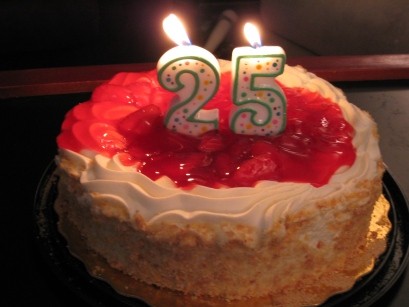
This year I turn 25. I don’t feel a day older than 18—that is, until I stand beside someone who just graduated from high school. I don’t feel that young either, until I stand next to someone with kids, a spouse, a mortgage, a pension plan, and a will. When I look back at all I have accomplished in my 25 years of life, I realize that my achievements are internal. For a quarter of a century, I’ve been living the Canadian dream and if I could go back in time and tell the six-year-old version of myself what I’ve done, I think he would be proud.

I dreamt big as a child, as most children do. I wanted to be an actor, or at least someone with the opportunity to be creative. Here I am—not an actor, but definitely creating. I feel pretty accomplished in that sense, not because I have achieved anything extraordinary (anyone with an opinion can write for the Other Press), but because I’m persistent and I’m staying true to my values.

Regardless of your age, I hope you are too, and that you’re not looking down on me for doing so.

I think reaching the 25-year mark still aiming for the goals I had as a child is remarkable. After all, think of all the other stuff getting in my way. Yes, the real life shit: money, education, relationships, entry-level jobs, parents, and peers. I see my high school friends, all of whom are turning 25 this year as well, moving out, getting engaged, and being promoted. They’re settling down with their lives, and it makes me so happy to see, because another trait I want as a 25-year-old is to be supportive—the same way I want my friends to support me and my silly choices.

But does that mean I’m a failure because I don’t have any of those things my friends have? Not at all, because like I said, what I have achieved is inside of me. It’s my own investment.

If the objective of life is to get a mortgage, then sure, I’m failing so far. And by the looks of it, I’ll continue to fail until, well, maybe my mid-life crisis. Yet, I have succeeded in recognizing that I would trade in a small two-bedroom house in exchange for travelling or writing a novel or getting a robust education. I believe when I’m 65, I’m going to be proud that I’ve indulged in life as a 25-year-old instead of taking roots in an existence I have no desire to grow old in.

I glance back on my successes and failures, and dwell a little bit on the failures. Yes, I wanted to be an actor and failed. I wanted to be a film director and failed. I wanted to be a standup comedian and failed. I made money as a dishwasher, a barista, a background performer, a sandwich board advertiser, and a door-to-door canvasser. I look back now and I can’t believe I did that—the same way I can’t believe I went bungee jumping. It’s weird what I’m proud of: not my successes, but my failures.I can’t believe they felt like the right decisions at some point. I can’t believe I did those things. But I did and I survived and it’s a part of me.

Up until now, my life has been a wrestle with adversity. But man, what an experience that’s been. What a great 25 years I’ve lived. What fantastic people I’ve met along the way. What wonderful privilege I had for being able to chase my dream and for being able to continue doing so. I don’t care what your age is, you should still be able to chase your dream. Or maybe I’m wrong. Maybe I’ll never grow up.

Canadian Startup Indiloop Remixes the Way We Listen to Music

indiloop

Put your hands up in the air! Vancouver-based Indiloop is remixing the way we listen to our favourite tunes. The cloud-based platform enables users to mix, match and create songs that might have otherwise only existed in David Bowie’s dreams.

It doesn’t matter whether you’re a fan of pop ballads, grungy rock or soulful R&B, because when it’s blended together the result is often unpredictable. With Indiloop, users have the ability to create a genre never before heard. Audio-mixing platforms are recognized as being notoriously complicated software, but Indiloop dared to be user-friendly.

“We wanted to build this platform where anybody can get into it even though they haven’t done it before,” founder and president of Indiloop Media, Erik Ashdown, told Techvibes. “But we wanted to make it customizable, so that someone who knows what they are doing can actually make something very nitty-gritty with it.”

Indiloop offers a selection of songs with each instrumental and vocal stem tracks dissected. Users can then preview each track, determine whether or not it’ll fit with their mix and then drag it down onto the mixing track at the bottom of the platform. Then they can press play and listen to see if it’s any good.

When I took Indiloop for a test run, my initial instinct was to combine the Seinfeld theme song with 50 Cent and Bruce Springsteen; what I created was a bit terrifying (and perhaps musically sacrilegious), but mostly it was intriguing—because it didn’t sound awful.

The time-stretching algorithm that Indiloop uses to blend songs together counts the beats per minute of each stem track, and through some technological/musical alchemy, the creation ends up being at various levels of listenable. What could have been hours of work on high-end software such as ProTools and FL Studio, Indiloop achieved in seconds.

“I went to Nimbus [Audio Engineering School] and I showed it to the guys there and their jaws dropped,” said Ashdown. “They were like, ‘we have been learning this for two years and you come and show us in 30 seconds?’ But at the end of the day they get that [Indiloop] is just for fun. It’s a game and a consumer-facing product. We are not trying to pose a threat to their industry. They can be in a studio mixing a track professionally for a film or something like that and then stop, use Indiloop for 20 minutes, clear their head and then go back to work.”

The same way Instagram had allowed all of us to create professional looking photographs with ease, Indiloop is doing the same with music. The ultimate goal is not to disrupt the DJing landscape or change the attitude of sound designers and mixers, but rather to bring the art form to a level where normal everyday people can enjoy.

Achievements, levels and the ability to share newly created mixes on social media offers another aspect to Indiloop. A community of mixers and listeners is built through the gamification and user interaction. Anyone on Indiloop can peek into your account, check out your latest mix and become a fan. And artists are noticing this new form of marketing.

“A lot of people have been coming to us because they see us as a way of marketing their music,” said Ashdown. “Let’s do a remix contest where you can mix the artist’s music on Indiloop and whoever makes the best mashup can have free concert tickets or a free shirt. From a marketing perspective, we’ve cut the barrier to entry.”

Indiloop is currently teaming up with Beatstar to hold a contest with a $2,000 grand prize and a $500 second place prize. The contestant’s objective is to remix a song featuring The Jets, Bostich+Fussible and Alexander Spit. To enter or to find out more about the contest visit Indiloop’s website.

In addition to the contest, Indiloop will also be releasing their platform for iPad in January and the iPhone version will be available in March.

“We’ve taken something that is so conventionally complicated and we’ve simplified it so much that when we tell people about it they are generally skeptical,” said Ashton. “They say, ‘well, I can never make music,’ Well, they can—look, it’s that easy. And they are always genuinely surprised when it doesn’t sound bad.”

Pet-thetic

opin_PetPunishment_final

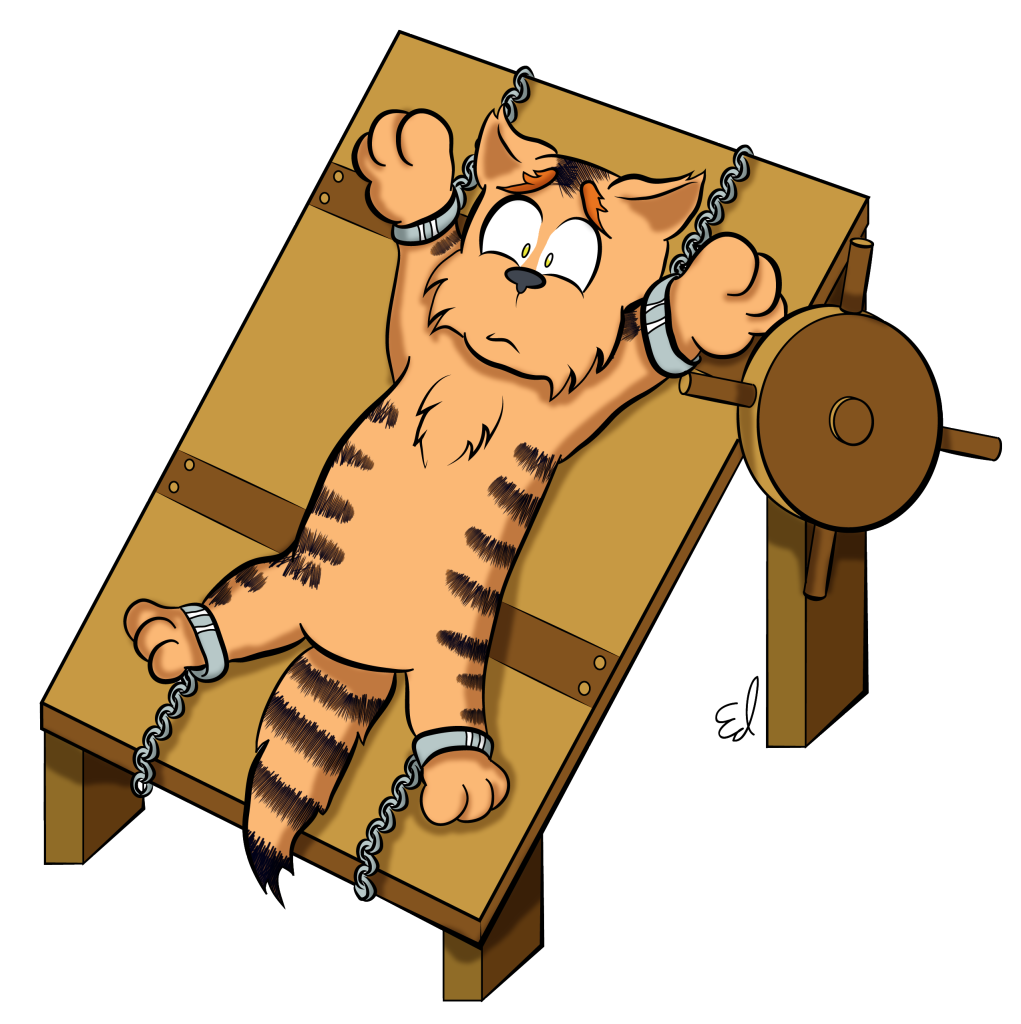
Should pet owners be punished for punishing their pets?

By Elliot Chan, Opinions Editor

Formerly published by The Other Press. Jan. 21, 2014

As 2013 ended, a video surfaced on the Internet showing a Taiwanese college student, Kiki Lin, stuffing her pet cat into a jar. The video went viral and the public was outraged by the despicable and irresponsible act.

At first there was speculation that Lin was punishing her pet; then she stated that she loved her cat and was only looking for a different way of transporting it. Regardless of the intention, the act was inhumane and regrettable. Still, this situation triggered some questions: is it ever okay to punish an animal? How does an owner discipline their pet without seeming cruel? Is that possible?

Every culture has a different technique for disciplining their pets, the same way they have different techniques for raising children. While spanking is appropriate and accepted in some places, it isn’t in North America. We must abide by these cultural customs. Bringing children into the world and pets into the household is a big responsibility, and when life is affected, we should always follow the status quo.

Physical punishment is never okay. Period. Striking an animal with your hand, a newspaper, or any foreign object will not teach the animal anything but fear—and fear is not obedience. We, as owners, must understand that there is a difference between discipline and punishment. Dogs, cats, and other animals don’t think logically like we do, so punishing them is nothing more than abuse, because they cannot comprehend what they’ve done wrong.

Poor owners become trapped in a weird situation where they must spend time and effort correcting their pet, grudgingly accepting its misbehaviour, or abandoning it. If you find yourself unhappy with a pet and you have strained all your patience, you’re probably not right for it.

Like any domestic relationship, chemistry and compatibility matter. It doesn’t mean that you hate animals or that you might beat your wife when times get tough, but why should you live with something or someone you dislike? You might not be punishing the animals, but you’re definitely punishing yourself. The animal won’t be able to divorce or be emancipated from you, so it’s up to you, with your human brain, to decide the decent action to take.

There is a belief that animals cannot judge their owner, plan, or instigate, but I believe that animals are more intelligent then people give them credit for. Sometimes humans and pets just don’t see eye to eye and it’s best for both parties to separate. There are a lot of animals left as strays in the SPCA; let that be the last resort. It’s a better option than animal cruelty, which can cost you a court trial, thousands of dollars in fines, and years of imprisonment.

Give up the animal if you don’t want it. It’s not your toy, it’s not your slave. If you ever see an animal being mistreated by an owner, let them know the severity of the law. I ask the question again: should owners be punished for abusing their pets? Odds are, they are already punishing themselves and we must step in to help them. Let’s hope the solution can keep both animals out of a cage.

Fallen Leafs up in Flames

 Brian-Burke

Brian Burke to be blamed for Maple Leafs’ struggles

By Elliot Chan, Opinions Editor

Formerly published in The Other Press. Jan. 21, 2014

The decisions of a general manager have lasting effects on a hockey team, even after the executive has moved on. In the case of former Toronto Maple Leafs’ GM, Brian Burke, the choices he made in his tenure will undoubtedly make ripples for many years to come. But how much blame or praise should one man take for the achievement or failure of a team? My answer: a lot.

Ask any skilled Monopoly player and they will tell you that luck has very little to do with their success. Sure, once in a while a bad roll of the dice and an unlucky trip to jail decides the game; but negotiation and anticipation, being able to see the possibilities around the bend, all of that is what makes those players so skilled. If Burke was to sit down for a game of Monopoly, I believe he would be the wheelbarrow—and also a very proficient player.

It seems that for every good decision Burke has made, he’s made two bad ones. Thank God he traded up to draft the Sedin twins in 1999 when he was the GM for the Canucks, but why did he trade away the draft pick that could have been Tyler Seguin for Phil Kessel when he was the GM for the Leafs? Why did he renew Leafs’ head coach Ron Wilson’s contract in 2011, despite a three-year losing record? Why did he go and criticize Anaheim Ducks’ Bobby Ryan in such a shameful manner when Ryan wasn’t selected to be on the United States’ Olympic team? Perhaps he did it all to turn up the heat in Calgary.

As president of Hockey Operations and interim GM for the Flames, Burke is hoping to return to his prowess. The man is obviously fearless when it comes to making choices, whether good or bad. If he does end up taking the helm in Calgary, I foresee a different-looking team sooner rather than later—and that is the same reason Toronto no longer wants Burke’s services.

He jumped the gun when he arrived in Toronto and built a subpar team, unlike the one in Anaheim. He was trying to recreate what he did in California and ultimately failed. Toronto was in a rebuilding state and instead of taking time to develop prospects, he traded them. The Maple Leafs’ minor successes are just that: minor. But at the moment, the Flames are just hoping for some fuel, so Burke is greatly welcomed.

The Flames have had a dismal 2013-14 season with 38 points in 48 games. Needless to say, whatever Burke does, things can’t get much worse—so no pressure. That was also the case when Burke took over in Vancouver, Anaheim, and Toronto. Burke seems to have a liking for taking a team going nowhere and giving them some direction. If you trace the history books, you can still see Burke’s fingerprints on all his former teams. So, should Burke be blamed for his teams’ successes and failures? Absolutely, and he wouldn’t have it any other way.

The recipe for wellness

DSCF6271 copy

Traditional Chinese medicine and the balance of life

By Elliot Chan, Opinions Editor

Formerly published in The Other Press. Jan. 21, 2014

I grew up with Traditional Chinese medicine (TCM). My mother has always been an advocate of it. On various occasions, my house would reek of a bitter, yet familiar odour. On the kitchen stove would be a large pot of miscellaneous herbs, while my mom hovered over it performing Chinese alchemy. Hours later, after the dark tea had stewed for long enough, she would insist that I drink it because (1) it would help me see better, 2) it would give me energy, 3) it would improve my joints, or (4) because she said so. The concoction tasted awful—always—like the Orient’s version of Buckley’s. I’d be coaxed a few more times before I either downed it all or abandoned it.

Many years later I still wonder if it did me any good. Did it make me healthier? Did it really work?

The history of traditional medicine

Over 2,000 years ago, before Advil and Pepto-Bismol were available to combat headaches and upset stomachs, ancient Chinese doctors found remedies in a practice that continues to this day. To call them doctors would be incorrect, though: during the Shang Dynasty (14th–11th century BC), there weren’t any doctors, only those seeking solutions to ailments.

The Chinese saw illness as disharmony between the human form and the world around it. Instead of approaching sickness as a chemical imbalance the way Western medicine does, TCM seeks cures by looking at the functionality of the body. Inspection, auscultation, olfaction, inquiry, and palpation are the five main methods used to diagnose patients. The practitioner does not hone in on one area of the body, but rather attends to the failing functionality in relation to external elements (wind, cold, fire/heat, dampness, dryness). The human form is one entity and any deficiency pertains to the whole body, not just the stomach or the arm or the brain.

DSCF6286

Sweet, sweet herbs

You’ve probably passed by Chinese herbal stores at malls and China Town promenades. Odds are you haven’t had a reason to enter any of them, except to alleviate your curiosity. You’ve peered inside and seen their shelving units and jars upon jars of mystery herbs, extracts, containers of macerated remedies, and fossilized animal carcasses. Such an establishment seems pulled out of the middle ages, just leasing real estate in modern society. Although the effectiveness of herbal therapy is still relatively unproven in 2014, many people live by it.

“People choose traditional medicine because it’s the natural solution,” said Kitty Tsin, employee at the Wah Fung Medicine Company. “You can never be sure how much of what is in pills or capsules. You can’t even be sure what it is. The capsules themselves are made out of gelatine, which isn’t healthy either. The Chinese tradition is that we boil medicine every day and drink the soup as a whole family to improve health. Capsules, tablets, and pills are only meant for individuals.”

TCM comes in a wide variety. Some have little effect, and function only as delicacies. Others are rare and exotic, and have been known to enhance the immune system, in addition to aiding the sickly.

Some common medicines are ginseng (used in many forms to provide energy, reduce the risk of cancer, and even treat erectile dysfunction), sea cucumber (has a property that helps treat arthritis and high blood pressure), and fritillary bulb (can be brewed as a tea to remedy coughs).

Rarer medicine can often cost hundreds—or even thousands—of dollars, and they may be more obscure. Examples include hasma, the fallopian tubes of frogs (known to revitalize internal organs, as well as enhance complexion); and cordyceps, a highly sought-after fungus, also known as the caterpillar fungus (can reduce the effects of asthma, reduce the risk of cancer, and balance out a person’s yin and yang).

The Chinese notion regarding health is based upon the importance of illness mitigation and prevention. While Western medicine tends to focus on treatment, TCM approaches well-being as a life-long pursuit.

Hokey-Pokey

In 2010 I sprained my MCL playing hockey. It took me off the ice for six weeks and the recovery process was agonizing. I re-aggravated the injury a few more times and thought it would never heal. I went to doctors and chiropractors, and when I exhausted all my options I consulted an acupuncture therapist. I’m not going to lie, I was quite skeptical—and perhaps a bit fearful—of the process. After all, lying down in a strange room with needles and cups sticking out and sucking on me was not my ideal day.

My acupuncture practitioner, Dr. Duzy Duyong Lee, punctured a hole in my injured knee, then warmed up a glass cup and placed it over the open wound. The objective (from what I remember) was to suck the blood clot out of my knee so that the healing process could start over again. At first the procedure seemed a bit farfetched—after all, the family doctors and chiropractors merely told me to wear a brace and stay off my leg. It’s hard to say which solution cured me in the end, but now I’m walking and skating just fine.

“The skin acts as a meridian to our organs,” said Bonalife Acupuncture and Herbal Medicine Clinic’s Dr. David Kuo. “I don’t touch the organ, but I touch the meridian; I use this meridian to adjust the organ.”

Acupuncture stems from the meridian system, a technique that addresses the human’s functionality and the flow of “qi” or life-energy. Qi includes the body’s circulation, the capability of the limbs, the defence against pathogenic factors, the emission of bodily fluids (urine, sweat, blood, etc.), and the intake of nutrients (food, air, water, etc.). By recognizing the body’s stimulation points, the practitioner can effectively correct the imbalance and restore the flow.

“Every part of your body has a function,” said Dr. Kuo. “When someone coughs, it’s not a coughing problem. There is something inside that is making you uncomfortable that makes you cough. I ask my patients why they are tired. They say, ‘Oh, I’m sick,’ Why are you sick? ‘Because I have a stomachache so I cannot eat and so I’m tired.’ Western medicine hears stomachache, they give you antibiotics—sometimes it’s right—but it’s always wrong. What do antibiotics do? It makes stomachache go away, but when antibiotic goes away, the problem returns. We need to understand the problem, not just the cure.”

DSCF6297

The future of traditional medicine

As our technology advances, so do bacteria and viruses. Vaccines, immunizations, and hospital treatments are tackling health with science, but can they ever snuff out the holistic approach of TCM?

A recent report in The Journal of Clinical Endocrinology and Metabolism showed that traditional medicine still has great potential in the Western world as well as the East, and it might be a solution for those with diabetes and other chronic illnesses.

Tianqi, a Chinese herbal mixture that has been shown to improve glucose levels, was the TCM up for the test. In a double-blind, randomized, placebo-controlled study, a sample of 389 people suffering from impaired glucose tolerance participated, where 198 were offered Tianqi and 191 were offered a placebo. The study showed that Tianqi reduced the risk of diabetes by 32.1 per cent. Of those in the Tianqi sample, 63.1 per cent reached normal glucose tolerance, compared to 46.6 per cent of the placebo group.

Many are starting to buy into TCM, making it a profitable market. And the modern science and medicine communities are implementing more studies to identify quality methods of treatment in relation to their own practices.

We live in a world where we are on the edge of medical breakthroughs and global pandemics. Our conditions are getting better and worse—but there is no room to panic. Instead, we should all take the time and find the necessary balance; the recipe that TCM has been cooking up for millennia.