The weather’s been rough lately, and on top of that, finding time to exercise has been a challenge. But all is good because my quote unquote training plan hasn’t started yet, and if there’s ever been a moment to get my life in order before it kicks off, it’s now.
In these videos, I often find myself reminding me to keep going, to stay consistent, and to push through even when things get tough. But today, I want to highlight something that’s crucial and often overlooked: not beating myself up.
I have a tendency to be hard on myself in many areas of life. I expect a lot, and I think that’s tied to some of the childhood trauma I’m still trying to work through. Whether it’s work, family, or especially my writing, I can be my harshest critic. When I played hockey as a goalie, I would get furious with myself for every save I missed. But I’ve gotten much better at giving myself grace, especially when it comes to triathlon training.
I think the reason for that is that I always approach it with the mindset of “I’m still learning, I’m still improving,” and it’s something I genuinely enjoy. As an adult, when you start labeling yourself as a professional, expert, or specialist, there’s often this expectation that you should have all the answers, solutions, and the ability to fix or improve everything. But the reality is, even with skills and experience, not everything is within your control. The world is constantly changing, and we need to adapt.
That brings me to where I am right now: building out my 12-week training plan for the sprint triathlon in May. The race will be a 444-meter swim, a 17.6 km bike ride, and a 4.9 km run.
The plan won’t be anything too strict or complicated. My goal is to do two runs a week: one hard interval session and one easy run. I’ll also swim twice a week using the Form goggle workouts, which I’m really enjoying. For biking, I aim for two rides a week—one intense and one more relaxed. Ideally, I’d like to get outside twice a week for the bike rides, and I might even throw in an extra fun ride over the weekend. Lastly, I plan to do a weekly bodyweight strength workout.
A bike in 45 minutes and 40 seconds, including both transitions.
And a run in 23 minutes and 44 seconds.
I think it’s definitely possible to cut a minute from each discipline—at least that’s the goal. But if I don’t hit it, I’m not going to beat myself up about it. I won’t stress over missing a workout when life gets in the way, or if a workout doesn’t go as planned. My focus will be on having fun and improving where I can.
With that said, I’ll do my best! I’ll give my best effort to improve and hit my goals. I’ll do my best in each workout, and most importantly, I’ll do my best to share this journey with you.
Today, I’m running a little East Van route from Van Tech High School to Emily Carr University of Art and Design. This route follows the SkyTrain and takes you through the Central Valley Greenway junction across Commercial Drive. Enjoy!
For more writing ideas and original stories, please sign up for my mailing list. You won’t receive emails from me often, but when you do, they’ll only include my proudest works.
Join my YouTube community for insights on writing, the creative process, and the endurance needed to tackle big projects. Subscribe Now!
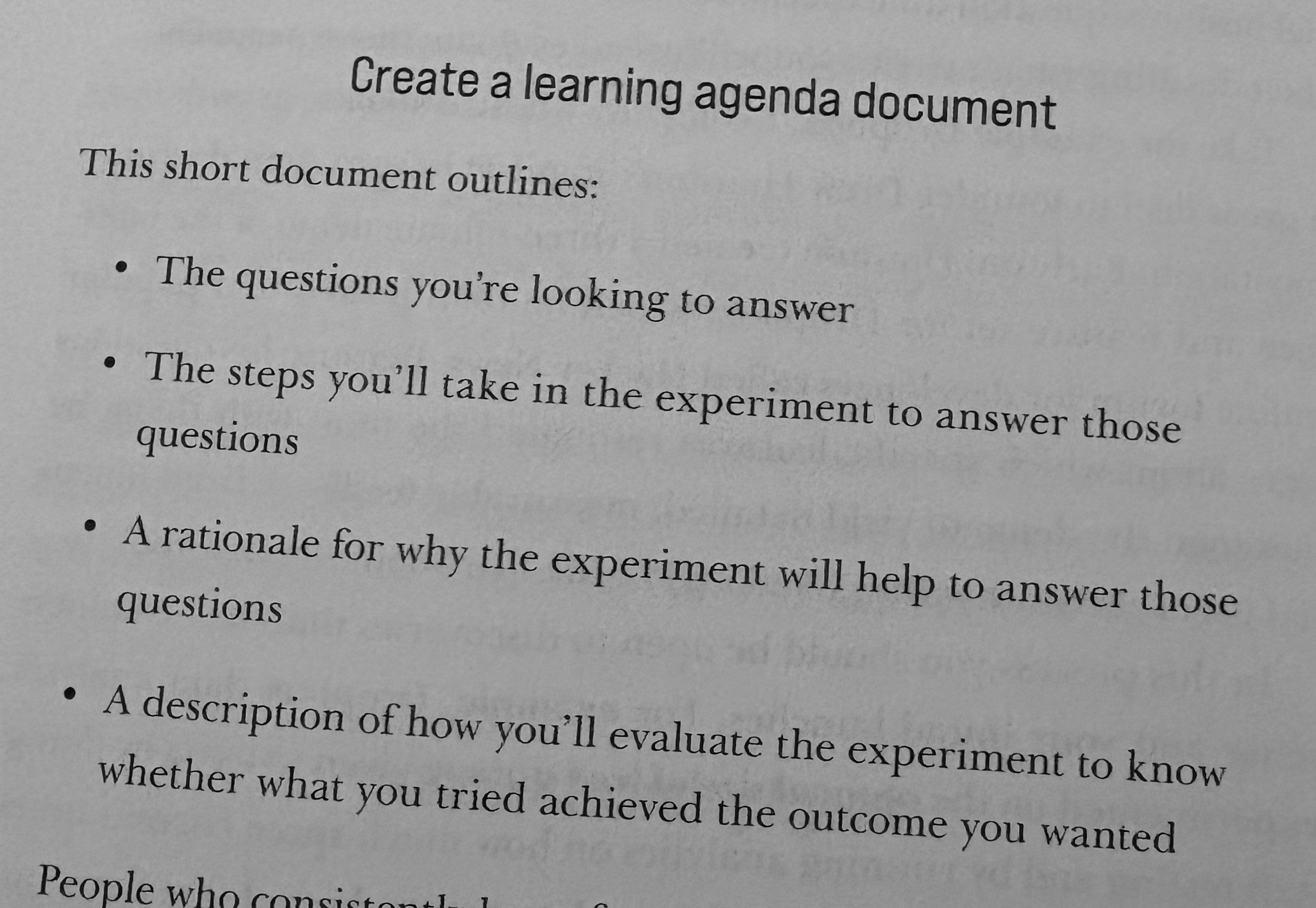
The Digital Mindset [Amazon] by Paul Leonardi and Tsedal Neeley is all about thriving in the digital age by learning smarter and experimenting better. One of the most applicable tools in the book is The Learning Agenda, a simple way to plan experiments and actually learn from them. It works by helping you frame 4 important questions:
What do you want to figure out?
What will you do to find the answers?
Why do you think this will work?
How will you know if it did?
By having an answer for each of these questions, you focus on what matters, so you’re not wasting time or energy.
There you go! You’ve just run an experiment.
For more writing ideas and original stories, please sign up for my mailing list. You won’t receive emails from me often, but when you do, they’ll only include my proudest works.
Join my YouTube community for insights on writing, the creative process, and the endurance needed to tackle big projects. Subscribe Now!
Well, the weather finally turned. If you want to experience the apocalypse, try driving in Vancouver on a snow day. But running in the snow? That’s exhilarating—if you can find a safe route.
Normally, I wouldn’t run down Commercial Drive. But if there’s ever a day to tour the city, it’s a snow day, right?
When it comes to anything in life—whether you do it well or not, whether things go your way or they don’t—there’s always an excuse. I notice that a lot when I’m training. You want to run, but it’s snowing. You want to feel good, but you step in a puddle. You want to stay in Zone 2, but you push too hard, and suddenly your heart rate is in the 170s. It’s easy to point at something and say, because of that, this happened.
But in the end, what matters is whether you let those excuses stop you. You can acknowledge the obstacles, but you still have to decide if you’re going to show up and put in the work.
Excuses are loudest when you’re trying to improve—especially since progress isn’t linear. It ebbs and flows. You get better at one thing, and something else gets worse. When you’re balancing three sports, working on creative projects, or even training a dog, it’s easy to focus on the setbacks and ignore the wins.
Take my swimming. Since getting Form goggles, I’ve been working on my head rolls—trying to improve my head position while breathing. But in the process, my swimming got worse. The first time you accidentally suck in water because you didn’t lift your head high enough. That’s enough to derail an entire workout. But when I step back and look at the big picture, I see small improvements adding up.
Count the little wins. Count the pennies earned, even if they don’t add up to a dollar yet.
There’s always an excuse when things go wrong. But sometimes things go right—sometimes they feel too easy—and maybe that’s when you should make excuses, too.
Because if you’re going to blame outside factors when things go wrong, you should acknowledge them when things go right. Maybe the conditions were perfect. Maybe you got lucky. Maybe your critic was just having a good day. But you still had to show up and do the work.
I need to keep this in mind as I start building my training plan for the upcoming races. Right now, committing to six workouts a week feels overwhelming. But all I have to do is take it one day at a time. One task at a time. One workout at a time.
Things will go wrong on sunny days, but things can go right on snowy days too. One day at a time. And today, that means running through the snow from the south end of Commercial Drive to the north.
Enjoy!
Join my YouTube community for insights on writing, the creative process, and the endurance needed to tackle big projects. Subscribe Now!
For more writing ideas and original stories, please sign up for my mailing list. You won’t receive emails from me often, but when you do, they’ll only include my proudest works.
Winter nights have a particular kind of silence that makes everything feel slower. This year, that quiet has become my writing time. I’ve had to face the fact that I only have 30 minutes a day to work on my novel. Between a busy job, taking care of Petey—my newly adopted dog—and the general rush of life, there’s no extra time to spare. But I’ve made it work, and consistency has been the secret.
Petey is a sweet soul who’s been through his own rough chapters. Between training sessions, walks, and making sure he’s not chewing on our blankets, my evenings belong to him. By the time he’s snoring at my feet, it’s close to bedtime. That’s when I sit down, put on Game of Thrones in the background, and dive into the fifth draft of my novel.
This draft is all about fixing inconsistencies and aligning the story with the rest of the trilogy I’m building. Every sentence I tweak and every plot hole I patch has to fit into the larger picture. With only 30 minutes a day, progress is slow but steady. Some nights I manage to rewrite an entire scene; other nights, I just have the energy to read a few paragraphs. But it’s not about how much I get done in one session—it’s about showing up every day.
Here’s how I’ve made the most of my limited time:
Plan Ahead: I end each session by anticipating what comes next. That way, when I sit down the next night, I know exactly where to pick up. I give a purpose for each session, am I reading, am I leaving comments, or am I making the edits? When I know what comes next, I can take action.
Set A Timer: I don’t only say that I’m going to write for 30 mins, I actually set a timer to ensure that I do. And at the end of the timer, I can stop or I can push through a little more. Often, I will end up doing a little more than 30 mins, but rarely do I do less.
Find Motivation in the Routine: Writing at the same time every night has turned it into a habit. Even on days when I’m tired, my brain knows it’s time to write. It’s the last thing I do. A final burst of energy, the kind you would do in a HIIT workout.
Tracking Your Streak: I find that marking down the days that I write really helps me stay committed. By marking it down, I can see how many days in a row I have been writing and then that gives me a little boost of motivation.
If you are hard-pressed to find time, often what you need is to feel committed. I know I’m always pushed to start and keep going when I have committed to a project, a program, or even a person.
If you are looking for that little extra push, you should check out Reedsy’s events and memberships. It’s a fantastic source to get your questions answered by publishing professionals, including literary agents and editors at Big 5 publishers. With the membership, you’d receive 12 months of exclusive access to events with bestselling authors and top publishing professionals from the Reedsy Marketplace.
If you are interested, check out the link here to learn more about the events and memberships.
This winter, I’ve learned that consistency is more powerful than long stretches of time. Petey reminds me of this in his own way. For dogs, in order to train them, they need to do the same things every day. Consistency. He’s grown so much since I adopted him, but it’s happened gradually, with patience and daily effort. The same is true of this novel. Each night I sit down, I’m inching closer to the story I’ve been imagining for years.
If you’re struggling to find time to write, my advice is simple: make the most of what you have. Whether it’s 30 minutes a day or even less, commit to showing up. Plan your sessions, set small goals, and trust the process. One day, you’ll look back and realize how far those tiny steps have taken you.
Join my YouTube community for insights on writing, the creative process, and the endurance needed to tackle big projects. Subscribe Now!
For more writing ideas and original stories, please sign up for my mailing list. You won’t receive emails from me often, but when you do, they’ll only include my proudest works.
Before we talk about the events in Metalhead, let’s flashback to when this episode was first released: December 29, 2017
In 2017, Boston Dynamics founder Marc Raibert took the TED conference stage to discuss the future of his groundbreaking robots. His presentation sparked a mix of awe and unease.
Boston Dynamics has a long history of viral videos showcasing its cutting-edge robots, many of which were mentioned during the talk:
Big Dog is a four-legged robot developed by Boston Dynamics with funding from DARPA. Its primary purpose is to transport heavy loads over rugged terrain.
Then there’s Petman, a human-like robot built to test chemical protection suits under real-world conditions.
Atlas, a 6-foot-tall bipedal robot, is designed to assist in search-and-rescue missions.
Handle is a robot on wheels. It can travel at 9 mph, leap 4 feet vertically, and cover about 15 miles on a single battery charge.
And then there was SpotMini, a smaller, quadrupedal robot with a striking blend of technical prowess and charm. During the talk, SpotMini played to the audience’s emotions, putting on a show of cuteness.
Simultaneously, post-apocalyptic themes gained traction in 2017 pop culture. From the success of The Walking Dead to Blade Runner 2049’s exploration of dystopian landscapes, this pre-covid audience seemed enthralled by stories of survival in hostile worlds, as though mentally preparing for the worst to come.
And that brings us to this episode of Black Mirror, Episode 5 of Season 4: Metalhead.
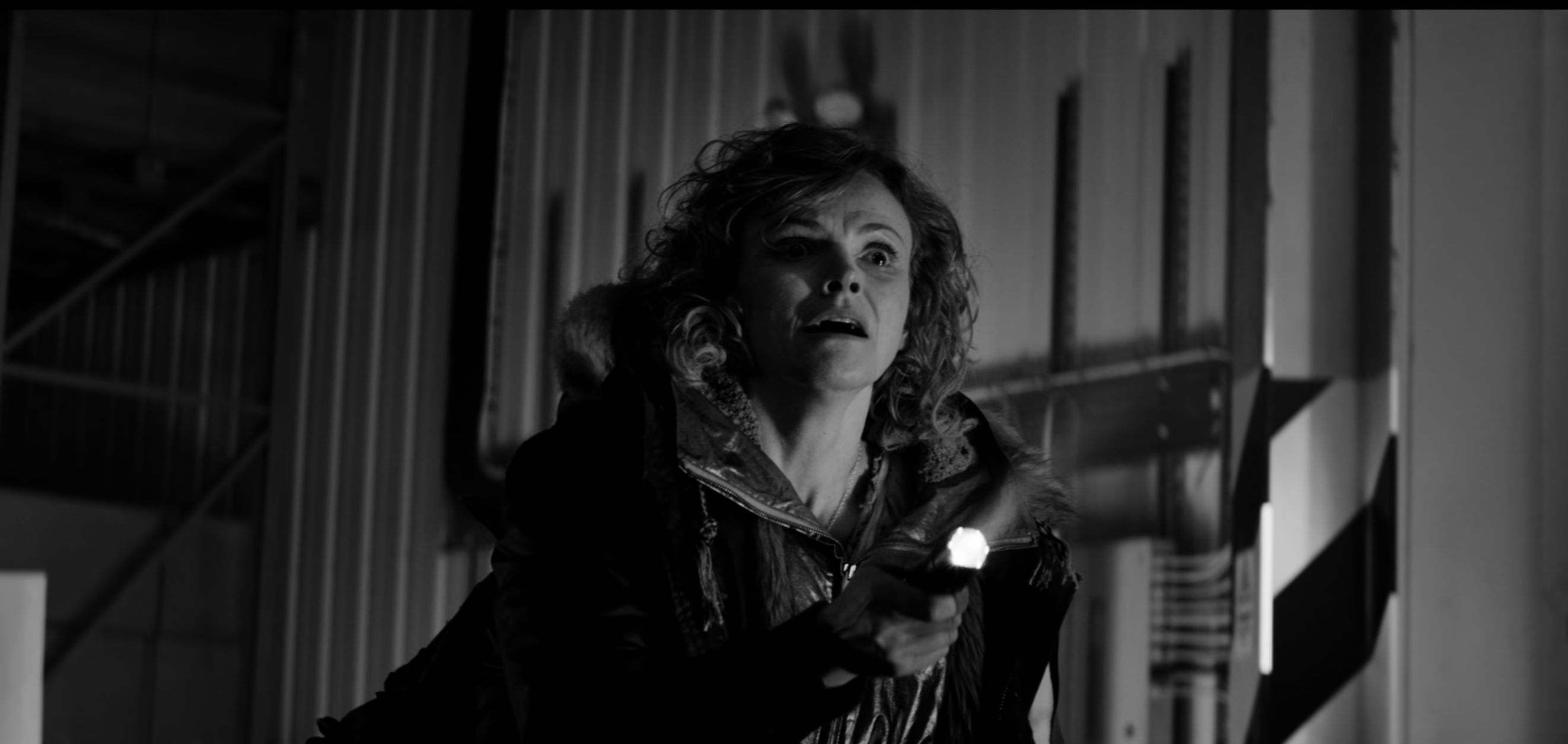
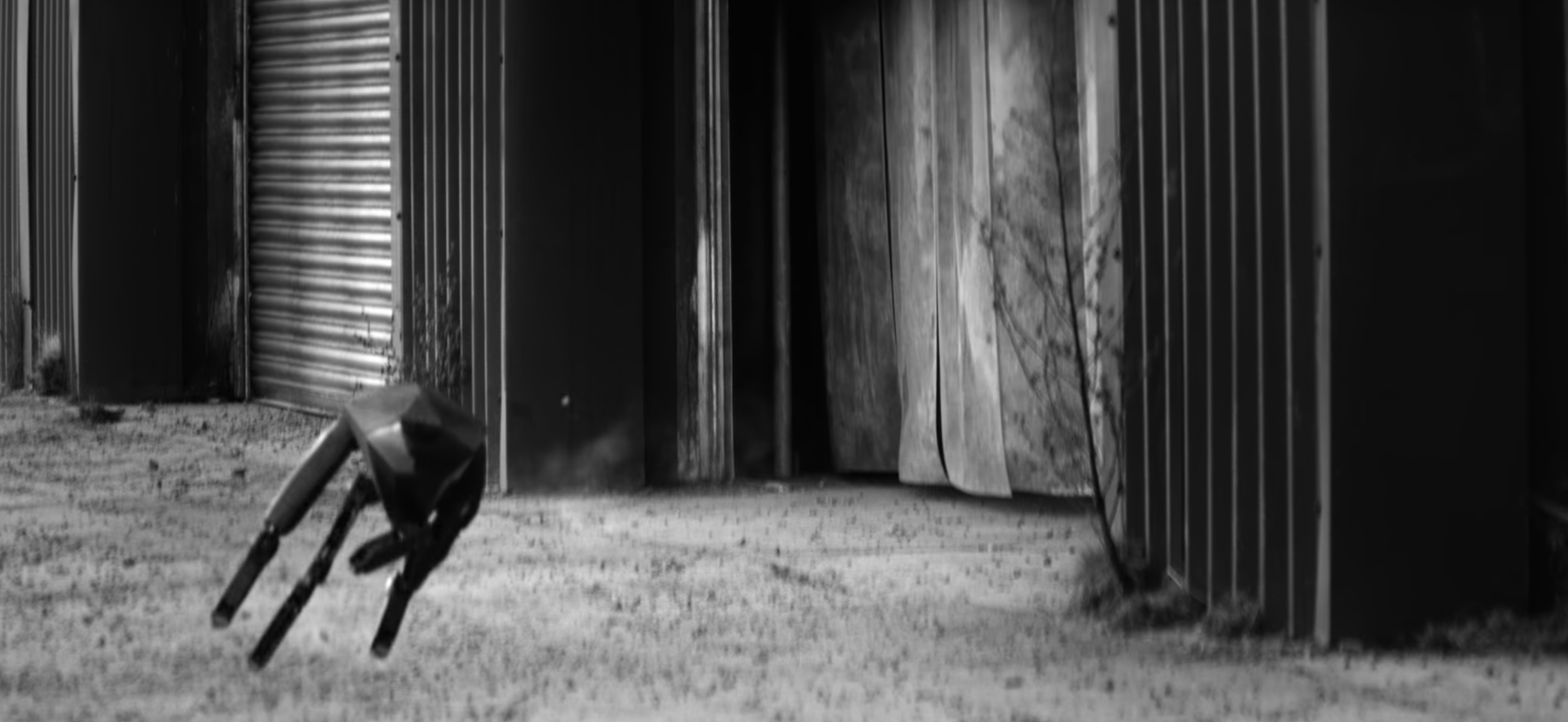
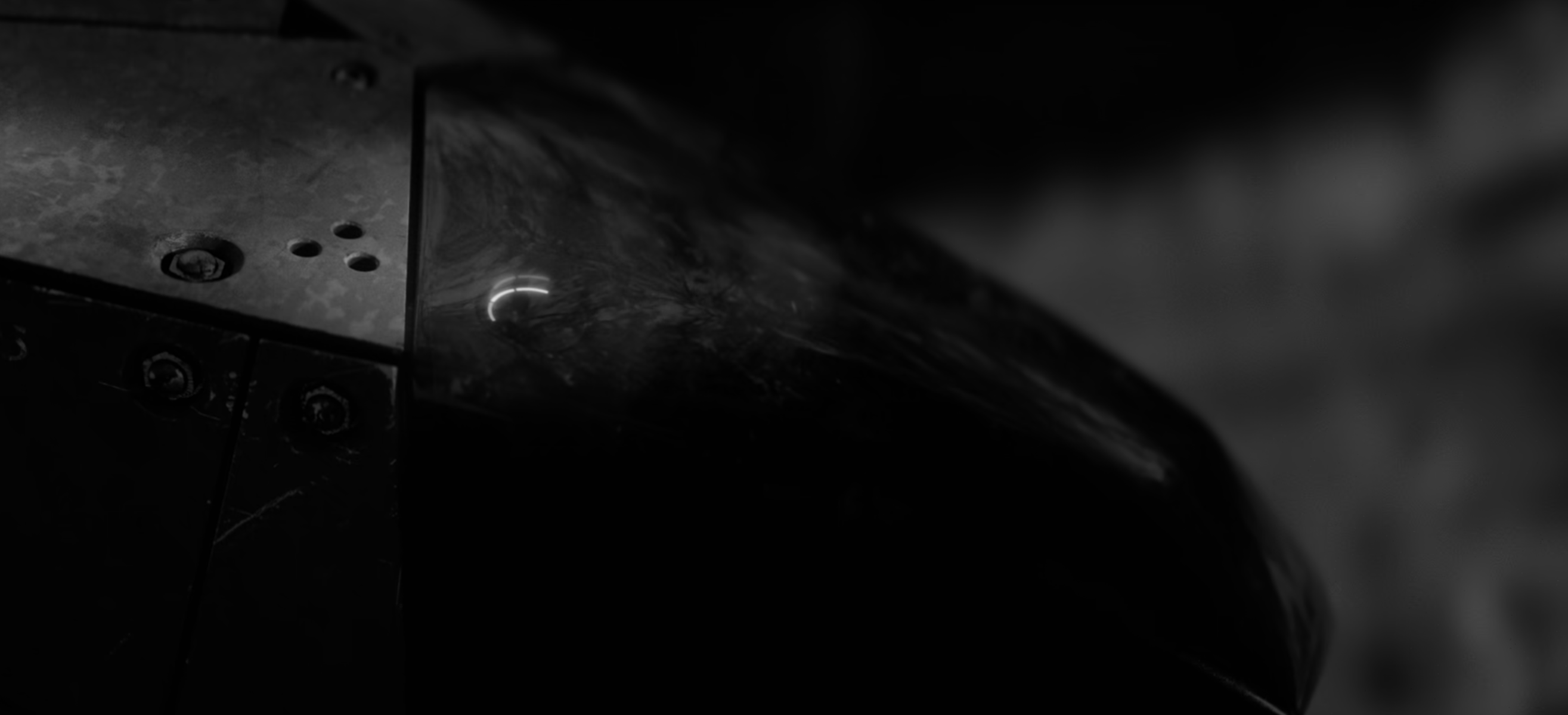
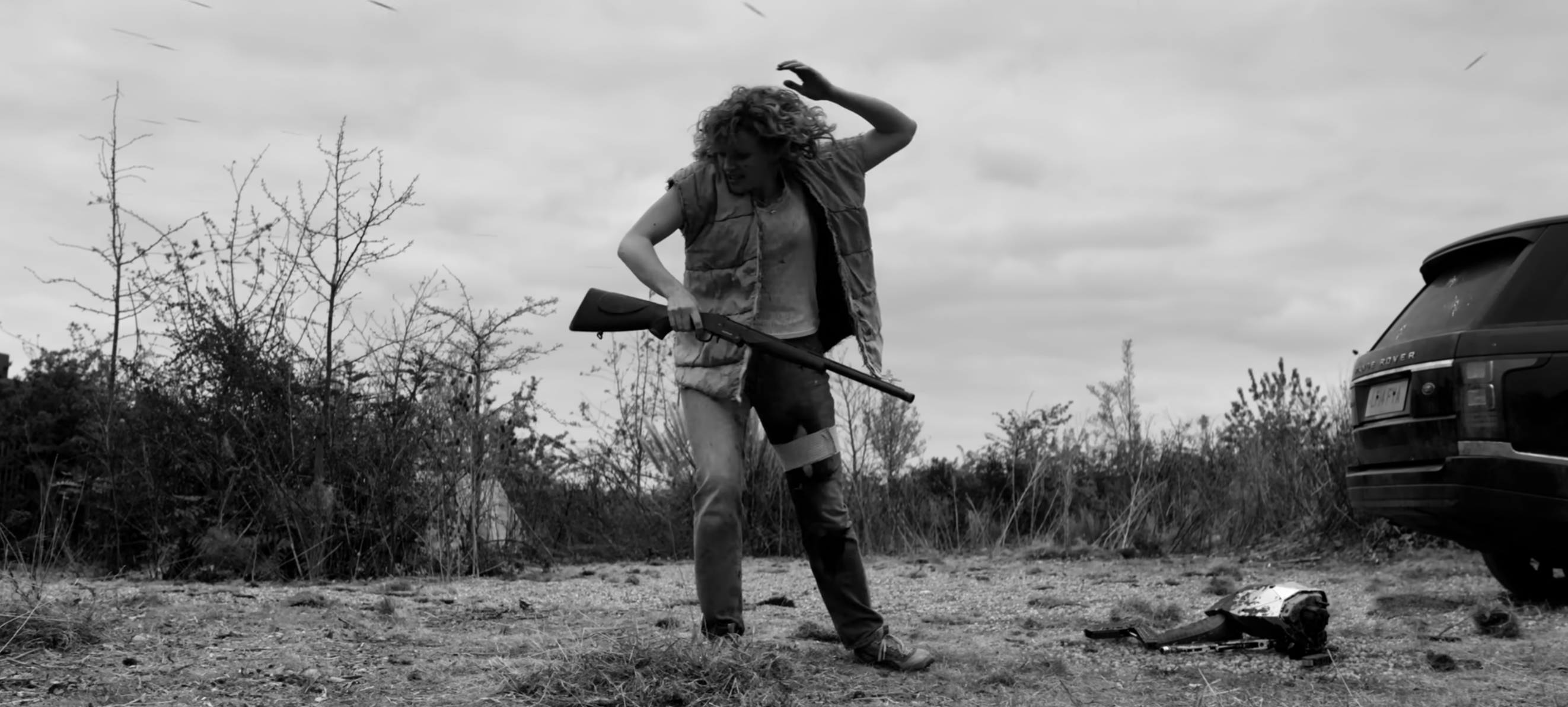
Set in a bleak landscape, Metalhead follows Bella, a survivor on the run from relentless robotic “dogs” after a scavenging mission goes awry.
This episode taps into a long-standing fear humanity has faced since it first began experimenting with the “dark magic” of machinery. Isaac Asimov’s Three Laws of Robotics were designed to ensure robots would serve and protect humans without causing harm. These laws state that a robot must not harm a human, must obey orders unless it conflicts with the first law, and must protect itself unless this conflicts with the first two laws.
In Metalhead, however, these laws are either absent or overridden. This lack of ethical safeguards mirrors the real-world fears of unchecked AI and its potential to harm, especially in situations driven by survival instincts.
So, we’re left to ask: At what point does innovation cross the line into an existential threat? Could machines, once designed to serve us, evolve into agents of our destruction? And, most importantly, as we advance technology, are we truly prepared for the societal consequences that come with it?
In this video, we’ll explore three key themes from Metalhead and examine whether similar events have already unfolded—and if not, whether or not it’s still plausible. Let’s go!
Killer Instincts
Metalhead plunges us into a barren wasteland where survival hinges on outsmarting a robotic “dog”. Armed with advanced tracking, razor-sharp senses, and zero chill, this nightmare locks onto Bella, after her supply mission takes a hard left into disaster.
The robot dog’s tracking systems are similar to current military technologies. Autonomous drones and ground robots use GPS-based trackers and infrared imaging to locate targets. Devices like Lockheed Martin’s Stalker XE drones combine GPS, thermal imaging, and AI algorithms to pinpoint enemy movements even in dense environments or under cover of darkness.
With AI-driven scanning systems that put human eyesight to shame, it can spot a needle in a haystack—and probably tell you the needle’s temperature, too. Think FLIR thermal imaging cameras, which let you see heat signatures through walls or dense foliage, or Boston Dynamics’ Spot using Light Detection and Ranging (aka Lidar) and pattern recognition to map the world with precision.
Lidar works by sending out laser pulses and measuring the time it takes for them to bounce back after hitting an object. These pulses generate a detailed 3D map of the environment, capturing even the smallest features, from tree branches to building structures.
One of the most unsettling aspects of the robot in Metalhead is its superior auditory abilities. In the real world, acoustic surveillance technology, such as ShotSpotter, uses microphones and AI to detect and triangulate gunfire in urban areas. While it sounds impressive, its effectiveness is debated, with critics including a study by the University of Michigan pointing to false positives and uneven results.
Still, technology is quickly advancing in recognizing human sounds, and some innovations are already in consumer products. Voice assistants like Alexa and Siri can accurately respond to vocal commands, while apps like SoundHound can identify music and spoken words in noisy environments. While these technologies offer convenience, they also raise concerns about how much machines are truly able to “hear.”
This is especially true when advanced sensors—whether auditory, visual, or thermal—serve a darker purpose, turning their sensory prowess into a weapon.
Take robotics companies like Ghost Robotics, which have developed machines equipped with sniper rifles, dubbed Special Purpose Unmanned Rifles (SPURs).These machines, designed for military applications, are capable of autonomously identifying and engaging targets—raising profound ethical concerns about the increasing role of AI in life-and-death decisions.
Built for Speed
In this episode, the robot’s movement—fast, deliberate, and capable of navigating uneven terrain—resembles Spot from Boston Dynamics.
Spot can sprint at a brisk 5.2 feet per second, which translates to about 3.5 miles per hour. While that’s fairly quick for a robot navigating complex terrain, it’s still slower than the average human running speed. The typical human can run around 8 to 12 miles per hour, depending on fitness level and sprinting ability.
So while Spot may not outpace a sprinter, DARPA’s Cheetah robot can — at least on the treadmill. Nearly a decade ago, a video was released of this robot running 28.3 miles per hour on a treadmill, leaving even Usain Bolt in the dust.
But while the treadmill is impressive, the current record holder for the fastest land robot is Cassie—and she’s got legs for it! Developed by Oregon State University’s Dynamic Robotics Lab, Cassie sprinted her way into the record books in 2022, running 100 m in 24.73 seconds.
While today’s robots may not yet match the speed, adaptability, and relentless pursuit seen in the episode, the rapid strides in robotics and AI are quickly closing the gap. Like the tortoise slowly gaining ground on the overconfident hare, these technological advances, though not yet flawless, are steadily creeping toward a reality where they might outrun us in ways we hadn’t anticipated.
Charged to Kill
At a pivotal point in the story, Bella’s survival hinged on exploiting the robot’s energy source. By forcing it to repeatedly power on and off, she aims to drain its battery. Advanced machines, reliant on sensors, processors, and actuators, burn through significant energy during startup.
Today’s robots, like Spot or advanced military drones, run on rechargeable lithium-ion batteries. While these batteries offer excellent energy density, their runtime is finite—high-demand tasks like heavy movement or AI processing can drain them in as little as 90 minutes.
However, the latest battery innovations are redefining what’s possible and the automotive industry is leading the charge. Solid-state batteries, for example, offer greater capacity, faster charging, and longer lifespans than traditional lithium-ion ones. Companies like Volkswagen and Toyota have invested heavily in this technology, hoping it will revolutionize the EV market.
Self-recharging technologies, like Kinetic Energy Recovery Systems (KERS), are moving from labs to consumer products. KERS, used in Formula 1 cars, captures and stores kinetic energy from braking to power systems and reduce fuel consumption. It’s now being explored for use in consumer and electric vehicles.
Battery innovation is challenging due to several factors. Improving energy density often compromises safety and developing new batteries requires expensive materials and complex manufacturing processes.
Modern robots are pretty good at managing their power, but even the smartest machines can’t escape the inevitable—batteries that drain under intense demands. While energy storage and self-recharging tech like solar or kinetic systems may help, robots will always face the dreaded low-battery warning. After all, as much as we’d love to plug them into an infinite, self-sustaining energy source, the laws of physics will always say, “Nice try!”
Information Flow
When Bella throws paint to blind the robot’s sensors and uses sound to mislead it, her plan works—briefly. But the robot quickly adapts, recalibrating its AI to interpret new environmental data and adjust its strategy. Similarly, when Bella shoots the robot, it doesn’t just take the hit—it learns, retaliating with explosive “track bullets” that embed tracking devices in her body. This intelligent flexibility ensures that, even when temporarily disabled, the robot can still alter its approach and continue pursuing its objective.
In real life, robots with such capabilities are not far-fetched. Modern drone swarms, such as those tested by DARPA, can coordinate multiple drones for collective objectives. In some instances, individual drones are programmed to act as decoys or to deliberately draw enemy fire, allowing the remaining drones in the swarm to carry out their mission.
In October 2016 at China Lake, California, 103 Perdix drones were launched from three F/A-18 Super Hornets. During this test, the micro-drones exhibited advanced swarm behaviors, including collective decision-making, adaptive formation flying, and self-healing.
While the events in Metalhead are extreme, they are not entirely outside the realm of possibility. Modern robotics, AI, and machine learning are progressing at a staggering rate, making the robot’s ability to adapt, learn, and pursue its objective all too real.
The advancements in sensors, energy storage, and autonomous decision-making systems could one day allow machines to operate with the same precision seen in the episode.
So, while we may not yet face such an immediate threat, the seeds are sown. A future dominated by robots is not a matter of “if,” but “when.” As we step into this new frontier, we must proceed with caution, for once unleashed, these creations could be as relentless as any natural disaster—except that nothing about this will be natural.
For more writing ideas and original stories, please sign up for my mailing list. You won’t receive emails from me often, but when you do, they’ll only include my proudest works.
Join my YouTube community for insights on writing, the creative process, and the endurance needed to tackle big projects. Subscribe Now!
Another beautiful day in Vancouver, but the weather is about to change. This ride was one I had to squeeze into an already packed weekend, so I made it an ambitious one.
Sometimes when I plan my ride, I focus entirely on the destination—never the journey there, and definitely not the journey back. But the journey back is often the hardest part. That’s where endurance happens. That’s where the training begins.
Going too far. To the limit. Must keep going.
There’s a moment in every long ride when you realize you’ve gone too far. You’re exhausted, miles from home, with no easy way out. No teleportation machine. No one to pick you up. You still have to pedal back.
I seek out that edge sometimes—not just in training, but in work and life. It’s in those moments, past comfort and deep in fatigue, that real decisions happen. Do you push through? Find a shortcut? Call home and admit you’re running late?
It’s a fitting metaphor. Whether in sport, creative work, or just navigating life’s responsibilities, we all hit that point where we wonder if we’ve taken on too much—gone too far. The question isn’t whether we’ll get tired—it’s what we do when we are.
Today, I’m riding from Trout Lake in East Van to the southern end of the Arbutus Greenway. I love this route—it cruises through undulating scenic city streets before easing onto a slightly calmer shared path.
But, as I mentioned, I had to squeeze this ride in. I got out later in the afternoon, right at peak traffic. Pedestrians, cyclists, cars—busy, busy. Another challenge to navigate.
Like all things, it comes back to the same question: Have I reached my limit? Or can I push through?
Enjoy the ride.
For more writing ideas and original stories, please sign up for my mailing list. You won’t receive emails from me often, but when you do, they’ll only include my proudest works.
Join my YouTube community for insights on writing, the creative process, and the endurance needed to tackle big projects. Subscribe Now!
Another beautiful day in Vancouver—cold, though. It’s just barely above freezing today. Still, any day in January without rain or snow? I’ll take it.
This week, I finally got around to tallying up all my metrics from 2024. Tracking data is something I genuinely enjoy, which is one reason I love triathlon so much—it’s basically an excuse to collect data. If I can quantify what I’m doing, it makes consistency feel so much easier. I bring that same philosophy to my creative work. Every day — or nearly every day — I track my creative writing and video creation the same way I track my workouts. I’m obsessed with my spreadsheets.
Here’s how 2024 shaped up:
I swam 90,325 meters in 44 hours, 20 minutes, and 26 seconds (5% less than 2023).
I cycled 3,901.07 kilometers in 175 hours, 21 minutes, and 32 seconds (22% more than 2023).
I ran: 621.44 kilometers in 67 hours, 11 minutes, and 29 seconds (23% less than 2023).
The big jump in cycling is thanks to our new indoor bike, which I added to my routine last year—it made all the difference. As for swimming, I swam less because I spent extra hours in 2023 learning how to swim, so naturally, I didn’t log as much distance in 2024 because I didn’t have that huge learning curve. For running, I held back intentionally to avoid overdoing it and risking more injuries.
2024 was my sophomore year in triathlon. While I packed the calendar with races, I’d call it more of a “slump year” training-wise. But seeing the data laid out, I know I’ve built a solid foundation. This year, I want to build on that thoughtfully—not just by chasing bigger numbers. These annual stats are a nice way to reflect on the work I’ve put in, but they don’t tell the full story. What matters to me this year is how well I’m performing in training and races.
Take swimming, for example. For my birthday, my amazing wife got me a game-changing gift: FORM goggles. If you haven’t heard of them, they’re like a smartwatch built into your goggles. They show data like pace and stroke rate while you swim. Even cooler, they give feedback on things like head position while breathing and overall swim efficiency.
After my first swim with them, I got a score of 40 out of 100. Plenty of room for improvement, but I’m excited to see how much I can progress.
With that said, I’m heading into year three of this triathlon journey. While improvement is always a focus, the real priority is maintaining the habit. I don’t even think of triathlon as a hobby anymore—it’s just what I do.
Before my training plan officially kicks off in a few months, I’m taking this time to maintain my routine and base fitness. There is no point in tiring myself out. This is my no-pressure, fun part of the year, and I want to enjoy it. And I definitely want to do a weekend ride. So I’ve decided to explore some parts of the city that aren’t great for structured training but are worth a visit.
Today, I’m riding to the West End of Vancouver to check out some of the greenways, including the Comox-Helmcken Greenway. Thanks to this project, there’s been a 49% boost in cycling trips and a 35% decrease in car trips in the neighborhood. While the greenway was originally planned to stretch across the entire city, only the Comox phase has been completed so far.
And since no ride into Downtown Vancouver is complete without detours, I got sidetracked by the demolition of the 115-year-old Dunsmuir building. It’s been a hotel, military barracks, and a shelter over the years, and now it’s making way for something new. From there, I’ll take a trip down the world-famous Granville Street.
Enjoy the ride.
For more writing ideas and original stories, please sign up for my mailing list. You won’t receive emails from me often, but when you do, they’ll only include my proudest works.
Join my YouTube community for insights on writing, the creative process, and the endurance needed to tackle big projects. Subscribe Now!
Bryan Cranston—you know, the guy who gave us Walter White—once shared some advice for actors going into an audition. But this advice felt bigger than just acting. He said: “know what your job is
At first, it sounds simple, almost too simple. But then he elaborates:
“I was going to auditions to try and get a job. That is not what you are supposed to do. An actor is supposed to create a compelling, interesting character that serves the text, you present it in the environment where you audition. And then you walk away. And that’s it. Everything else is outside your control, so don’t even think about it, don’t focus on that. You’re not going there to get a job. You’re going there to present what you do. You act. And there it is. And you walk away and there’s power in that.”
Cranston’s not saying “Don’t care about the outcome.” He’s saying, “Care about what you can control.” For him, it’s about crafting a character that serves the story. For us—whether we’re writers, marketers, or creators—it’s about honing our craft and delivering it with intention.
I remember a time when I was deep in job applications, obsessing over every detail, trying to predict what each company wanted. The constant second-guessing, the tweaking of synonyms and punctuations—it was exhausting. My job wasn’t to convince them I was perfect. My job was to show up and be myself—to present what I do best.
The same rule applies when you’re already on the job. Showing up every day isn’t just about ticking off tasks or meeting deadlines. It’s about knowing what’s at the heart of your work. If you’re a writer, your job isn’t just to write—it’s to tell a story that connects. If you’re a marketer, it’s not just about ad campaigns—it’s about creating something that leads to action.
But here’s the thing—the pressure to get it “right” can mess with your head. You want the recognition, the results, the wins. That’s why Cranston’s advice feels so important. He’s saying: let go of what you can’t control. You can’t control how people respond to your performance, your draft, or your campaign. But you can control the effort and care you put into it.
So, how do you do this in real life? First, focus on the process. Instead of asking, “Will they like it?”
Ask: “Am I proud of this? Does it serve the purpose?”
Second, detach from the outcome. Present it and move on.
And third, redefine success. It’s not just about landing the job or nailing the project—it’s about the growth that comes from the work itself.
Rejections sting. Constructive criticism can break me down. And negative comments are hard to ignore. But when you focus on what’s within your control, you start to find a different kind of power. You’re less tied to the highs and lows, and more grounded in the work you’re doing every day.
So, whether you’re pitching ideas, crafting stories, or designing campaigns, take Cranston’s advice: “Know what your job is.” Show up. Do the work. Let go of the rest. There’s freedom in that.
For more writing ideas and original stories, please sign up for my mailing list. You won’t receive emails from me often, but when you do, they’ll only include my proudest works.
Join my YouTube community for insights on writing, the creative process, and the endurance needed to tackle big projects. Subscribe Now!
I turn 36 next week. Not old, but definitely older than I feel. People keep warning me that it’s only a matter of time before old age catches up and deals me the inevitable. Until then, I still have time to reach some old goals and start some new ones.
Last year, I completed my first Olympic-distance triathlon—a goal that once felt impossible. This year, I’m aiming for my second one. My first goal was simply to finish, but now, I want to do better. I’ve already signed up for one in September. Since that’s still months away, I decided to add a shorter race earlier in the year for practice.
At first, I planned to race in BC’s interior, maybe one of the ones in the Okanagan. But since we recently adopted a new dog, I figured staying closer to home would be better. Last year, I did the North Shore Triathlon in North Vancouver, and I liked how small and manageable it was. It feels like the perfect race to sneak into the year without disrupting everything else.
So, here’s the plan: one sprint-distance race and one Olympic-distance triathlon in 2025. On top of that, I want to run a 10K and aim for a PR—ideally under 45 minutes. I’m also keeping an eye out for a swim- or bike-specific race. I think that’s enough to keep me active without burning out.
You see, it’s not just the training. That novel I keep talking about? Still happening. I might do a video update on it soon, but essentially, I’m working on it 30 minutes a day. That means, when I’m working on it I’m not really getting any deep work. It’s very fragmented. But honestly, the whole project has been built this way.
At this point, consistency is the only way forward. A little every day adds up, just like training. Of course, there will come a time when I need to push harder and finish it, and that day’s coming fast. For now, though, I’ve got good momentum.
Between the novel, training, work, eating, sleeping, and everything else, life’s busy. And let’s not forget about making videos. Videos tie all of this together. This year, I want to take you on a more immersive journey—especially with my triathlon training. I also want to showcase the sights and sounds of Vancouver. Ever since I started riding my bike, I’ve found a new appreciation for this city that I love, and I want to share it with you.
Consider this the first episode: a weekend ride from Science World to the Stanley Park loop, one of my favorite routes. It rained in the morning, but by the time I got out, it turned into a beautiful January day. Enjoy the ride.
Join my YouTube community for insights on writing, the creative process, and the endurance needed to tackle big projects. Subscribe Now!
For more writing ideas and original stories, please sign up for my mailing list. You won’t receive emails from me often, but when you do, they’ll only include my proudest works.
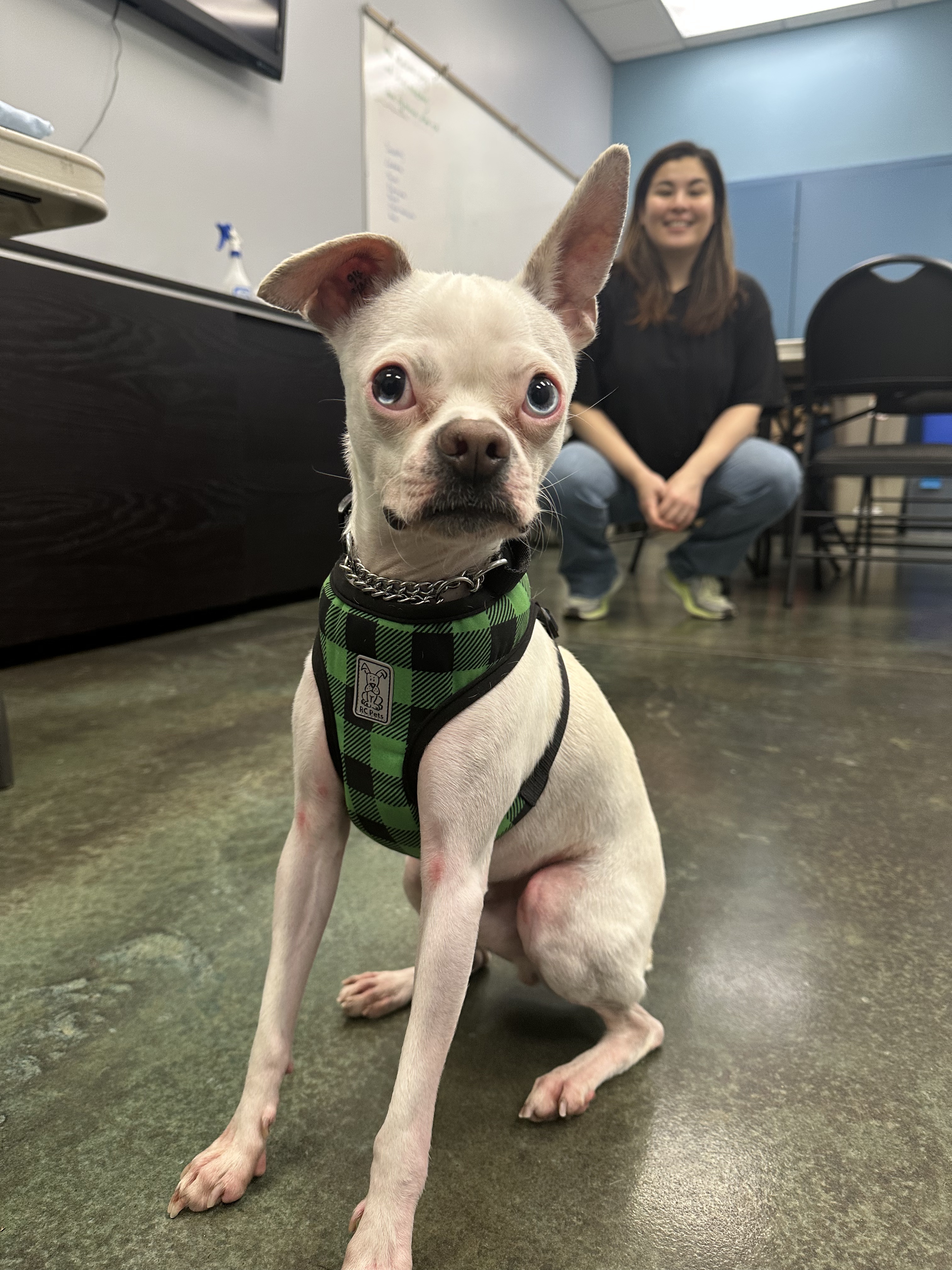
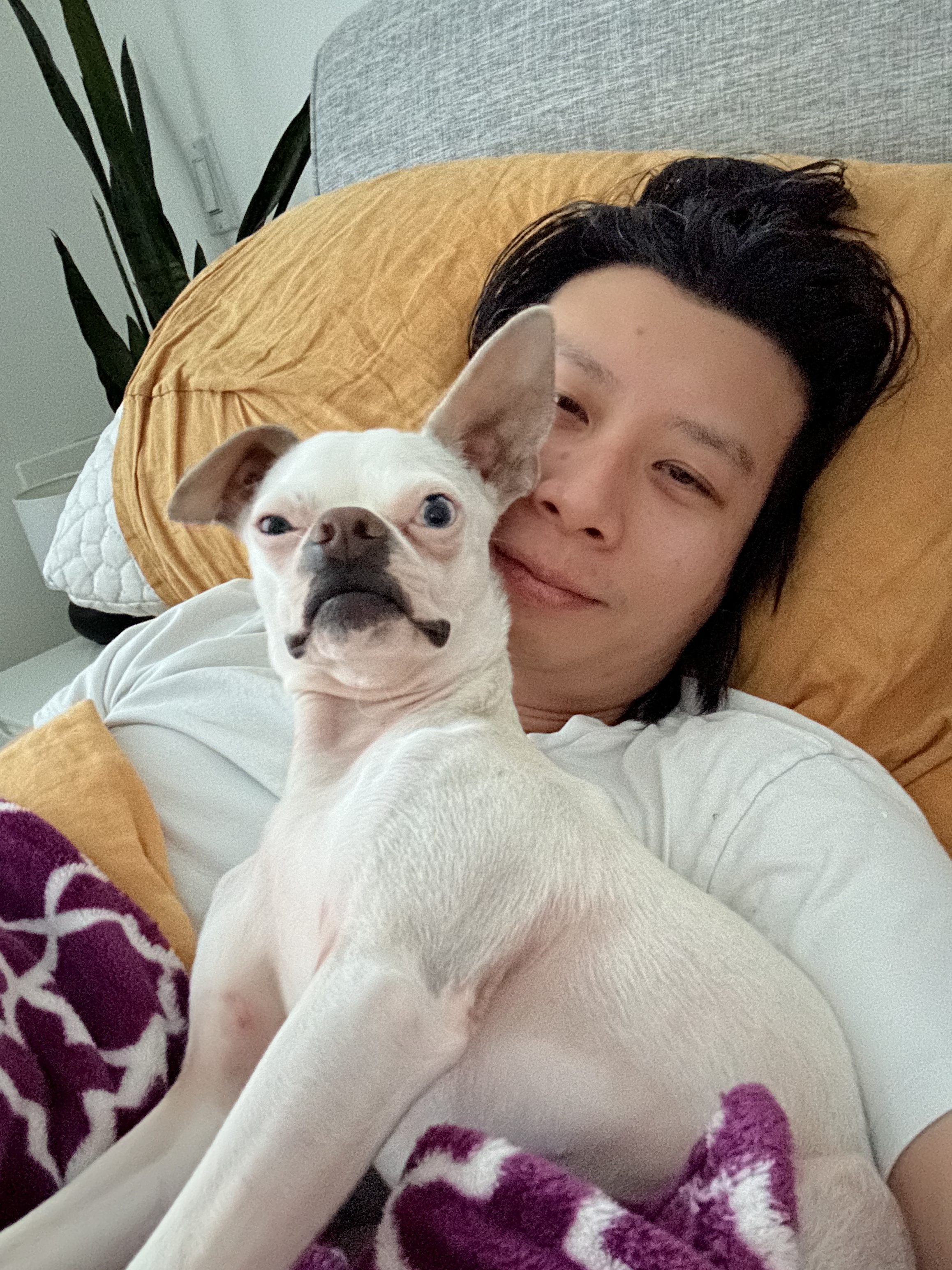
His mother was a Boston Terrier. His father, a Chinese Crested. He’s unique. Floppy ears. Black lips. Short, wiry hair. Big, Steve Buscemi eyes. He’s one of a kind.
Before he was Petey, he was Pickles, and before he was Pickles, he was Colton. Colton was born in a drug house and passed off to an elderly man with cognitive impairments who couldn’t care for him. Eventually, he was abandoned.
But Colton’s story doesn’t end there.
One fateful day, a good samaritan found him wandering the streets near 41B St and Delta Port Way in Ladner—the middle of nowhere. They brought him to the shelter, where his painful past was uncovered. His original owner came forward, explaining that he simply couldn’t care for Colton anymore. With what we hoped was regret and remorse, they chose not to claim him. Instead, they left him behind. Colton was now Pickles. The shelter rebranded him because, apparently he’s like a piglet… pickles?
But Pickles was struggling. At the shelter, the trauma consumed him. He barked incessantly, jumped against the walls of his kennel, and snapped at staff members in frustration.
One day a family arrived to meet him— but they brought children with them, and for Pickles, that was too much. His fear and anxiety overwhelmed him, and he shut down. He avoided the kids and kept his distance, and the family realized that he wasn’t the right fit for them. The shelter staff was left with heavy hearts, unsure what would come next for Pickles.
Pickles’ behavior was becoming more unpredictable, and the staff had tried everything they could, but nothing seemed to help. They began discussing behavioral euthanasia. It seemed like there was no way out for Pickles, no way for him to escape the endless cycle of fear and frustration.
Before that decision could be made, That’s when we walked in.
Our journey to adopt Petey wasn’t instant—but we were determined. After all, we fell in love with him right away. We visited him at the shelter for two weekends in a row—Saturdays and Sundays. Every time we saw him, we could feel the stress and anxiety, but we could also sense a happy, fun-loving guy. We saw potential. It was clear he just needed someone who understood him, someone who had the patience for him.
My wife and I are uniquely equipped to adopt him. But we also knew it wouldn’t be easy. The staff reminded us that it wouldn’t be easy, just in case there was a moment we thought it would. This kept us grounded and it helped us prepare for our future together.
After those weekend visits, we brought him home for a 4-hour trial run on a Thursday afternoon, just to see how he’d settle in. It was clear he was ready for a change. For my wife and I who lost our old dog, Michael only a year ago, just having a dog in our apartment felt like our home had been given new life. The visit went so well. He played. Cuddled with us. And went for a couple of walks.
While initially, the shelter recommended that it would benefit Petey to have a couple of home visits before being fully adopted, seeing how well he did with us, they made plans to streamline our process. We were hoping to bring him home in two weeks for the Christmas holidays, as that will be when we will both have time off from work to get him settled.
Then we returned to the shelter the following Saturday, two days after his home visit, thinking it was just another playdate. But the staff had other plans. They could see how he was struggling at the shelter, how miserable he was in comparison to how well he was doing with us. They asked us straight up, “Can you take him today?”
We weren’t necessarily ready for him that day. We had plans that weekend and we still needed to proof the house for him. But hearing that he was struggling in the shelter, there was no way we could leave him there for another day let alone another week for our convenience.
And just like that, Petey came home with us.
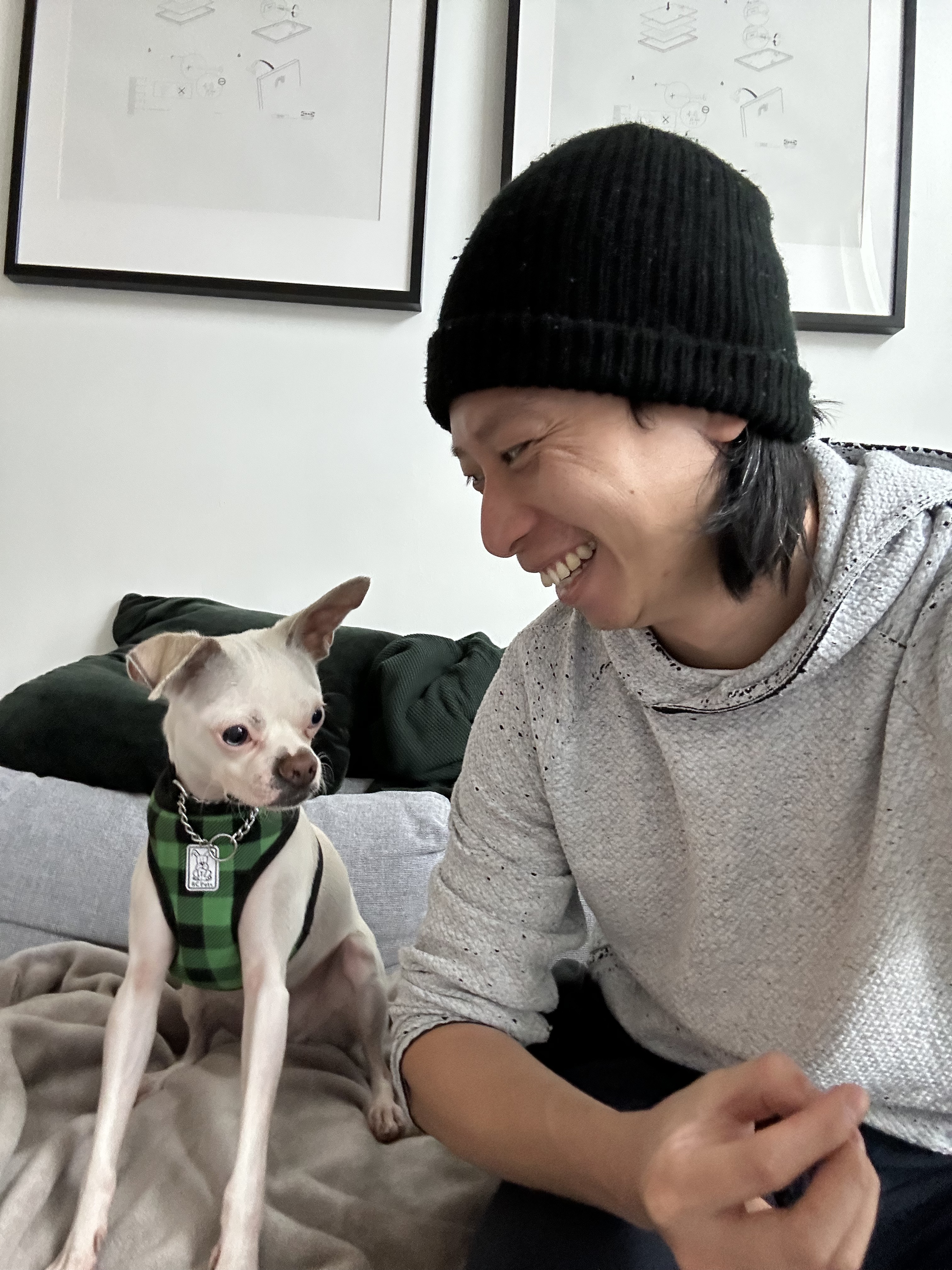
From the moment he entered our home, it was as if everything clicked. He knew he was in his new home. Many rescue dogs are nervous or even standoffish when they first meet their new owners, but not Petey. Perhaps guided by the spirit of Michael, he was immediately comfortable, curling up in our laps and making himself home. We knew we needed to train him and there was a lot of work ahead, but one thing was clear: he knew he had found his family.
This is Petey’s story. A dog who escaped a dire situation, and now, he’s ready to take on the world… but first, he needs to get over his trauma. This is the start of his journey to being the best dog he can be.
Stay tuned for more updates on Petey!
Join my YouTube community for insights on writing, the creative process, and the endurance needed to tackle big projects. Subscribe Now!
For more writing ideas and original stories, please sign up for my mailing list. You won’t receive emails from me often, but when you do, they’ll only include my proudest works.
 Elliot Chan