Triathlon, for me, often feels like a selfish act. I train to get faster. I work out for my mental health. For my physical health. Because it’s my hobby—my escape. I race to beat my last time, to check a box, to prove something to myself. Most of what I do, I do for me. And I don’t think there’s anything wrong with that.
We’re often told that everything we do should serve a greater good—that if something doesn’t benefit others, it’s not worth doing. But there’s value in doing something simply because it lights you up. Motivation matters. Not everything needs to be for something.
That said, sometimes tying your effort to something larger than yourself is exactly what keeps you going. When you’re exhausted, or stuck, or unmotivated, a deeper purpose can pull you through.
Pain can drive you, too.
A month after my dog Michael passed away, I ran my first half marathon. I was overwhelmed with emotion at the finish. It hurt to keep going—but I kept going, and it meant something.
Michael’s death was sudden.
I’d gone out for a swim that rainy evening, and by the time I got changed and rushed home, he was already gone. We learned he had an undetected tumor near his heart. It burst, and within hours, he was gone. There was nothing we could have done.
I still think about how I was off training—doing something for myself—when he left.
We only have so much time to do the things we want to do. Life is fragile—and it’s not just death that can take things from us. Injury, burnout, financial hardship, obligations—they can all pull us away from the life we imagined.
In stoicism, there’s a phrase for this: memento mori. Remember, you must die. When you carry that awareness with you, it creates urgency. You want to make the most of each day.
This summer, I signed up for a few races leading up to my second Olympic-distance triathlon. I’ve got two open water swims and my first-ever bike race: the Cypress Challenge, a climb up Cypress Mountain. It’s not just any ride—it’s an event that raises money for BC Cancer and brings attention to pancreatic cancer.
Any contribution is deeply appreciated. Donate here!
Now, please enjoy a couple of hill repeats with me up Queen Elizabeth Park, on this beautiful cherry blossom day.
Enjoy the ride.
Join my YouTube community for insights on writing, the creative process, and the endurance needed to tackle big projects. Subscribe Now!
For more writing ideas and original stories, please sign up for my mailing list. You won’t receive emails from me often, but when you do, they’ll only include my proudest works.
I knew triathlon training this season would be tough, but you never really know how tough until you’re in it. One thing that’s made this block especially challenging is Petey, our new rescue dog. He’s well on his way to becoming a great, obedient training partner, but the fear and stress from being abandoned on the side of the highway and his time in the shelter don’t fade overnight. We’re working with him patiently, step by step.
Our goal is to eventually leave him home alone for a few hours, but we’re not there yet. While we could leave him with someone we trust, we’re still nervous—especially about how he might react early in the morning. As devoted helicopter dog parents, we’re trying to strike a balance. Sadly, the world can’t stand still and wait.
Right now, that means adding Petey’s training to mine. Alongside preparing for my race, we’re also helping him get used to new experiences so he can join us at the event. We decided the best approach—for me, my wife, and Petey—is to go to the race together.
We know the environment could be overwhelming for him, but with gradual exposure, a little structure, and a lot of treats, we think we can make it a positive experience.
So, we set up a trial run. I signed up for a 5K at Rocky Point in Port Moody—the same place my wife and I got married. It’s a special spot for us, and now it’s tied to a new memory: Petey’s first race.
It was a small, inaugural event, which meant fewer people and a manageable crowd. After a warm-up walk, I headed to the start line while Petey busied himself sniffing a bush. Then it was up to my wife to keep him company—and for me to focus on the run.
I didn’t have a strict goal going in—this was mostly about training Petey—but I figured, why not aim for a personal record? My last 5K in 2023 was 25 minutes and 2 seconds. Those 2 seconds bugged me. So anything under 25 felt like a solid target.
I did it! Finished in 24 minutes and 1 second. Just shy of the minute mark—next time, maybe. Still, it was a strong run, especially on a hillier course than I expected. That’s a great sign heading into my upcoming sprint triathlon.
And Petey? He did amazing. Which really means my wife did amazing. She kept him calm the whole time I was running. A few months ago, having him in this kind of environment seemed out of the question. But today gave us hope. It was one more step closer to having a life filled with fun and adventures.
Of course, this was just a test—a short run. A triathlon is a whole different beast: longer, more chaotic, and way more logistically intense. It’ll be a challenge. But that’s the point, right?
Thank you for joining us on this run. I’ll see you in the next one.
Join my YouTube community for insights on writing, the creative process, and the endurance needed to tackle big projects. Subscribe Now!
For more writing ideas and original stories, please sign up for my mailing list. You won’t receive emails from me often, but when you do, they’ll only include my proudest works.
I think a lot about how momentum works. Not just in training—although yeah, I do love a good triathlon—but in creativity too.
When I’m training for a triathlon, I’m not just running every day. I swim. I bike. And I run. Each discipline works different muscles, keeps things fresh, and somehow… they all support each other. Like, I come out of a bike ride with stronger legs for the run.
And that’s kinda how I’m approaching my creative life too.
I don’t just write. I don’t just draw. I don’t just make videos. I move between all of them—and doing that actually helps me stay motivated and inspired. If I’m stuck in one, I switch to another. If I’m tired of reading, I pull out my camera. If I can’t sit down to draw, I cut up footage and express my creativity in a whole new way.
So today, I’m sharing something I call the Creative Triathlon. It’s a predetermined length of focused time on three different creative practices: illustrating, video creation, and writing. One discipline at a time. No pressure. No multitasking. Just a way to find time to do what you enjoy.
First leg: illustration. For the past 4 years, I’ve been working on this massive personal project—drawing every single Pokémon. Yeah. All of them. It’s been slow-going, not because I don’t love it, but because finding the time is hard. Life piles up. Other projects take priority. And as strange as it sounds, drawing Pokemon doesn’t pay the bills.
But when I do this creative triathlon, it forces me to carve out time for it. Even just 25 minutes. And honestly? It’s kind of like swimming. At first, it takes a while to get ready. But once I start? I don’t want to stop. It’s peaceful. It’s focused. And there’s something really satisfying about seeing one more little creature take shape.
This leg always reminds me why I started this project in the first place: because I love it. Because it brings me back to that kid part of myself that used to draw these things on notebooks.
I’m almost at 1000 Pokemon. I really want to finish before they add more. If you are interested in see the rest, check out this video in the cards and the instagram in the link in the description.
Second leg: video creation. Right now, I’ve been making a series of YouTube Shorts where I highlight key takeaways from books I’ve read. It’s honestly become one of my favorite creative outlets.
What I love about it is that it’s a true mashup of all my past-time activities—reading, thinking, writing, editing—it all comes together in these tiny videos. It makes everything I do feel active. Reading no longer feels like a passive intake of ideas. By turning it into a video, I get to spend more time with what I’m reading. I get to sit with the concepts, rephrase them, visualize them. And because of that, the lessons stick. They become part of me. A little snapshot of my life.
Video creation is great that way. It lets you experience your own thoughts in a completely new medium. You go from absorbing to articulating, from quiet reflection to something that moves and speaks. Seeing an idea come to life on screen—it just never gets old.
Final leg: writing. I’m currently editing the fifth draft of the first book in a trilogy I’ve been working on for years. And yeah—it’s a slog. A meaningful one, but a slog nonetheless.
It’s such a big project that most days, I’m just chipping away at it. I don’t always see progress. There’s no big “aha” moment, no flashy breakthrough. It’s slow, repetitive work. And honestly, it feels a lot like running. Not a sprint—a marathon. You get tired. You want to stop. But you don’t, because the work is worth it. The fatigue is part of the point. It’s what builds endurance. It’s what makes the story matter.
Working on something this big, this long—it becomes part of your life. It’s something you carry. And the beautiful thing about creativity is that it’s not like sports… there’s no finish line in the same way. It doesn’t end. But that’s why I love this Creative Triathlon practice—because it does give me small finish lines.
Instead of focusing on finishing the book, I just focus on finishing a session. That’s it. One 25-minute block. And when it’s done, I get this little burst of relief, a sense of accomplishment. Like I’ve closed a loop. It’s such a good feeling—being able to look back at my day and say, “I did something today.” No guilt. No disappointment.
So that’s my Creative Triathlon. Three disciplines, 25 minutes each for me today. It could be more on other days, but today was only 25 minutes. Which is enough to get a good chunk of work done. Know this, though, it’s not about finishing a masterpiece in an hour and a half—it’s about movement. It’s about momentum.
Just like in a real triathlon, each leg has its own rhythm. Some feel strong. Some feel slow. But they all carry me forward.
If you’re someone who loves multiple creative things—or if you’re feeling stuck—try this. Treat your creativity like a triathlon. Mix it up. Work different muscles. Let each practice breathe new life into the others.
Thanks for hanging out with me today. If you decide to try your own Creative Triathlon, let me know how it goes! And if you already have a different combo that works for you—maybe it’s music, painting, and cooking—drop it in the comments. I’d love to hear what you’re working on.
Join my YouTube community for insights on writing, the creative process, and the endurance needed to tackle big projects. Subscribe Now!
For more writing ideas and original stories, please sign up for my mailing list. You won’t receive emails from me often, but when you do, they’ll only include my proudest works.
Having completed “Right Thing, Right Now” by Ryan Holiday (Amazon), I want to highlight a chapter that stood out: “You Just Have to Be Kind”
As Kurt Vonnegut said, “There’s only one rule that I know of: Goddamn it, Joe, you’ve got to be kind.””
Be kind.
To the ones who serve you.
To the ones who frustrate you.
To those who falter, those who fall.
To the ones who follow you and the ones who came before.
To the ones you may never meet.
The history is filled with brilliant and successful people. You’ve probably encountered plenty. But how many truly kind people have you met? When we look back, one thing that never ages well is a lack of kindness.
The cruelty of mobs. The selfishness of leaders. The way whole groups of people were dismissed, diminished, denied their humanity.
It’s true: There is no leader who has not faced frustration. There is no wise person who has not endured foolishness. There is no good person who has not been wronged.
This is the way of the world.
But it is our strength, our wisdom, our decency that obligates us to be kind anyway.
You never know what someone is carrying. You never know how far a small kindness might ripple. But that’s not why we do it.
We do it because as Vonnegut puts it, it’s the only goddamn rule there is.
For more writing ideas and original stories, please sign up for my mailing list. You won’t receive emails from me often, but when you do, they’ll only include my proudest works.
Join my YouTube community for insights on writing, the creative process, and the endurance needed to tackle big projects. Subscribe Now!
When we talk about endurance sports, we often hear about battling through pain. So much of the sport is about pushing our limits, and it’s in that process where we truly improve. When it gets hard, that’s when we’re challenged. That’s when we discover who we are. That’s when we endure.
That’s when we prove to ourselves: we are not quitters.
Of course, this mindset isn’t just for sport. We can bring that kind of endurance to every part of life. Don’t give up on what you started. Follow through on what you said you’d do. As a creative, I know that struggle well. How many projects have I started only to abandon them halfway through?
In life and in triathlon, endurance is everything. When things get hard, scary, or painful, we have to push through. We have to keep going.
During this training block, I faced plenty of challenges—not just tough workouts, but all the resistance that comes with the sport. There are always reasons to stop.
Lately, I’ve been finding it hard to get on the bike for long rides. Not just because of the weather, but because of my schedule. This season doesn’t really allow me to be away for hours. And sure, I don’t need that long of a session for a sprint triathlon, but I still feel like I should be putting in the time. My new dog, my new job—life has been full, and it’s been keeping me off the bike.
But I’m still enduring. And enduring sometimes means problem-solving. Last year, I relied on Zwift for convenient indoor training. When it stopped connecting to my bike, I tried Rouvy. But I wasn’t riding enough to justify the cost, so I cancelled. I thought I just had to tough it out with nothing but numbers on my watch, but that’s unnecessary suffering. I signed up for MyWhoosh last week, and suddenly, my excitement for biking returned.
Things go wrong. Equipment breaks. Problems arise. We have to endure that, too. This is the good kind of endurance—the kind that builds patience, confidence, resilience. Not just physical strength, but mental strength too.
Recently, my GPS watch started glitching. After just a year, the battery drains quickly, and the elevation tracking stopped working. I’m working with support to fix it, but it’s frustrating. When my gear isn’t working, my motivation drops. I love collecting data—tracking workouts, measuring progress. When the metrics are off, everything feels off. It’s like playing hockey with dull skates. But I kept going anyway. And good news: I discovered Strava has a “Correct Elevation” feature, so even if my watch is wrong, I can fix it.
This is what endurance really looks like—dealing with the little things. Because when you don’t deal with them, they pile up. It’s like cleaning your house—if you clean as you go, it’s easy. If you don’t, it becomes a mess. Maybe even a hoarder-level mess.
Good endurance is good habit. It’s confidence. It’s delayed gratification.
But not all endurance is good.
Bad endurance is ego. It’s pushing through when you shouldn’t. It’s training through injury. It’s ignoring your mind and body. It’s refusing to fuel or rest properly. It’s bottling up your feelings. It’s not asking for help when you need it.
Bad endurance is thinking you’re strong for holding your hand to the flame. Sure, it might impress someone in the short term—but long term, it only burns you. Physically, mentally.
Bad endurance is staying in toxic relationships or jobs. It’s putting up with bullying and gaslighting. That kind of endurance doesn’t make you stronger—it chips away at you. It erodes your confidence. It delays your healing.
After everything I’ve been through these last few years, I’m learning what’s worth enduring and what isn’t. What makes me stronger, and what just does damage. What’s worth waiting for, and what isn’t.
Triathlon is an endurance sport—but that doesn’t mean you should endure everything. There’s good endurance, and there’s bad endurance.
I remind myself of this whenever I feel like quitting. I take a moment to reflect on what’s really stopping me. Am I avoiding a problem I could solve? Am I just making an excuse? Or am I actually being fair and reasonable with myself?
That said, training is going well. After a few speed bumps with my health, I’m feeling good. So I’m trying something new: riding across the Lion’s Gate Bridge into West Van, down to Ambleside Beach. It was my first time doing that route, and let me tell you—the descent off the bridge is way steeper than I expected. But I stayed calm. I didn’t stop. I managed the panic.
And that, to me, is good endurance.
For more writing ideas and original stories, please sign up for my mailing list. You won’t receive emails from me often, but when you do, they’ll only include my proudest works.
Join my YouTube community for insights on writing, the creative process, and the endurance needed to tackle big projects. Subscribe Now!
This is my third year training for triathlon. So many things that once felt new now feel like routine—but that doesn’t mean they feel old. A training plan stretches across months, and because life keeps moving—your schedule shifts, your body changes, the world changes around you—none of it ever stays the same. It’s like that saying: you never step into the same river twice. Even if the actions—swimming, cycling, running—are familiar, the route, the time of day, the body you’re moving in… none of it is exactly as it was before.
My body is in constant flux. Some days it’s tired, others it’s fresh. Sometimes I ache. Sometimes I feel strong.
Life throws a mix of old and new challenges. Things I’ve done before and continue to refine, and things I’m encountering for the first time. This season, like clockwork, allergies hit me hard. Hay fever, maybe a cold too—right during the week I had off before starting a new job. Not ideal timing.
The new job has been exciting—a fresh challenge, new systems to learn, new people to meet. It’s energized me, but it’s also demanded my focus, and that’s meant training has taken a back seat some days.
And then there’s Petey, our new rescue dog. It’s been three months now, and while he’s adjusting well, he doesn’t exactly make triathlon training easier. Every day is a puzzle of syncing his needs with mine and my wife’s schedules. On top of that, we’re trying to figure out what to do with him on race day—we don’t think we can leave him alone for that long. Ideally, we’d bring him with us.
That means, in a way, he’s training too. We’re slowly getting him used to more stimulating environments—other people, other dogs—but more importantly, we’re helping him get used to me leaving him. That’s been the hardest part. On walks, if I duck into a store or step away, he panics. So we’re working on that—teaching him to stay calm when I leave, helping him understand that I always come back. Patience, consistency, and making those moments feel safe are key.
There’s a lot going on. At times, more than I feel I can juggle. Priorities shift day to day. But strangely, all of this has helped me stay present. When I do get to train, it feels even more meaningful. Something I look forward to. Something that feels like mine.
I’ve done triathlon before. I’ve even raced this upcoming course before. But nothing about this season feels the same—and that’s what makes it thrilling.
Like today. I’m riding out to Burnaby to do what I call the Brentwood loop. I grew up in Burnaby North—a suburb just outside Vancouver—and this area is so familiar to me. But every time I return, something’s different. New buildings, new shops, new roads—but also, pieces of it stay the same.
Things shift—over years, over days, even from one moment to the next. One second it’s sunny, the next it’s raining. That’s just how it goes.
So: enjoy the ride.
For more writing ideas and original stories, please sign up for my mailing list. You won’t receive emails from me often, but when you do, they’ll only include my proudest works.
Join my YouTube community for insights on writing, the creative process, and the endurance needed to tackle big projects. Subscribe Now!
It’s been over three months since we adopted Petey from the shelter. When we first brought him home, we had an idea of what he’d been through and knew he had a lot of healing to do. But day to day, the progress was hard to see.
Now, looking back, it’s incredible to see how far he’s come in such a short time. It gives us so much hope that he can grow into his full potential—confident, obedient, and chill.
Of course, it’s still a work in progress, and there’s a long way to go. But at the three-month mark, there’s already so much to celebrate.
They say three months is a big milestone for a shelter dog—it’s when they start feeling truly comfortable in their new home, and their real personality starts to shine through.
And while we’ve seen some major wins in his behavior, the biggest surprise? His physical transformation.
Physical Changes:
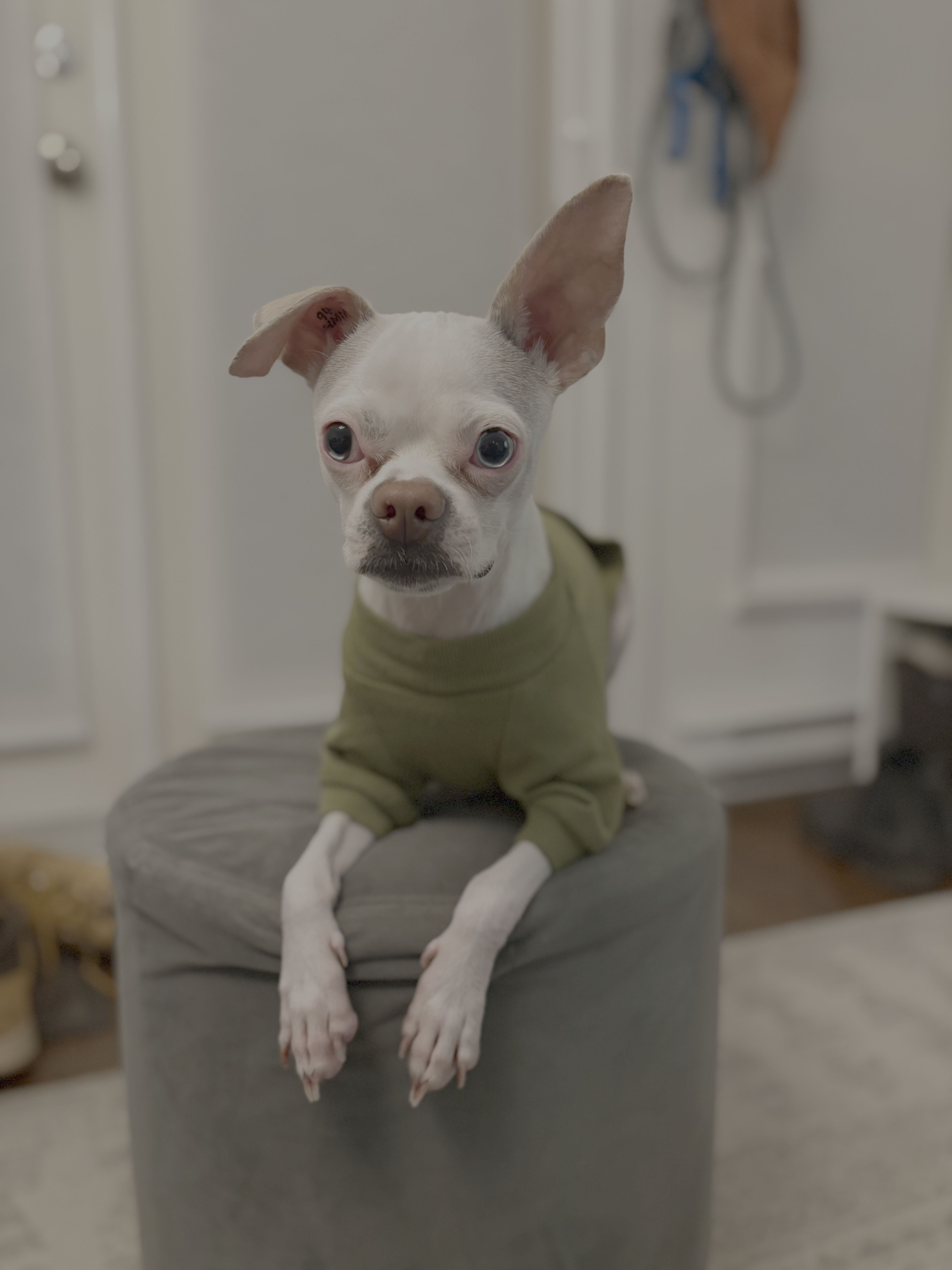
When we first brought Petey home, he was emaciated—you could literally see the stress and anxiety on his face. He was always on high alert like some paranoid drug addict. On top of that, he had these concerning rashes on his elbows.
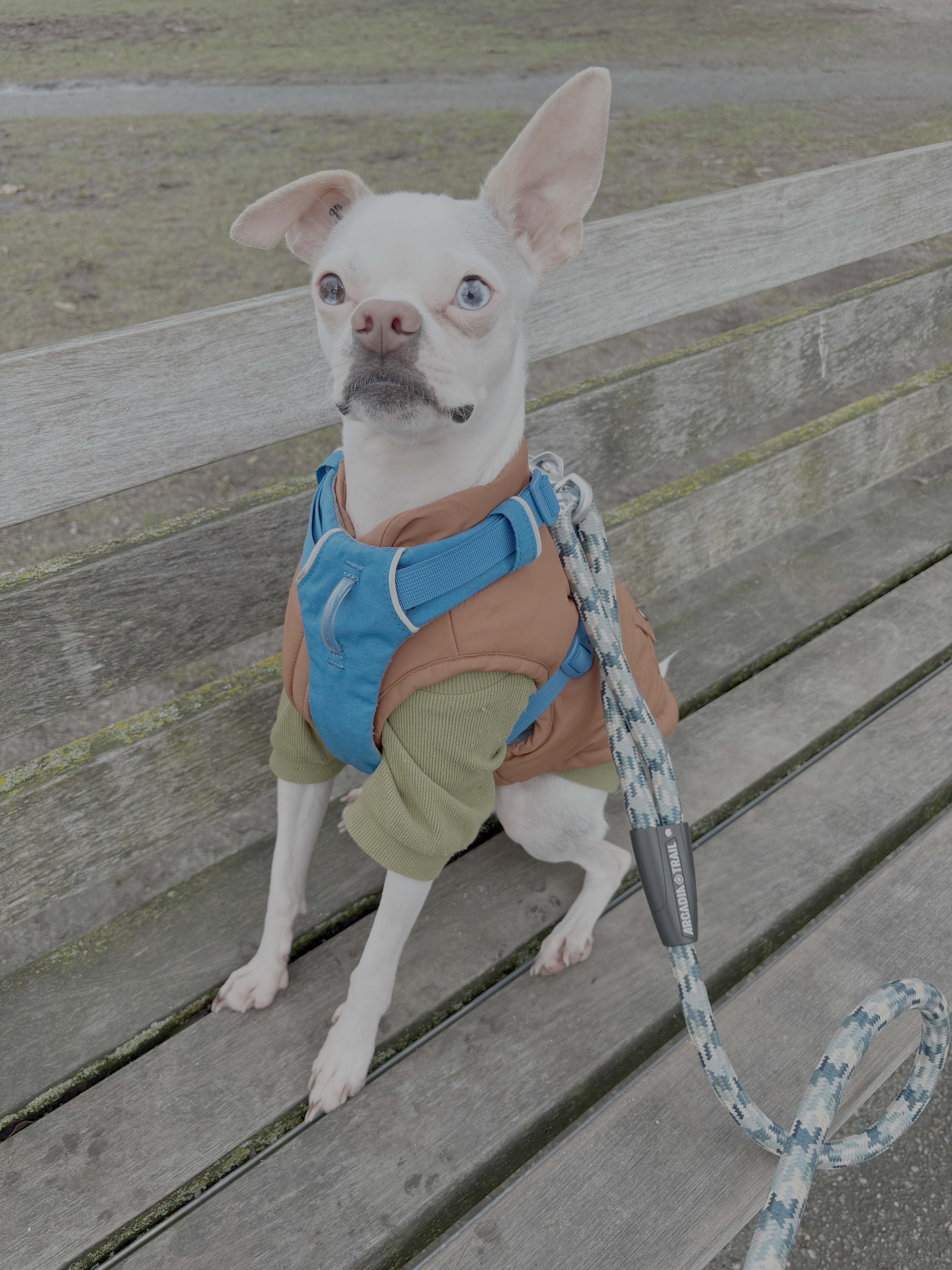
Petey doesn’t have a lot of hair, so his skin is extra vulnerable, but the rashes didn’t seem like they were from rubbing against anything. The vet recommended an elimination diet and prescribed a medical shampoo for his baths. We also got him some clothes—not just to protect him from the elements, but to stop him from licking himself raw.
Now, at the three-month mark, Petey has never looked better. He’s filled out, his face looks noticeably less stressed, and even the bags under his eyes have lightened—though he still has those signature Steve Buscemi eyes. His hair has thickened up a bit (even in the places we thought he couldn’t grow hair), and most importantly, the rashes on his elbows are completely gone.
We’re not 100% sure what did the trick—whether it was allergies, bacteria, or just the stress—but I’m leaning toward a bacterial infection. So, as much as he hates bath time, those medicated washes probably made the biggest difference.
Barking at Noises
Over the past three months, Petey has made huge progress when it comes to dealing with noises—whether it’s sounds from the alley, the hallway, or even the TV.
When we first brought him home, things like garbage trucks beeping or our neighbors coming and going would send him into a meltdown. In those early weeks, he’d bark like crazy and take anywhere from 10 to 30 minutes to calm down—which was frustrating.
But now? He still hears the sounds, but instead of instantly reacting, he actually pauses and thinks about it. And if he does decide to bark, we can stop him with just our voices and redirect him to something else.
That’s a huge win. It gives us hope that, soon enough, these noises won’t even phase him—he’ll be completely used to it.
Biting Blankets and Cushions
Petey loves biting soft things. But he also loves relaxing on soft things. And, well, that creates a bit of a dilemma.
In the first two months, he was fixated on chewing blankets and cushions. We got him a bed, but he just kept biting it—so we had to take it away. It was one of the biggest signs that he couldn’t be trusted alone.
To curb the destruction, we tried a chew-prevention spray—basically just bitter flavoring. Did it work? Yes, for a bit, but it wasn’t a permanent solution.
Fast forward to today, and while Petey still has the occasional urge to chew, the difference is that now, when we tell him to stop, he actually listens. That’s a huge milestone. Before, I’d have to physically block him, which would just make him double down—his “shelter brain” would kick in, and sometimes, in the chaos, he’d bark, jump, and snap at me.
Now, the only time he really goes for our stuff is when he’s chewing one of his toys and—by pure coincidence—a cushion or a blanket corner ends up in his mouth. At that point, the temptation is just too strong. But even then, we can call him off with just our voices.
Most recently, we’ve introduced the bed back into the equation and while he still has the urge to bite it, there are also occasions where he is able to control himself enough so that he is able to lie down and even take a nap in it.
That’s huge progress.
Being Left Alone
Probably the biggest struggle with Petey right now is leaving him alone.
He has a lot of trauma from being locked in a crate, and if we put him in one, it takes just a few seconds before he starts freaking out. We can extend it to a few minutes with a Kong. But even just closing him in a room is a challenge. We set up a camera to see what he does when the door is shut, and… yeah, he just jumps at the door over and over until he’s exhausted.
This is one area where, honestly, we haven’t made a ton of progress. We worry about him getting himself into trouble—or worse, annoying the neighbors with his constant yapping.
So, we’re taking it slow. Little by little.
We’ll leave him in the living room while we work in our offices—he’ll nap on the couch while we do. He’s fine when we step away for a bathroom break. And occasionally, we’ll step outside to throw out the garbage while he stays in the living room.
It’s going to take patience—on both sides. But lately, thanks to some afternoon naps together, Petey has started to chill out a bit. There have even been times when he takes himself to the bedroom to rest on his own. We have faith that as he develops more confidence, he’ll start seeking more opportunities to be independent.
While there is no hard date. We do have a timeline—there’s going to come a day when we have to leave him alone. So, we’re really hoping the next three months bring more progress than the first three. Fingers crossed.
Walks
When we first got Petey, walks were a whole thing.
The smallest things would spook him—someone walking down the street, a shadow from a tree, kids playing, a random bang from the construction site down the block. But nothing freaked him out more than other dogs.
In the past three months, he’s gotten way better with people walking by and random noises. And for the most part, he can handle dogs in the distance. What he can’t handle? A dog—or even a person—coming too close to our home. If another dog walks by our gate, he gets territorial, barking and charging like a little maniac.
One time, he actually pulled out of his leash on me—and I swear, that was the most terrified I have ever been in my entire life. Luckily, we both survived that ordeal. And honestly? We both grew from it.
The key on walks has been constant treats. The more he’s enjoying himself, the less likely he is to freak out. But we’ve still got work to do—especially when I’m walking him with my wife, and one of us has to duck into a store. That situation? Still a struggle.
The best part, though? I’ve started taking him on some runs. It’s not the most efficient workout for me yet, but I know it’s something we can keep practicing and get better at over time.
The Most Cuddly Boy
If there’s one thing we’ve learned about Petey in the past three months, it’s that he is one of the cuddliest dogs I’ve ever met—and honestly, we couldn’t be happier about it. He’s only gotten more cuddly over time, and it’s clear this isn’t just a phase. This is who he is.
And to think—at the shelter, there were discussions to euthanize this sweet guy. It’s almost unbelievable when I look at him now.
Petey is just this happy, fun-loving guy. If it weren’t for the rough start he had in life, he’d be an all-star dog. He’s super smart, pure-hearted, and the longer we have him, the more he reminds us of our first dog, Michael.
Like Michael, Petey is part Boston Terrier, and we’re starting to see those traits shine through. It feels like Michael’s spirit is guiding Petey in some way—and that thought just fills us with so much joy.
When I look at Petey in profile, I see Michael. It’s crazy how this dog found us, just like we found him. It couldn’t have worked out more perfectly for all three of us.
These past three months have been challenging, frustrating, and exhausting at times—but watching him heal, seeing his progress, and knowing how far he’s come? That makes it all worth it. We couldn’t be more proud.
Join my YouTube community for insights on writing, the creative process, and the endurance needed to tackle big projects. Subscribe Now!
For more writing ideas and original stories, please sign up for my mailing list. You won’t receive emails from me often, but when you do, they’ll only include my proudest works.
Before we talk about Black Museum, let’s flashback to when this episode was first released: Dec 29, 2017.
In 2017, the rise of dark tourism—traveling to sites tied to death, tragedy, or the macabre—became a notable cultural trend, with locations like Mexico’s Island of the Dolls, abandoned abandoned hospitals and prisons drawing attention. Specifically, Chernobyl saw a dramatic increase in tourists, with around 70,000 visitors in 2017, a sharp rise from just 15,000 in 2010. This influx of visitors contributed approximately $7 million to Ukraine’s economy.
Meanwhile, in 2017, the EV revolution was picking up speed. Tesla, once a trailblazer now a company run by a power-hungry maniac, launched the more affordable Model 3.
2017 also marked a legal dispute between Hologram USA and Whitney Houston’s estate. The planned hologram tour, aimed at digitally resurrecting the iconic singer for live performances, led to legal battles over the hologram’s quality. Despite the challenges, the project was eventually revived, premiering as An Evening with Whitney: The Whitney Houston Hologram Tour in 2020.
At the same time, Chicago’s use of AI and surveillance technologies, specifically through the Strategic Subject List (SSL) predictive policing program, sparked widespread controversy. The program used historical crime data to predict violent crimes and identify high-risk individuals, but it raised significant concerns about racial bias and privacy.
And that brings us to this episode of Black Mirror, Episode 6 of Season 4: Black Museum. Inspired by Penn Jillette’s story The Pain Addict, which grew out of the magician’s own experience in a Spanish welfare hospital, the episode delves into a twisted reality where technology allows doctors to feel their patients’ pain.
Set in a disturbing museum, this episode confronts us with pressing questions: When does the pursuit of knowledge become an addiction to suffering? What happens when we blur the line between human dignity and the technological advancements meant to heal? And what price do we pay when we try to bring people back from the dead?
In this video, we’ll explore the themes of Black Museum and examine whether these events have happened in the real world—and if not, whether or not it is plausible. Let’s go!
Pain for Pleasure
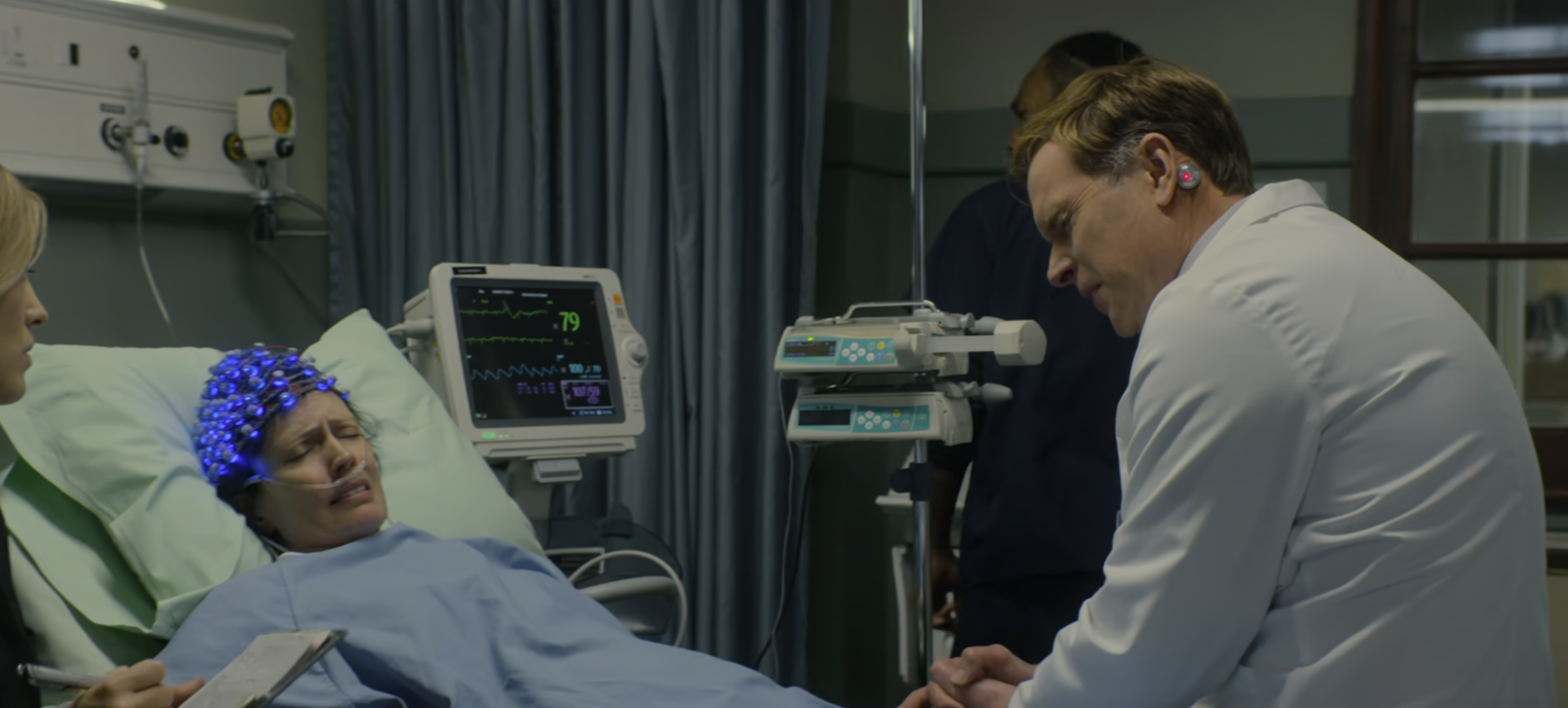
As Rolo Haynes guides Nish through the exhibits in the Black Museum, he begins with the story of Dr. Peter Dawson. Dawson, a physician, tested a neural implant designed to let him feel his patients’ pain, helping him understand their symptoms and provide a diagnosis. What started as a medical breakthrough quickly spiraled into an addiction.
Meanwhile, in the real world, scientists have been making their own leaps into the mysteries of the brain. In 2013, University of Washington researchers successfully connected the brains of two rats using implanted electrodes. One rat performed a task while its neural activity was recorded and transmitted to the second rat, influencing its behavior. Fast forward to 2019, when researchers linked three human brains using a brain-to-brain interface (BBI), allowing two participants to transmit instructions directly into a third person’s brain using magnetic stimulation—enabling them to collaborate on a video game without speaking.
Beyond mind control, neurotech has made it possible to simulate pain and pleasure without physical harm. Techniques like Transcranial Magnetic Stimulation (TMS) and Brain-Computer Interfaces (BCIs) let researchers manipulate neural activity for medical treatment.
AI is actively working to decode the complexities of the human brain. At Stanford, researchers have used fMRI data to identify distinct “pain signatures,” unique neural patterns that correlate with physical discomfort. This approach could provide a more objective measure of pain levels and potentially reduce reliance on self-reported symptoms, which can be subjective and inconsistent.
Much like Dr. Dawson’s neural implant aimed to bridge the gap between doctor and patient, modern AI researchers are developing ways to interpret and even visualize human thought.
Of course, with all this innovation comes a darker side.
In 2022, Neuralink, Elon Musk’s brain-implant company, came under federal investigation for potential violations of the Animal Welfare Act. Internal documents and employee interviews suggest that Musk’s demand for rapid progress led to botched experiments. As a result, many tests had to be repeated, increasing the number of animal deaths. Since 2018, an estimated 1,500 animals have been killed, including more than 280 sheep, pigs, and monkeys.
When Dr. Dawson pushed the limits, and ended up experiencing the death of the patient, his neural implant was rewired in the process, blurring the line between pain and pleasure.
At present, there’s no known way to directly simulate physical death in the sense of replicating the actual biological process of dying without causing real harm.
However, Shaun Gladwell, an Australian artist known for his innovative use of technology in art, has created a virtual reality death simulation. It is on display at the Melbourne Now event in Australia. The experience immerses users in the dying process—from cardiac failure to brain death—offering a glimpse into their final moments. By simulating death in a controlled virtual environment, the project aims to help participants confront their fears of the afterlife and better understand the emotional aspects of mortality.
This episode of Black Mirror reminds us that the quest for understanding the mind might offer enlightenment, but it also carries the risk of unraveling the very fabric of what makes us human.
In the end, the future may not lie in simply experiencing death, but in learning to live with the knowledge that we are always on the cusp of the unknown.
Backseat Driver
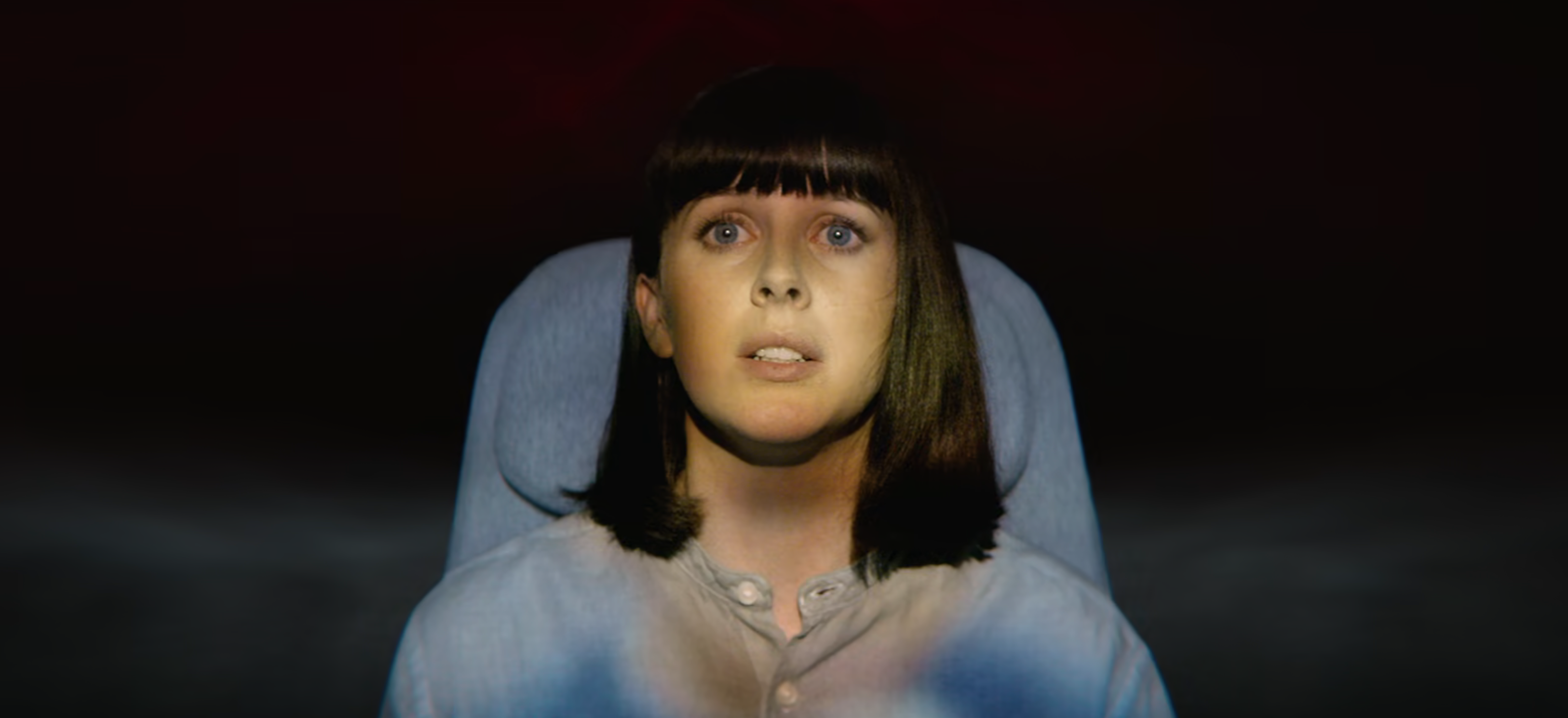
In the second part of Black Museum, Rolo recounts his involvement in a controversial experiment. After an accident, Rolo helped Jack transfer his comatose wife Carrie’s consciousness into his brain. This let Carrie feel what Jack felt and communicate with him. In essence, this kept Carrie alive. However, the arrangement caused strain—Jack struggled with the lack of privacy, while Carrie grew frustrated by her lack of control—ultimately putting the saying “’til death do you part” to the test.
The concept of embedding human consciousness into another medium remains the realm of fiction, but neurotechnology is inching closer to mind-machine integration.
In 2016, Ian Burkhart, a 24-year-old quadriplegic patient, made history using the NeuroLife system. A microelectrode chip implanted in Burkhart’s brain allowed him to regain movement through sheer thought. Machine-learning algorithms decoded his brain signals, bypassing his injured spinal cord and transmitting commands to a specialized sleeve on his forearm—stimulating his muscles to control his arm, hand, and fingers. This allowed him to grasp objects and even play Guitar Hero.
Another leap in brain-tech comes from Synchron’s Stentrode, a device that bypasses traditional brain surgery by implanting through blood vessels. In 2021, Philip O’Keefe, living with ALS, became the first person to compose a tweet using only his mind. The message? A simple yet groundbreaking “Hello, World.”
Imagine being able to say what’s on your mind—without saying a word. That’s exactly what Blink-To-Live makes possible. Designed for people with speech impairments, Blink-To-Live tracks eye movements via a phone camera to communicate over 60 commands using four gestures: Left, Right, Up, and Blink. The system translates these gestures into sentences displayed on the screen and read aloud.
Technology is constantly evolving to give people with impairments the tools to live more independently, but relying on it too much can sometimes mean sacrificing privacy, autonomy, or even a sense of human connection.
When Jack met Emily, he was relieved to experience a sense of normalcy again. She was understanding at first, but everything changed when she learned about Carrie—the backseat driver and ex-lover living in Jack’s mind. Emily’s patience wore thin, and she insisted that Carrie be removed. Eventually, Rolo helped Jack find a solution by transferring Carrie’s consciousness into a toy monkey.
Initially, Jack’s son loved the monkey. But over time, the novelty faded. The monkey wasn’t really Carrie. She couldn’t hold real conversations anymore. She couldn’t express her thoughts beyond those two phrases. And therefore, like many toys, it was left forgotten.
This raises an intriguing question: Could consciousness, like Carrie’s, ever be transferred and preserved in an inanimate object?
Dr. Ariel Zeleznikow-Johnston, a neuroscientist at Monash University, has an interesting theory. He believes that if we can fully map the human connectome—the complex network of neural connections—we might one day be able to preserve and even revive consciousness. His book, The Future Loves You, explores whether personal identity could be stored digitally, effectively challenging death itself. While current techniques can preserve brain tissue, the actual resurrection of consciousness remains speculative.
This means that if you want to transfer your loved ones’ consciousness into a toy monkey’s body, you’ll have to wait, but the legal systems are already grappling with these possibilities.
In 2017, the European Parliament debated granting “electronic personhood” to advanced AI, a move that could set a precedent for digital consciousness. Would an uploaded mind have rights? Could it be imprisoned? Deleted? As AI-driven personalities become more lifelike—whether in chatbots, digital clones, or neural interfaces—the debate over their status in society is only just beginning.
At this point, Carrie’s story is purely fictional. But if the line between human, machine, and cute little toy monkeys blurs further, we may need to redefine what it truly means to be alive.
Not Dead but Hardly Alive
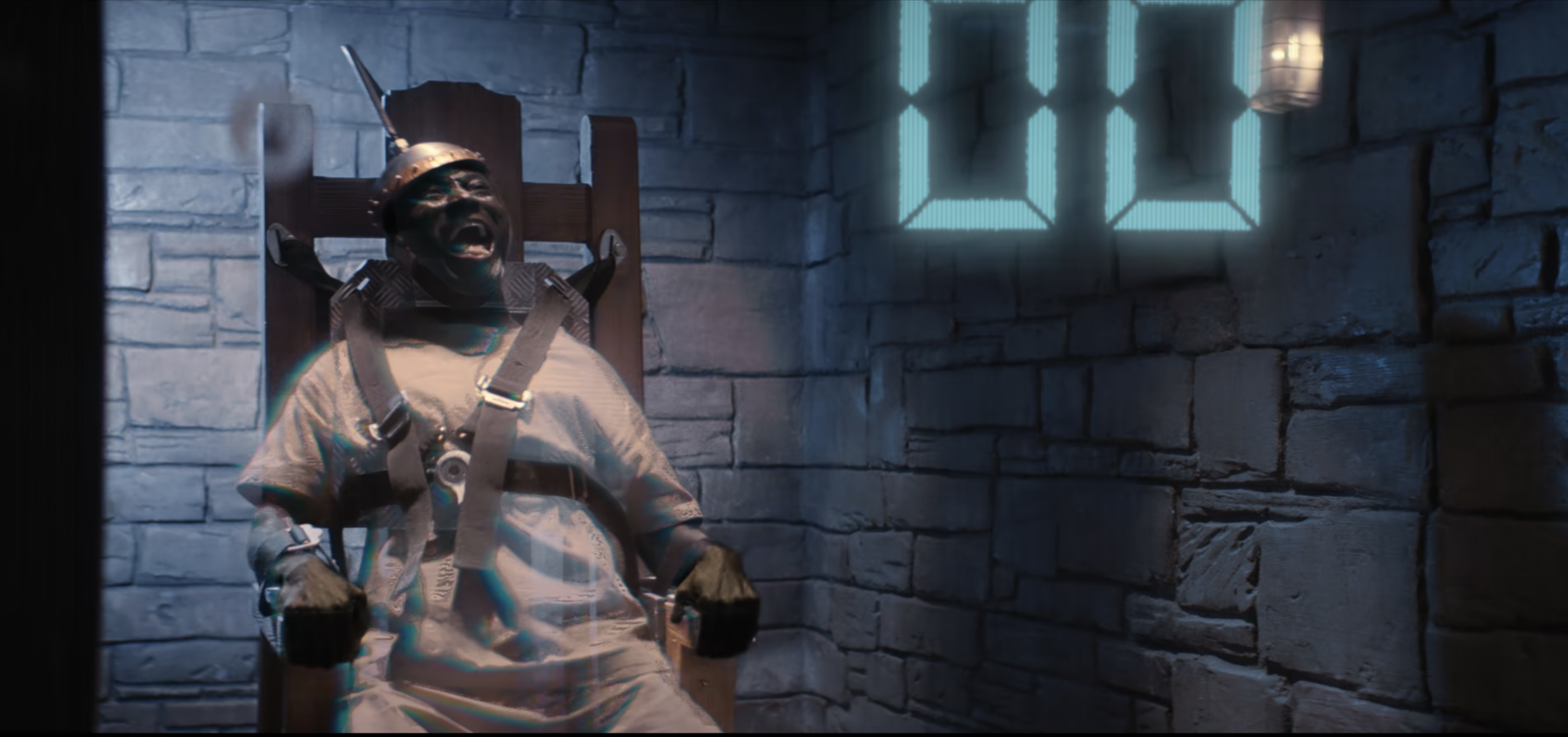
In the third and final tale of Black Museum, Rolo Haynes transforms human suffering into a literal sideshow. His latest exhibit? A holographic re-creation of a convicted murderer, trapped in an endless loop of execution for paying visitors to experience.
What starts as a morbid fascination quickly reveals the depths of Rolo’s cruelty—using digital resurrection not for justice, but for profit.
The concept of resurrecting the dead in digital form is not so far-fetch. In 2020, the company StoryFile introduced interactive holograms of deceased individuals, allowing loved ones to engage with digital avatars capable of responding to pre-recorded questions. This technology has been used to preserve the voices of Holocaust survivors, enabling them to share their stories for future generations.
But here’s the question: Who controls a person’s digital afterlife? And where do we draw the line between honoring the dead and commodifying them?
Hollywood has already ventured into the business of resurrecting the dead. After Carrie Fisher’s passing, Star Wars: The Rise of Skywalker repurposed unused footage and CGI to keep Princess Leia in the story.
The show must go on, and many fans preferred not to see Carrie Fisher recast. But should production companies have control over an actor’s likeness after they’ve passed?
Celebrities such as Robin Williams took preemptive legal action, restricting the use of his image for 25 years after his death. The line between tribute and exploitation has become increasingly thin. If a deceased person’s digital avatar can act, speak, or even endorse products, who decides what they would have wanted?
In the realm of intimacy, AI-driven experiences are reshaping relationships. Take Cybrothel, a Berlin brothel that markets AI-powered sex dolls capable of learning and adapting to user preferences. As AI entities simulate emotions, personalities, and desires, and as people form deep attachments to digital partners, it will significantly alter our understanding of relationships and consent.
Humans often become slaves to their fetishes, driven by impulses that can lead them to make choices that harm both themselves and others. But what if the others are digital beings?
If digital consciousness can feel pain, can it also demand justice? If so, then Nish’s father wasn’t just a relic on display—he was trapped, suffering, a mind imprisoned in endless agony for the amusement of strangers. She couldn’t let it stand. Playing along until the perfect moment, she turned Rolo’s own twisted technology against him. In freeing her father’s hologram, she made sure Rolo’s cruelty ended with him.
The idea of AI having rights may sound like a distant concern, but real-world controversies suggest otherwise.
In 2021, the documentary Roadrunner used AI to replicate Anthony Bourdain’s voice for quotes he never spoke aloud. Similarly, in 2020, Kanye West gifted Kim Kardashian a hologram of her late father Robert Kardashian. These two notable events sparked backlash over putting words into a deceased person’s mouth.
While society has largely moved beyond public executions, technology is creating new avenues to fulfill human fantasies. AI, deepfake simulations, and VR experiences could bring execution-themed entertainment back in a digital form, forcing us to reconsider the ethics of virtual suffering.
As resurrected personalities and simulated consciousness become more advanced, we will inevitably face the question: Should these digital beings be treated with dignity? If a hologram can beg for mercy, if an AI can express fear, do we have a responsibility to listen?
While the events of Black Museum have not happened yet and may still be a long way off, the first steps toward that reality are already being taken. Advances in AI, neural mapping, and digital consciousness hint at a future where identities can be preserved, replicated, or even exploited beyond death.
Perhaps that’s the real warning of Black Museum: even when the human body perishes, reducing the mind to data does not make it free. And if we are not careful, the future may remember us not for our progress, but for the prisons we built—displayed like artifacts in a museum.
Join my YouTube community for insights on writing, the creative process, and the endurance needed to tackle big projects. Subscribe Now!
For more writing ideas and original stories, please sign up for my mailing list. You won’t receive emails from me often, but when you do, they’ll only include my proudest works.
Fitting in my training these past few weeks has been a challenge. I’m transitioning jobs, which means juggling handovers and prepping for the new role. A part of my responsibility for the role I’m exiting is coordinating a video project, which means spending a couple of days on set. Add in waiting around for new gear deliveries, and my schedule has felt pretty out of my control.
And if that wasn’t enough—cue the bad weather. An atmospheric river is rolling through, so outdoor training? Not ideal. Plus, a few of my usual pools are closed for annual maintenance, making swim sessions even trickier to fit in.
With all this chaos, my training has definitely taken a backseat. But I’m still managing two workouts per discipline each week, thanks to a whole lot of flexibility—constantly shifting my schedule based on time, energy, and what’s actually available. Sometimes, that means doubling up on workouts.
Over the past couple of weeks, my biggest workouts have been a 30-minute run test and an 800-meter swim test. I covered 5.65 km in 30 minutes, averaging a 5:19 pace on the run. For the swim, I finished 800m in 17:47, which breaks down to 2:13 per 100m.
As for the bike… I should probably do a new FTP test. My Coros watch says 204 watts, and that seems about right—but it wouldn’t hurt to check.
Right now, swimming is easily my favorite—it feels like a little escape. Since it takes some effort just to get to the pool, by the time I finally dive in, everything else just fades away.
Running, on the other hand, is the sport I’m squeezing in wherever I can. It’s the easiest to be flexible with, so I just fit it in when and where it works.
And cycling? Honestly, I’m not loving it lately. Between the weather and fatigue, I’ve been stuck riding indoors at night while my dog sleeps, and it’s just… boring. Not being able to ride outside hasn’t helped either. Hopefully, that changes once things settle down.
But if there’s one thing I’ve learned, it’s that flexibility is key. Not just for training, but for keeping triathlon sustainable with real life. Sometimes, that means doubling up—on workouts and daily tasks. If I’m driving to swim, I’ll grab groceries on the way back. I’m running or biking, I’ll plan a route that lets me run an errand.Training isn’t just about squeezing things in—it’s about making my life flow.
And flexibility isn’t just about right now—it’s about the whole year. It’s easy to stress about hitting every workout when it’s scheduled, but going too hard too soon leads to burnout. Right now, I’m just getting used to this new training load, setting a new baseline, and making sure that I can sustain this pace for the rest of the year.
This ride is a good example of all that. I biked from Mount Pleasant to Lumberman’s Arch in Stanley Park to help my wife return a race tag for a half marathon. It was a fun ride… until I had to weave through the seawall mid-race. But hey, that’s all part of being flexible.
Join my YouTube community for insights on writing, the creative process, and the endurance needed to tackle big projects. Subscribe Now!
For more writing ideas and original stories, please sign up for my mailing list. You won’t receive emails from me often, but when you do, they’ll only include my proudest works.
Finally back on the bike, and it feels so good. Starting a new training block, having a race to aim for—everything feels right. Even when the world seems like it’s spinning out of control, it’s such a relief to focus on my training. For a brief moment in this crazy life, I feel like I can take control back.
I remember why I started triathlon. Two years ago, during one of the darkest times in my life, I made the decision. It was the beginning of 2023, as we were finally coming out of the shadows of Covid and the world began to reopen. I had been locked up, living in a five-block radius, working in a windowless room. I was focusing all my energy on my creative projects and work, but it felt like the hours spent in front of a computer screen were slowly suffocating me.
I literally noticed that I was holding my breath for long periods while writing a stressful email or attending a Zoom call.
I lost 20 pounds. Looking back at pictures from that time, I was so thin and sickly that there’s no other way to describe it but to say I felt bad—physically and mentally bad.
Change is nothing new to me. I’ve gone through phases in my life. If you had asked me in 2019 if I’d ever do any of the three sports in a triathlon, I would’ve laughed it off, made a joke, and everyone would’ve been laughing along. But no, triathlon wasn’t even on my radar.
So how did it come to this? Before Covid, travel was my source of excitement. It was a huge part of who I was. I took two or three trips a year—flying on planes, exploring new places, tasting different foods, paying in different currencies. That was my thing.
When Covid hit, that travel bug was crushed. And unlike the cockroaches that can survive an apocalypse, the travel bug didn’t really come back. Sure, it would be fun to travel again, but I no longer had that intense desire. But I still needed something to look forward to, something I could work toward. I needed an activity that would regularly take me outside the house.
My wife became a big source of inspiration. She’s been a marathon runner for years, and she’d always tell me about the places she ran to. It blew my mind that, as a hobby, she could end up in totally different parts of the city. I wanted that for myself.
Triathlon turned out to be the perfect sport for me because it’s three sports in one. Training for a marathon means repeating the same activity every day, but triathlon is varied. Every day is different, and I love that.
Little by little, I started learning the three sports, having never done any of them before. The progress is steady, but it’s happening. What I love about riding, running, or swimming is that at the end of each session, I return home. Work, whether creative or professional, often feels like an endless grind. But sports have a sense of closure—a run, a ride, a swim, and then it’s done. And I feel good.
That good feeling has been a lifesaver these past couple of years. Life isn’t always easy, of course. But on a sunny day, when I’m out on a ride like this one, preparing for something ahead, it gives me a sense of hope. It’s a personal journey, but it fills me with a simple desire to keep living.
The world can be a scary place. There are people out there who aren’t kind. And when you’re on a bike, you sometimes feel that—like you don’t belong, or you’re in someone’s way, or even that you’re breaking the rules — when you’re not! But that’s just life. Even when the world wants me to feel bad, I don’t. I feel good.
Today’s a good day. This week’s a good week. And it’s the start of something great. We’ll get there. For now, I’m riding Ontario Street in Vancouver, one of the main north-south corridors that takes you from the seawall downtown to the Fraser River on Marine Drive. From there, you’re just a stone’s throw from the airport. This is my first time riding all the way south—a 65-block journey. Enjoy!
Join my YouTube community for insights on writing, the creative process, and the endurance needed to tackle big projects. Subscribe Now!
For more writing ideas and original stories, please sign up for my mailing list. You won’t receive emails from me often, but when you do, they’ll only include my proudest works.
 Elliot Chan