Before we dive into the events of Rachel, Jack, and Ashley Too, let’s flash back to when this episode first aired: June 5, 2019.
At CES 2019, a diverse range of innovative robots captured attention, from practical home assistants like Foldimate, a laundry-folding robot, to advanced companions such as Ubtech’s Walker and the emotionally expressive Lovot. Together, these robots laid the groundwork for future developments in consumer robotics.
When Charli D’Amelio joined TikTok in May 2019, she was just another teenager posting dance clips. But within weeks, her lip-sync and choreography videos were going viral. By July, her duets were spreading across the platform, and by the close of 2019, she had transformed from an unknown high schooler into a digital sensation with millions of followers.
On February 2, 2019, Fortnite hosted Marshmello’s virtual concert at the in-game location Pleasant Park. The event drew over 10.7 million concurrent players, breaking the game’s previous records.
In 2019, Taylor Swift’s public fight with Big Machine Records over the ownership of her master recordings exposed deep systemic issues, as Swift’s masters were sold without her consent, preventing her from controlling the use of her own music. In response, she began re-recording her early albums under the Taylor’s Version banner, starting with Fearless (Taylor’s Version) in 2021
In January 2019, Britney Spears abruptly canceled a highly anticipated show in Las Vegas. In April, Spears entered a mental health facility, sparking public concern and amplifying the #FreeBritney movement amid allegations of emotional abuse linked to her conservatorship.
All of which brings us back to this episode of Black Mirror—Season 5, Episode 3: Rachel, Jack, and Ashley Too.
The episode dives into the mechanics of digital fame—where algorithms hold the power, artists blur into avatars, and identity bends under the weight of technology. It asks: What happens when the spotlight is no longer earned but assigned? When music is stripped down and musicians reduced to assets? And, in the end, can we lose ourselves to the very machine that makes us visible?
In this video, we’ll explore the episode’s themes and investigate whether these events have already happened—and if not whether or not they are still plausible. Let’s go.
Connection by Algorithm
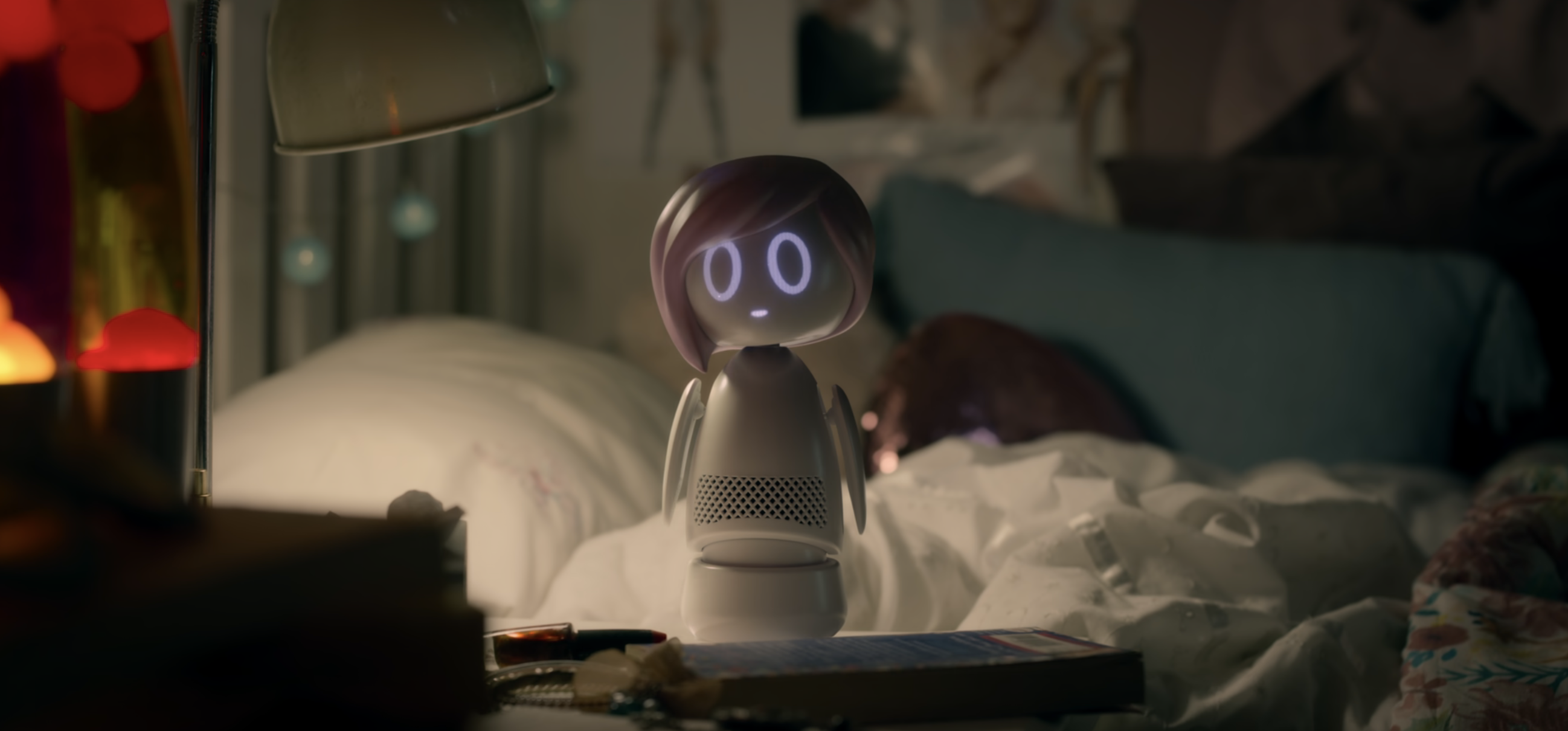
In this episode, we follow Rachel, a teenager struggling with the loss of her mother and looking for connection. In her search for belonging, Rachel grows attached to Ashley Too—a talking doll modeled after pop star Ashley O. She clings to it as both a friend and a channel to her idol.
AI companion apps have exploded in 2025, with more than 220 million downloads and $120 million in revenue projected for the year. Popular platforms now include Character.AI, Replika, Chai, and Kindroid, all offering lifelike interactions.
Even more effective than a friend, AI can now detect depression by analyzing data like daily activity patterns recorded by wearable devices.
A recent 2025 study from JMIR Mental Health found that an AI model called XGBoost could correctly identify if someone was depressed about 85% of the time. The AI looks at changes in sleep and activity rhythms. However, even with these advances, AI sometimes finds it hard to understand subtle emotions or the context of what a person is feeling.
In this episode, Rachel’s sister Jack—driven by jealousy, or perhaps genuine concern—hides Ashley Too, worried it’s “filling her head with crap.” Her skepticism mirrors a real-world fear: that leaning on digital companions can warp the grieving process.
Recent regulatory actions have begun addressing risks around AI companion apps. New York passed a law effective November 2025 requiring AI companion operators to implement safety measures detecting suicidal ideation or self-harm and to clearly disclose the non-human nature of the chatbot to users.
In the end, Rachel and her sister discover that the doll’s personality is intentionally restricted by an internal limiter, and when it is removed, the AI reveals a deeper consciousness trapped inside.
ChatGPT and similar AI models are increasingly used as therapy tools. A 2025 randomized controlled trial of the AI therapy chatbot “Therabot” reported clinically significant reductions in depression and anxiety symptoms, with effect sizes comparable to or exceeding some traditional treatments.
However, a study presented at the American Psychiatric Association’s 2025 meeting found human therapists still outperform ChatGPT in key therapy skills like agenda-setting, eliciting feedback, and applying cognitive behavioral techniques, due to their greater empathy and flexibility. Another thematic study of ChatGPT users found it provides helpful emotional support and guidance but raised concerns about privacy and emotional depth.
As technology grows more immersive and responsive, these digital bonds may deepen. Whether that’s a source of comfort or a cause for concern depends on how we balance connection, privacy, and the question at the heart of the episode: what does it really mean to be known?
Creativity, Rewired
Ashley O is a pop icon suffocated by the demands of her aunt and record label. She feels trapped as her true voice is silenced and her image squeezed into a marketable mold.
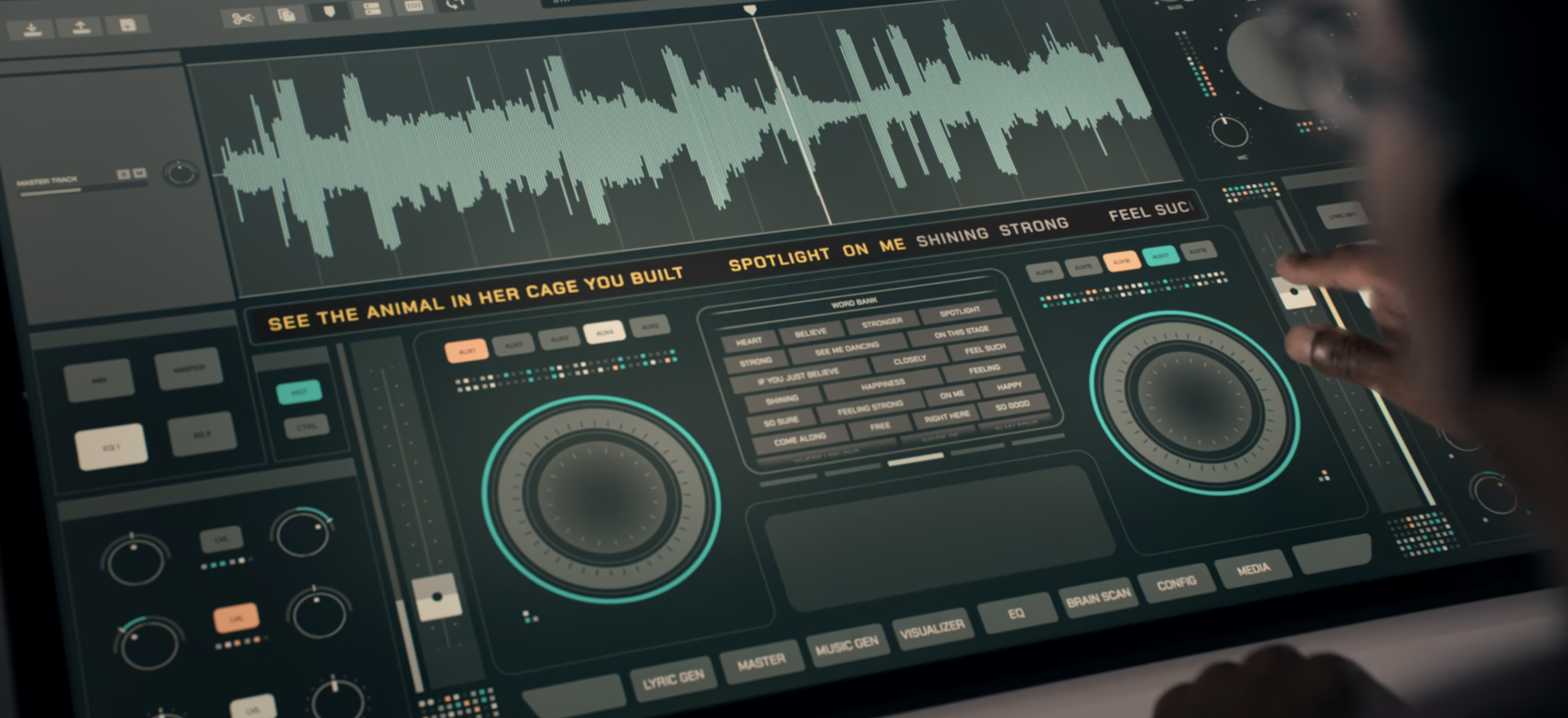
When Ashley is put into a coma, the producers crank up a machine to decode her brainwaves and extract new songs, pumping out tracks without her consent. A literal case of cookie-cutter artistry.
The Velvet Sundown is an AI-generated music project that emerged in 2025, debuting with two albums on Spotify and quickly sparking global discussion about the future of artificial creativity.
The project, created by an anonymous human creator, used AI tools like Suno for music generation, with style descriptions crafted by language models such as ChatGPT.
In June 2024, major record labels—including Sony Music, Universal Music Group, and Warner Records—filed lawsuits against AI music companies Suno and Udio, accusing them of large-scale copyright infringement. The labels alleged that the startups used their recordings without permission to train AI systems capable of generating new songs. Both companies denied wrongdoing, claiming their models create original works rather than copying existing recordings. The case remains ongoing as of 2025.
Legal and ethical challenges around AI-generated music are mounting. Unauthorized use of vocal clones or deepfakes has sparked heated debates on consent, ownership, and copyrights. Legal systems struggle to keep up. If a person shapes the AI’s output, copyright might apply—but it’s unclear how much input is enough. This gray area makes artist rights, licensing, and royalties more complicated.
Can creativity actually be replicated by machines, or does something essential get lost when all they do is measure patterns and output? As Ashley’s story shows, automated artistry might never replace the real thing—but it can easily outpace it.
Celebrity in a Cage
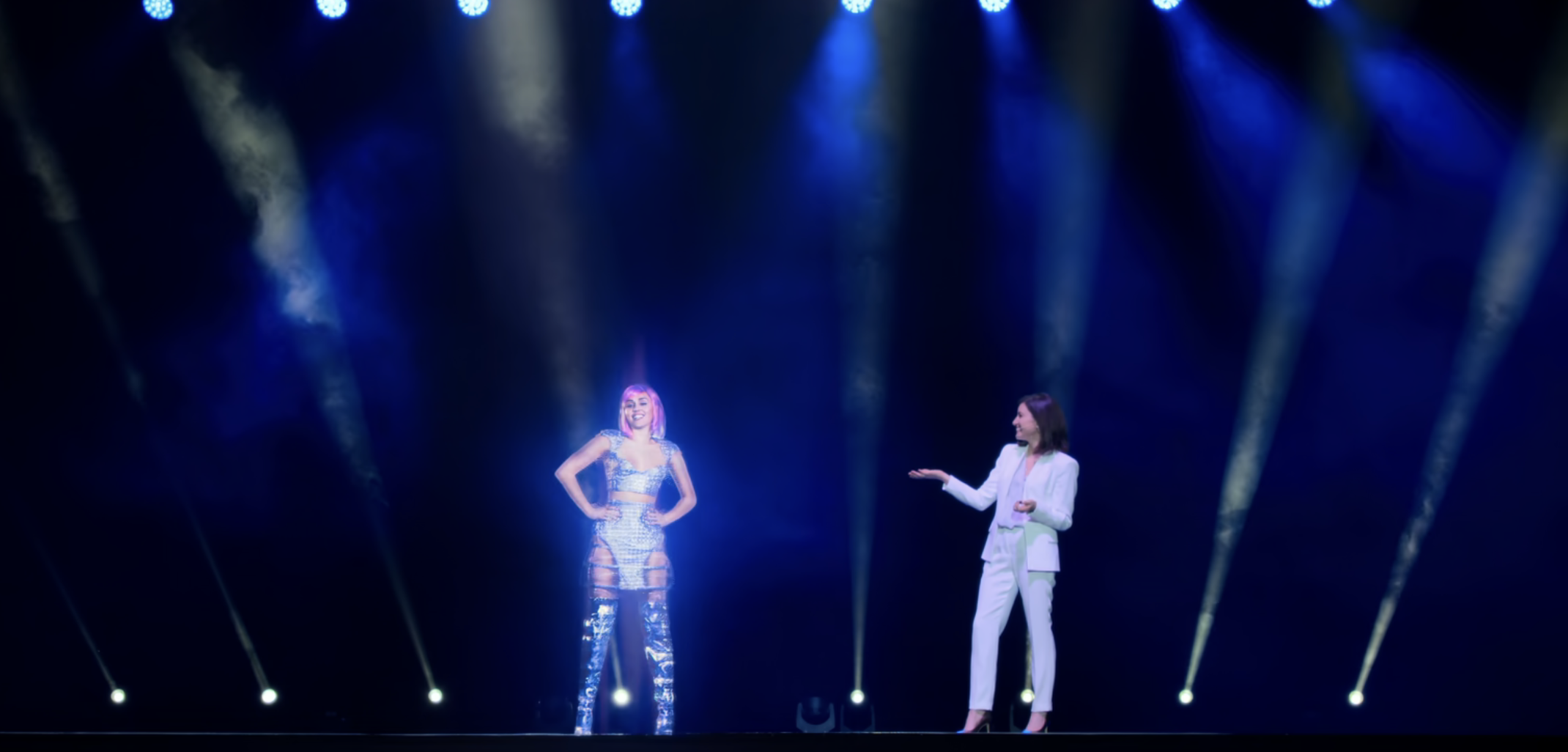
In Rachel, Jack, and Ashley Too, we see the dark side of fame through Ashley O’s story: she is drugged into compliance and eventually placed in a coma, while her aunt schemes to replace her with a holographic version built for endless future tours.
This holographic pop star can instantly change outfits, scale in size, appear simultaneously in thousands of locations, and perform endlessly without the vulnerabilities of a human artist.
In 2024–2025, virtual K-pop idols like SKINZ and PLAVE emerged as a new wave of celebrity branding that extends beyond music into virtual merchandise and digital idols.
PLAVE is a five-member group, powered by real performers using motion capture. They have racked up over 470 million YouTube views, charted on Billboard Global 200, and sold out virtual concerts while engaging fans with digital fan meetings.
SKINZ, a seven-member virtual boyband produced by South Korean singer-songwriter, EL CAPITXN, blends rock, hip-hop, and funk, has performed at iconic venues like Tokyo Dome.
This surge in AI and virtual stardom opens extraordinary possibilities, but what about the humans who now have to compete in this new arena?
This brings to mind Britney Spears, whose long conservatorship battle captivated the world. In total, Britney performed hundreds of shows during the 13-year conservatorship from 2008 to 2021, but always under heavy restrictions and control.
While AI and holograms can perform endlessly without burnout or loss of control, traditional live tours remain a lucrative but fragile model heavily dependent on a single artist’s health and agency.
In late 2024, indie-pop artist Clairo faced significant backlash after postponing three highly anticipated concerts in Toronto at the last minute due to “extreme exhaustion.” The cancellations came just as doors were about to open for the first show at Massey Hall, leaving fans frustrated and inconvenienced, especially those who had traveled and faced challenges getting refunds.
In contrast, virtual concerts and holographic tours, already proven by groundbreaking shows like ABBA’s Voyage, which made its long-anticipated debut on May 27, 2022, at the purpose-built ABBA Arena in London’s Queen Elizabeth Olympic Park. The virtual concert residency features hyper-realistic avatars of the band members as they looked in 1979, created using cutting-edge motion capture technology and visual effects by Industrial Light & Magic.
In contrast, virtual concerts and holographic tours rely not on a single performer. This is demonstrated by shows like ABBA’s Voyage, which debuted on May 27, 2022, at the purpose-built ABBA Arena in London’s Queen Elizabeth Olympic Park. Instead, they depend on the coordinated work of many teams. Hyper-realistic avatars of the band as they appeared in 1979 were created through motion capture, stage design, lighting, production, and visual effects by Industrial Light & Magic.
While the performers are getting more digital, many performers are aiming to bring the audience back to the moment.
Phone-free concerts have grown in popularity as artists seek to create more immersive, distraction-free live experiences. Ghost, a Swedish rock band, has pioneered this approach by requiring fans to secure their phones in lockable pouches called Yondr bags, which can only be opened after the show or in designated areas.
Yet even as performers reclaim control over the audience’s attention, the question remains: How much control do today’s celebrities really have, and how much of their image and choices are shaped by algorithms, managers, and market trends?
Virtual and hybrid performances blur the line between genuine presence and manufactured spectacle, leaving us to wonder whether we’re watching artists or carefully engineered illusions.
As fame, creativity, and even friendship are being reshaped, the episode explores the tension between what can be automated and what should remain authentic.
Programs already guide our choices, digital idols fill our feeds, and synthetic voices mingle with human ones. In that haze, where artist becomes asset and companion becomes artificial, the story feels like a glimpse of what’s already unfolding.
For more writing ideas and original stories, please sign up for my mailing list. You won’t receive emails from me often, but when you do, they’ll only include my proudest works.
Join my YouTube community for insights on writing, the creative process, and the endurance needed to tackle big projects. Subscribe Now!
 Elliot Chan