I’ve learned a lot about cycling over the past three years. One big takeaway? It’s not something I’m naturally good at. Part of that is probably because I’m in my mid-thirties, and before getting into triathlon, I didn’t even own a bike. When I think back to my childhood, I can’t really remember how I learned to ride. My parents never taught me — honestly, I’m not even sure they know how to ride themselves. I think I figured it out staying over at a friend’s place in fifth grade. I remember leaning against a wall, just teaching myself how to balance.
Teaching myself has been my go-to approach with most hobbies. It just made sense — why pay for cycling lessons? That felt frivolous, like taking art class or something. Maybe someday I’ll get a coach and try to really improve, but for now, cycling and sports are about getting in shape, relieving stress, having an event to look forward to, and challenging myself little by little.
One big challenge coming up is climbing Cypress Mountain in Vancouver. I live near plenty of hills, so I’m familiar with climbs, but a 12km climb straight up? That’s new, and honestly, it’s a bit intimidating.
Sure, there’s probably a “right” way to train for something like this. But I’ve got to fit in running and swimming too — I still have two swim races, a triathlon, and a 10K PR attempt this year. If I had a coach, they’d probably guide me, but for now, I’m figuring it out on my own. And honestly? That’s kind of peaceful.
To get started, I decided to do an FTP test. I began using MyWhoosh a couple months ago, and it’s been a lifesaver. Before that, I tried Zwift and Rouvy, but for various reasons, I stopped using them. I’ve done FTP tests with different apps before:
In November 2023, I did an hour-long test and got 146 watts.
That was the last test I did, and since then, a lot has changed. My bike fitness has definitely dropped — I didn’t do many workouts over winter after unsubscribing from Rouvy. I’ve been cycling regularly but mostly just commuting and casual late-night zone 2 rides.
This third year of triathlon has taught me I don’t have a huge appetite to ride outside unless I really have to. There are just too many hazards out there, and self-preservation feels more important this year.
That’s why I got MyWhoosh and went back to indoor riding for this training block. But to get a true baseline, I needed to start fresh with a new FTP test — and that’s what I did today, with a Ramp Test on MyWhoosh.
Having done a few ramp tests before, they always feel deceptive. The start is easy, then suddenly it ramps up and crushes your legs. Right now, I think my peak wattage for about a minute is around 260. Anything more, and I fall apart — at least on a ramp test, where you’re already exhausted by the time you hit the top.
I didn’t feel great during this test. I’m not proud of my performance, but I gave it everything I had. One annoying thing compared to Rouvy was the mercy feature: when you can’t keep up, the test ends. MyWhoosh doesn’t seem to have that — or at least I didn’t find it. So I had to keep going, watching those red numbers and feeling bad for not hitting 300 watts.
In the end, I got a shock — my FTP dropped to 192 watts. That’s 38 watts lower than before, which feels like a lot. But it doesn’t seem unrealistic. FTP tests aren’t perfect, and honestly, this feels closer to what I could hold for an hour right now.
So here we are, at the start of a new chapter. There’s a lot to improve in my cycling — I want to climb that mountain feeling strong, not struggling. I’m not aiming to win, but I want to feel good, to know I can push myself further.
Training starts now. I’ve got a few areas to work on, and not much time, so being realistic matters. Reminding myself this is all new helps. Reminding myself it’s a journey of self-discovery helps too. And that I don’t have anything crazy to prove.
Cycling is just another story I’m telling myself — a story I’m still writing. And this is the beginning.
If you want to support pancreatic cancer care and research, please consider donating to my ride — I’d really appreciate it.
Join my YouTube community for insights on writing, the creative process, and the endurance needed to tackle big projects. Subscribe Now!
For more writing ideas and original stories, please sign up for my mailing list. You won’t receive emails from me often, but when you do, they’ll only include my proudest works.
I want to tell you a story. Not the one I’ve been writing, but the story of bringing it to life.
About five years ago, something sparked. A character showed up, then a scene, then a whole world. I remember thinking, This is it. This is the story I have to tell.
I had this image in my head of how it would go: sleepless nights, fast fingers, drafts piling up like magic. You know the stereotype, the fevered genius at the keyboard.
That didn’t happen.
Instead, writing this story turned into something slower. Quieter. Not a mad sprint, but more like wandering. I felt like a lost hiker, circling the same trees, passing the same landmarks, unsure if I was getting anywhere at all. But there was hope. Every plot breakthrough gave me energy—just long enough to run into the next wall.
In the beginning, everything buzzed. But the spark isn’t supposed to last.
At some point, the dialogue dries up. You lose the thread. You open your draft and just… sit there.
I told myself I was “thinking about the story,” when really, I was avoiding it. Because facing the page meant facing the fear that maybe this story wasn’t good. Or worse, that I wasn’t good.
That’s when I started to understand: inspiration might start the fire, but discipline keeps it going.
So I began showing up. On bad days. On tired days. For ten minutes at a time. I’d rewrite the same paragraph five times and still feel like I hadn’t moved. But that was progress, too.
Writers like George R. R. Martin have talked about the middle—the long slog—as the real heart of the work.
Eventually, I gave up on waiting for ideal conditions. I let go of perfect. Some days I wrote two pages. Other days, I added a single word only to cut it. That had to be enough.
What helped was remembering that no one reads the first version and that revision isn’t punishment—it’s a privilege.
Robert Jordan used to write sprawling, chaotic outlines just to figure out what he might say. Brandon Sanderson rewrote entire books. That gave me permission to take my time too.
Time wasn’t the enemy. It was the process.
There were moments I felt guilty for not writing. For thinking about quitting. For wondering if I should just start a new project with all that fresh, exciting energy again.
But there were also quiet wins: a chapter that finally clicked. A problem I solved after months of spinning. The story shifted. So did I. It stopped being about finishing fast and started being about building something I enjoyed.
Characters evolve not just in my drafts, but in my mind. Themes start to mean more. My voice changed. The world I wrote grows richer, not because I pushed, but because I lived with it.
That’s what chipping away builds. Not perfection. Not speed. But depth.
Every great epic—The Lord of the Rings, The Wheel of Time, A Song of Ice and Fire—wasn’t written overnight. They were sculpted. One patient, faithful, messy page at a time.
These days, I think of persistence as its own kind of art.
It’s not about grinding harder. It’s about staying close to the work. Trusting that something is happening, even when it feels slow. Especially when it feels slow.
So if you’re working on something long—something that keeps asking for your time and care—you’re not behind.
You’re not lost.
You’re an artist in motion.
Maybe you’ll finish the thing. Maybe you’ll shelf it. Maybe you’ll come back in a year with fresh eyes and finally crack it open. Whatever happens, the time wasn’t wasted.
If you’re in the middle of a project that’s taking longer than you expected. Keep chipping away.
And remember: art isn’t finished. It’s only ever abandoned. There is no end.
So maybe today’s the day you write one more sentence. Maybe that’s enough.
For more writing ideas and original stories, please sign up for my mailing list. You won’t receive emails from me often, but when you do, they’ll only include my proudest works.
Join my YouTube community for insights on writing, the creative process, and the endurance needed to tackle big projects. Subscribe Now!
Before we discuss the events in Striking Vipers, let’s flashback to when this episode was first released: June 5, 2019.
In 2019, the Movember Foundation ran a global campaign for men’s health with celebrities like Stephen Fry, Bear Grylls, Stephen Merchant, and Nicole Scherzinger using humorous videos and social media to encourage men to talk about their health.
Back in 2019, consumer VR was caught between promise and practicality. Premium headsets like the Oculus Rift demanded expensive, high-powered PCs, pushing total setup costs over $1,500. Meanwhile, budget-friendly options like Samsung Gear VR delivered underwhelming performance. With few blockbuster games to drive demand, mainstream adoption stalled. As a result, companies like IMAX closed their VR divisions.
Still, VR found new life in enterprise applications. Walmart used VR training modules to boost employee retention and immerse staff in real-world scenarios, while sectors like healthcare and manufacturing also adopted VR for training simulations
At the same time, 2019 marked significant milestones for LGBTQ+ visibility. Elliot Page (then Ellen) was a vocal advocate for gender-affirming care, Lil Nas X came out as gay during the peak of “Old Town Road”, and Pete Buttigieg launched his historic campaign as the first openly gay U.S. presidential candidate.
And that brings us to this episode of Black Mirror. Episode 1 of Season 5: Striking Vipers.
This episode welcomes us into a digital world where friendship, desire, and identity collide. Through the lens of a VR fighting game turned emotional crucible, the episode explores how immersive tech can both reveal and distort our deepest needs, leaving us with some unsettling questions:
What happens when technology offers a more fulfilling life than reality? Can a digital body expose truths we’re too afraid to face in the physical world? And as virtual experiences grow more vivid, are we prepared for the emotional and ethical consequences they bring?
In this video, we’ll unpack the episode’s key themes and examine whether these events have happened in the real world—and if not, whether or not it is plausible. Let’s go!
Blurred Realities
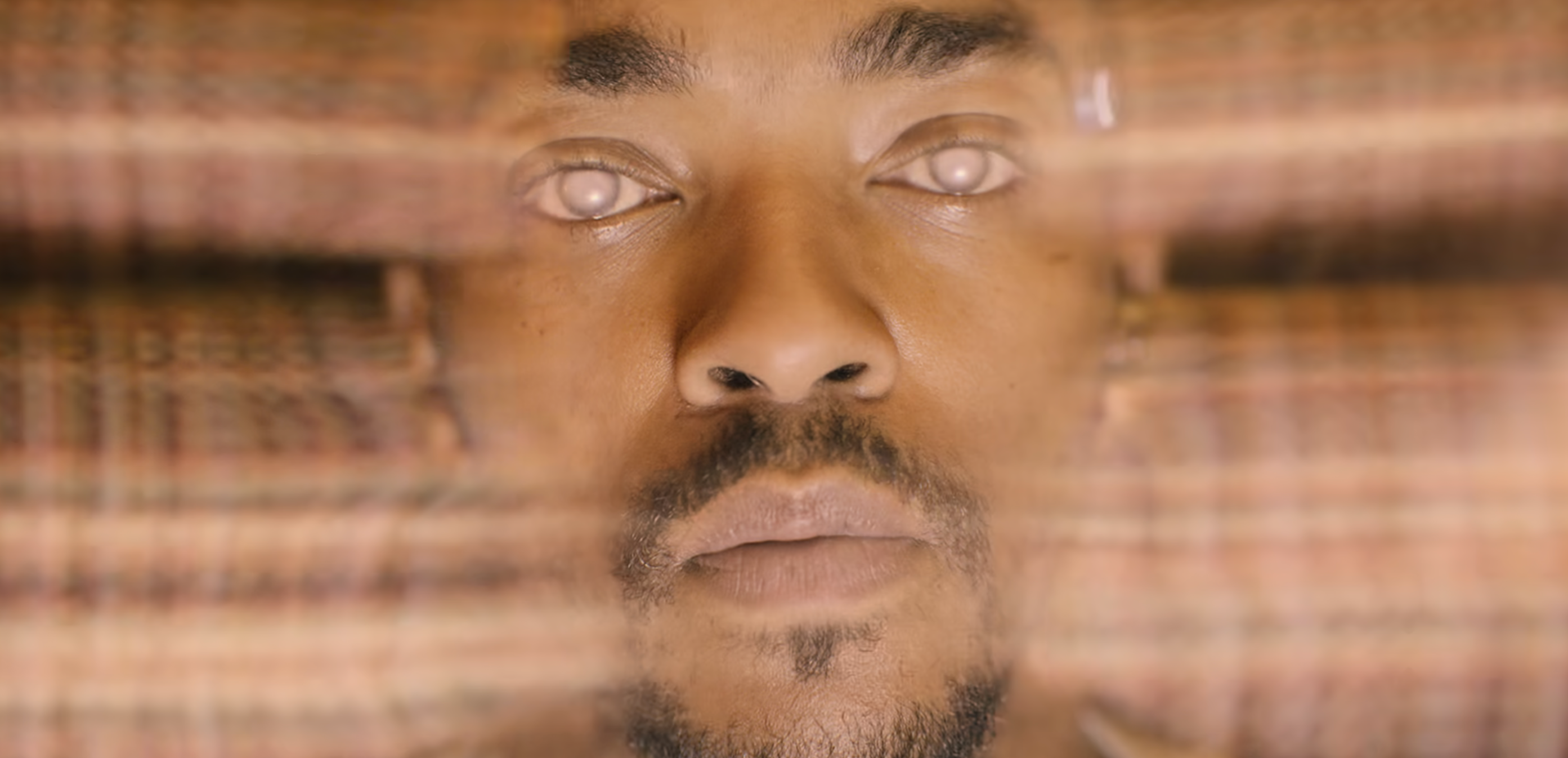
When Karl gives Danny a birthday gift—Striking Vipers X, a hyper-realistic VR fighting game—their casual nostalgia takes an unexpected turn. In this game, players don’t just control avatars; they fully inhabit them, experiencing every physical sensation their characters feel.
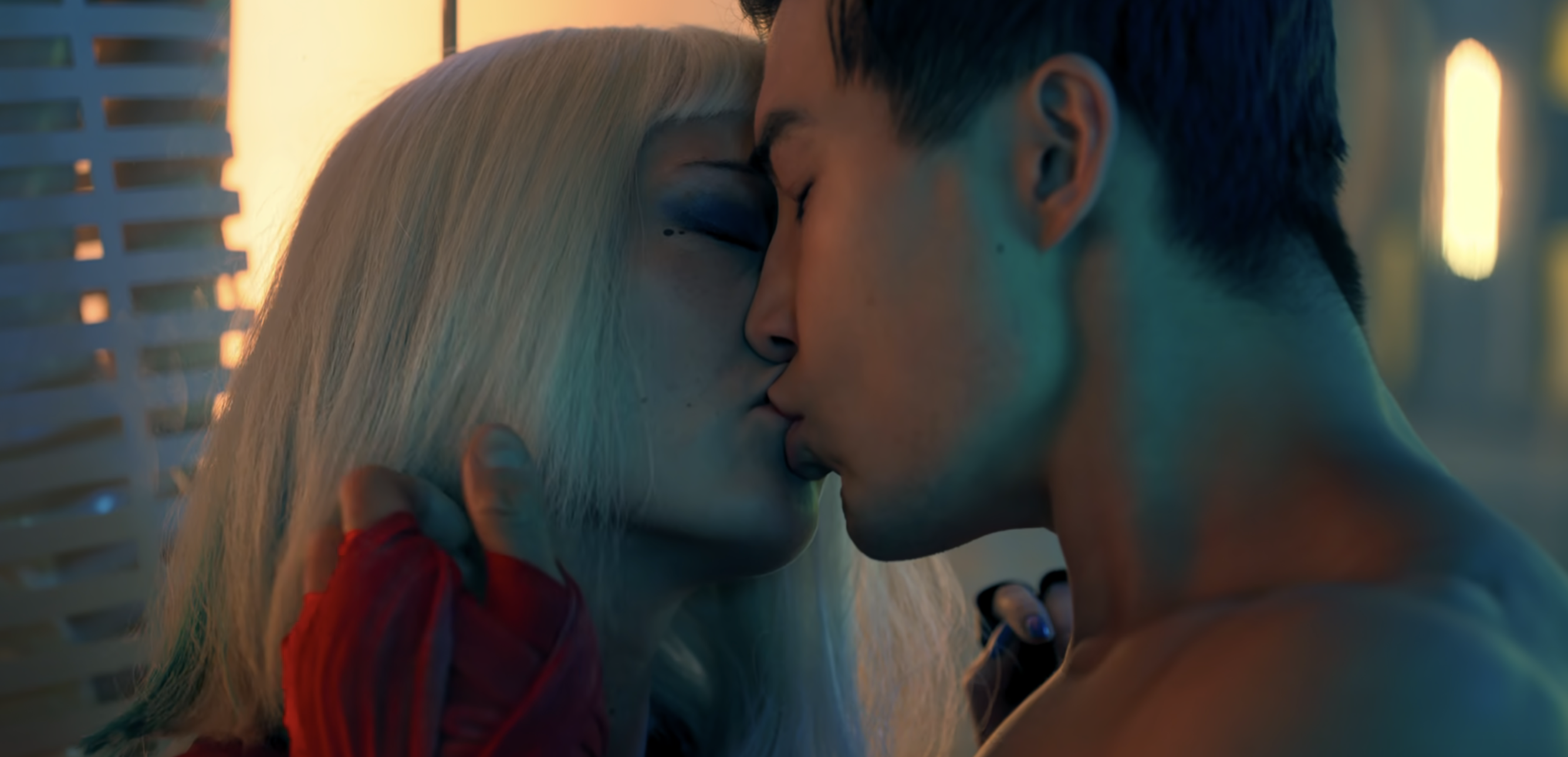
As their in-game battles escalate into a sexual relationship, the emotional intensity of their connection begins to strain Danny’s marriage and forces both men to confront their desires, identities, and the blurry lines between reality and fantasy.
While today’s VR systems don’t yet plug directly into our brains, the separation between real and virtual intimacy is growing increasingly thin. New technology like haptic suits and internet-connected sex toys like teledildonics lets people feel touch and physical sensations from far away. Companies like Kiiroo offer Bluetooth-enabled devices that sync with a partner’s movements or online media, making remote intimacy physically real.
However, the darker side of immersive technology is getting harder to overlook. Many VR platforms quietly collect personal data—like your heart rate, facial expressions, and even brain activity—often without users fully understanding or consenting.
According to the American Association for Marriage and Family Therapy, up to a third of internet users go online for sexual reasons—and nearly 1 in 5 can become addicted to it. As internet use becomes more common, more couples are running into serious issues like trust problems, emotional distance, and even breakups because of online infidelity.
A 2017 Deseret News survey revealed striking gender and generational divides in what people consider cheating. Women were significantly more likely than men to label both online and offline behaviors as “always cheating”—59% of women, compared to just 42% of men, said that sending flirty messages crosses the line, while 70% of women said simply having an online dating profile counts as infidelity.
In a survey of 91 women and 3 men affected by a partner’s cybersex addiction, 68% described sexual problems in their relationship directly related to the addiction. About 22% said the addiction was a major reason for separation or divorce.
Age also played a role in how people view cheating. Surprisingly, millennials were more likely than Gen Xers to say that watching porn alone is cheating. These changing opinions show how modern technology is making the line between loyalty and betrayal harder to define.
For Danny, the escape wasn’t just into a game. It was into a version of himself he couldn’t find in daylight. And maybe that’s the real question Striking Vipers leaves us with: when the fantasy fits better than the life we’ve built—what do we choose to come home to?
As the truth comes to light, Danny and Theo strike an agreement: once a year, he returns to the virtual world, and she explores real-life connections of her own. It’s not the first time they’ve played pretend—earlier in the episode, they flirted with role-play to revive their spark. But this time, the game is real. Their compromise isn’t a happy ending so much as a new set of rules.
In the United States, polygamy is extremely rare-less than 0.5% of households-but public acceptance is growing. Approval of polygamy as morally acceptable has risen from 7% in 2003 to 23% in 2024, especially among younger, unmarried, and less religious Americans. Interestingly, men are six times more likely than women to be open to polygynous relationships, according to recent UK research.
We already live at the edges of intimacy—crafting curated selves, clinging to parasocial ties, chasing comfort in the glow of a screen. VR, AI, and immersive worlds only pull us deeper, fusing intimacy and illusion into something hard to untangle.
Bodies in the Mirror
In the game, Karl chooses to play as a female fighter named Roxette, not just as a disguise—but as a truth he hasn’t yet admitted. What unfolds is less about sex and more about the fluidity of self in a world where identity can be downloaded and worn like clothing.
The episode reflects the real-world experience of exploring names, pronouns, and appearances in digital spaces before coming out in everyday life. It captures the emotional challenges that many LGBTQ+ individuals face during their coming-out journeys.
In 2023 alone, more than 30 new laws targeting LGBTQ-related education were enacted, reshaping the 2023–24 school year. These measures include bans on discussing sexual orientation and gender identity in classrooms, limits on pronoun use, and mandates for parental notification or opt-in before students can access LGBTQ-inclusive curricula.
Simply put, the physical world is not a welcome one for exploration, which is why so many turn to digital spaces to discover who they are.
A 2025 study on ZEPETO—a social app where people interact through avatars—found that female users who took on male avatars felt more connected to their virtual characters and more confident in their real-life gender identity.
Inclusive design has been shown to boost mental health and promote a sense of empowerment. A 2024 study of 79 trans and gender-diverse adults found that customizable avatars in games were associated with increased enjoyment, empowerment, and authentic self-representation, while restricted customization reduced engagement and could trigger distress or dysphoria.
Trans and gender-diverse youth face far higher rates of rejection, discrimination, and violence than their cisgender peers. As a result, around 61% experience suicidal thoughts, and nearly one in three have attempted suicide—more than four times the rate of cisgender youth.
In this context, the digital world becomes a lifeline. Research shows that having just one online space where LGBTQ+ youth feel safe and understood is linked to a 20% lower risk of suicide attempts and a 15% drop in recent anxiety.
Virtual bodies aren’t just avatars—they’re mirrors of inner truth. And for those navigating the margins of society’s acceptance, they can become windows into a more authentic future.
But here’s a deeper question: when does a safe space become a place to hide?
The Digital High
It starts with two old friends staying up all night playing the game they loved in their twenties—laughing, trash-talking, reliving the past. But what begins as nostalgia slowly shifts. The game becomes a secret habit, a nightly escape that feels more thrilling and alive than the routine of Danny’s real life.
Soon, he’s forgetting his anniversary and growing distant from his wife. Striking Vipers isn’t just about sex or fantasy; it’s about how addiction can sneak in under the cover of comfort, and how escaping reality too often can leave the real world behind.
Between 2% and 20% of frequent VR users display compulsive behaviors, with addiction risk linked to the immersive feeling of embodiment inside an avatar.
Our attention spans have dropped to just 45 seconds on average—and video games are a major driver. Many of the most addictive titles keep us hooked with competitive and social features (like Fortnite or League of Legends), immersive escapism (Skyrim, Stardew Valley), and personalized role-play (World of Warcraft, The Sims). These experiences trigger dopamine hits, making everyday life feel dull, chaotic, or unrewarding in contrast.
Video game addiction affects an estimated 3–4% of gamers worldwide, with higher rates among adolescents and young adults, especially males. Addicted gamers can spend up to 100 hours a week immersed in play, sacrificing relationships, hobbies, and responsibilities along the way.In Striking Vipers, the title itself becomes a metaphor: just like a viper’s deadly strike, addiction can sneak up unexpectedly, striking again and again as players hunt for that elusive thrill.
Join my YouTube community for insights on writing, the creative process, and the endurance needed to tackle big projects. Subscribe Now!
For more writing ideas and original stories, please sign up for my mailing list. You won’t receive emails from me often, but when you do, they’ll only include my proudest works.
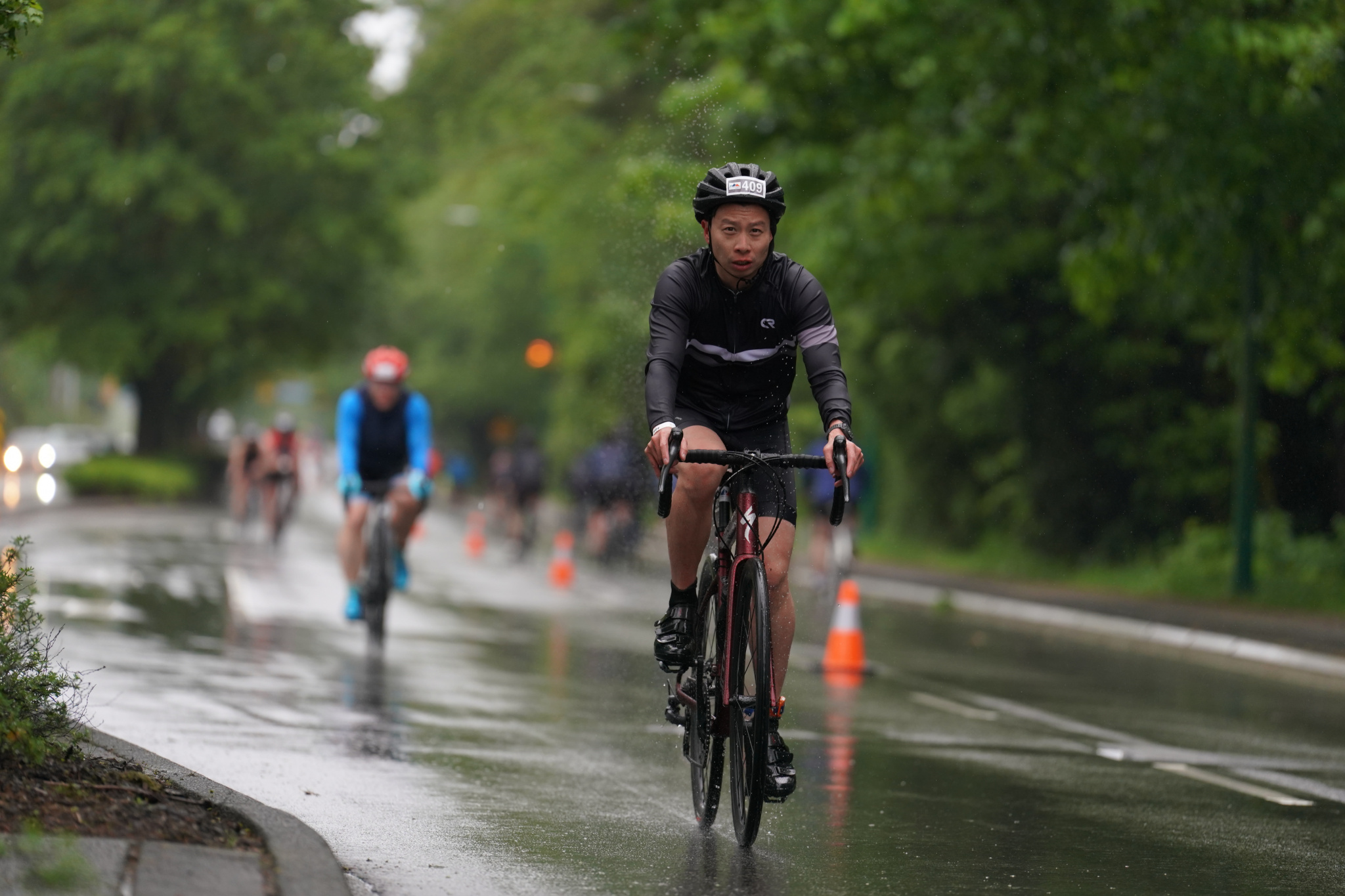
The day finally arrived: my first triathlon of 2025. In fitting conclusion to a chaotic training block, race day kicked off with a perfectly miserable, rainy morning.
There were plenty of challenges leading up to this moment—months of work, unexpected obstacles, and less-than-ideal conditions. But we don’t sign up for this because it’s easy.
In addition to swim, bike, and run logistics, there was one more wildcard: our dog, Petey. We’ve been training him to handle crowds and noise, and he’s made a lot of progress. Still, we knew race day would test him. That morning, we left him with my wife at the car while I made my way to the start line. I had about an hour to set up before go time.
This was my fifth triathlon, so by now, the usual gear-check panic had faded. No more obsessing over whether I packed everything or anxiety about setting up in transition. Still, right before the start, I always feel it—that churn in the stomach. Pushing yourself to the edge while trying to pace it right? That’s always nerve-wracking.
Speaking of my stomach, I wasn’t feeling 100% physically. Digestively. But maybe it’s all in my mind. I chalked it up to the general discomfort of standing around in the rain. Yes, it was a very messy morning. The trek to the pool was a mudfest.
The swim was supposed to be 444m like last year, but a week out, we got an email that it’d be shortened to 300m. Not ideal for an apples-to-apples comparison, but with the rain, nothing was going to be a perfect match. Still, it was a chance to improve.
Last year, I finished 126th out of 276. This year, my goal was to break into the top 100. Not always the healthiest mindset—comparing yourself to others—but this race uses a staggered start, so standings are kind of a mystery anyway. I decided to treat it like a solo time trial.
To position myself in the most ideal spot, I tested a 300m swim in training and estimated I’d come in around 6:40. Last year, I guessed I could swim 444m in 10 minutes—it ended up taking me about 11, and I had to let a few people pass at the wall. This time, based on my test, I landed pretty close: 6:31 on my watch, and 7 minutes officially after running across the pool to hit the timing checkpoint.
As for the bike—there was no predicting that. I’d done a good chunk of zone two work leading up to the race, but not much hard outdoor riding lately. Still, my legs felt solid. The course was four laps on a rolling route with a 50m climb over 2km. Not brutal, but enough to require steady effort.
I went out a bit aggressively on lap one, eased off by lap two, and by lap three the rain was relentless. I started shivering on a descent and suddenly, my vision blurred. I literally had to shake my head to snap out of it.
I hadn’t trained much in rainy conditions, so from that point on, it was all about survival—just making it to the run.
Needless to say, I was relieved to finally get off the bike at 47 min and 18 seconds, which included both transition times. On my watch, I had 42 min and 42 seconds. A solid time, but I was completely out of it. I started the run with a group pacing around 4:30–4:45/km, which might’ve been fine on a good day—but not after that ride, and not in the state I was in. Once the hills kicked in, I knew I had to ease up.
The run course was no joke—lots of short, punchy climbs, with 128m of elevation packed into just under 5K. I didn’t have huge expectations. Sure, it would’ve been nice to match my 24-minute 5K from last month, but there was no pressure. I just wanted to give it everything I had.
And I think I did.
And just like that, it was over. Another race in the books. And to my surprise, I hit that arbitrary goal I set at the start. I cracked the top 100. Barely. 99th place.
The conditions were rough. The training block was fragmented and inconsistent. But I got through it, and now it’s a race I’ll remember fondly.
As for Petey? He didn’t quite share in my success. While I braved the rain, he opted for safety and comfort. My wife tried a few times to coax him out to spectate, but he preferred to wait it out in the warm car. After a bit of howling, he curled up in the backseat and took a nap.
Still, we all did our best. And I’m proud of the three of us for figuring it out—together.
There will be more attempts. There will be more challenges. Plenty more adventures ahead.
For more writing ideas and original stories, please sign up for my mailing list. You won’t receive emails from me often, but when you do, they’ll only include my proudest works.
Join my YouTube community for insights on writing, the creative process, and the endurance needed to tackle big projects. Subscribe Now!


 Elliot Chan