Another beautiful day in Vancouver—cold, though. It’s just barely above freezing today. Still, any day in January without rain or snow? I’ll take it.
This week, I finally got around to tallying up all my metrics from 2024. Tracking data is something I genuinely enjoy, which is one reason I love triathlon so much—it’s basically an excuse to collect data. If I can quantify what I’m doing, it makes consistency feel so much easier. I bring that same philosophy to my creative work. Every day — or nearly every day — I track my creative writing and video creation the same way I track my workouts. I’m obsessed with my spreadsheets.
Here’s how 2024 shaped up:
I swam 90,325 meters in 44 hours, 20 minutes, and 26 seconds (5% less than 2023).
I cycled 3,901.07 kilometers in 175 hours, 21 minutes, and 32 seconds (22% more than 2023).
I ran: 621.44 kilometers in 67 hours, 11 minutes, and 29 seconds (23% less than 2023).
The big jump in cycling is thanks to our new indoor bike, which I added to my routine last year—it made all the difference. As for swimming, I swam less because I spent extra hours in 2023 learning how to swim, so naturally, I didn’t log as much distance in 2024 because I didn’t have that huge learning curve. For running, I held back intentionally to avoid overdoing it and risking more injuries.
2024 was my sophomore year in triathlon. While I packed the calendar with races, I’d call it more of a “slump year” training-wise. But seeing the data laid out, I know I’ve built a solid foundation. This year, I want to build on that thoughtfully—not just by chasing bigger numbers. These annual stats are a nice way to reflect on the work I’ve put in, but they don’t tell the full story. What matters to me this year is how well I’m performing in training and races.
Take swimming, for example. For my birthday, my amazing wife got me a game-changing gift: FORM goggles. If you haven’t heard of them, they’re like a smartwatch built into your goggles. They show data like pace and stroke rate while you swim. Even cooler, they give feedback on things like head position while breathing and overall swim efficiency.
After my first swim with them, I got a score of 40 out of 100. Plenty of room for improvement, but I’m excited to see how much I can progress.
With that said, I’m heading into year three of this triathlon journey. While improvement is always a focus, the real priority is maintaining the habit. I don’t even think of triathlon as a hobby anymore—it’s just what I do.
Before my training plan officially kicks off in a few months, I’m taking this time to maintain my routine and base fitness. There is no point in tiring myself out. This is my no-pressure, fun part of the year, and I want to enjoy it. And I definitely want to do a weekend ride. So I’ve decided to explore some parts of the city that aren’t great for structured training but are worth a visit.
Today, I’m riding to the West End of Vancouver to check out some of the greenways, including the Comox-Helmcken Greenway. Thanks to this project, there’s been a 49% boost in cycling trips and a 35% decrease in car trips in the neighborhood. While the greenway was originally planned to stretch across the entire city, only the Comox phase has been completed so far.
And since no ride into Downtown Vancouver is complete without detours, I got sidetracked by the demolition of the 115-year-old Dunsmuir building. It’s been a hotel, military barracks, and a shelter over the years, and now it’s making way for something new. From there, I’ll take a trip down the world-famous Granville Street.
Enjoy the ride.
For more writing ideas and original stories, please sign up for my mailing list. You won’t receive emails from me often, but when you do, they’ll only include my proudest works.
Join my YouTube community for insights on writing, the creative process, and the endurance needed to tackle big projects. Subscribe Now!
Bryan Cranston—you know, the guy who gave us Walter White—once shared some advice for actors going into an audition. But this advice felt bigger than just acting. He said: “know what your job is
At first, it sounds simple, almost too simple. But then he elaborates:
“I was going to auditions to try and get a job. That is not what you are supposed to do. An actor is supposed to create a compelling, interesting character that serves the text, you present it in the environment where you audition. And then you walk away. And that’s it. Everything else is outside your control, so don’t even think about it, don’t focus on that. You’re not going there to get a job. You’re going there to present what you do. You act. And there it is. And you walk away and there’s power in that.”
Cranston’s not saying “Don’t care about the outcome.” He’s saying, “Care about what you can control.” For him, it’s about crafting a character that serves the story. For us—whether we’re writers, marketers, or creators—it’s about honing our craft and delivering it with intention.
I remember a time when I was deep in job applications, obsessing over every detail, trying to predict what each company wanted. The constant second-guessing, the tweaking of synonyms and punctuations—it was exhausting. My job wasn’t to convince them I was perfect. My job was to show up and be myself—to present what I do best.
The same rule applies when you’re already on the job. Showing up every day isn’t just about ticking off tasks or meeting deadlines. It’s about knowing what’s at the heart of your work. If you’re a writer, your job isn’t just to write—it’s to tell a story that connects. If you’re a marketer, it’s not just about ad campaigns—it’s about creating something that leads to action.
But here’s the thing—the pressure to get it “right” can mess with your head. You want the recognition, the results, the wins. That’s why Cranston’s advice feels so important. He’s saying: let go of what you can’t control. You can’t control how people respond to your performance, your draft, or your campaign. But you can control the effort and care you put into it.
So, how do you do this in real life? First, focus on the process. Instead of asking, “Will they like it?”
Ask: “Am I proud of this? Does it serve the purpose?”
Second, detach from the outcome. Present it and move on.
And third, redefine success. It’s not just about landing the job or nailing the project—it’s about the growth that comes from the work itself.
Rejections sting. Constructive criticism can break me down. And negative comments are hard to ignore. But when you focus on what’s within your control, you start to find a different kind of power. You’re less tied to the highs and lows, and more grounded in the work you’re doing every day.
So, whether you’re pitching ideas, crafting stories, or designing campaigns, take Cranston’s advice: “Know what your job is.” Show up. Do the work. Let go of the rest. There’s freedom in that.
For more writing ideas and original stories, please sign up for my mailing list. You won’t receive emails from me often, but when you do, they’ll only include my proudest works.
Join my YouTube community for insights on writing, the creative process, and the endurance needed to tackle big projects. Subscribe Now!
I turn 36 next week. Not old, but definitely older than I feel. People keep warning me that it’s only a matter of time before old age catches up and deals me the inevitable. Until then, I still have time to reach some old goals and start some new ones.
Last year, I completed my first Olympic-distance triathlon—a goal that once felt impossible. This year, I’m aiming for my second one. My first goal was simply to finish, but now, I want to do better. I’ve already signed up for one in September. Since that’s still months away, I decided to add a shorter race earlier in the year for practice.
At first, I planned to race in BC’s interior, maybe one of the ones in the Okanagan. But since we recently adopted a new dog, I figured staying closer to home would be better. Last year, I did the North Shore Triathlon in North Vancouver, and I liked how small and manageable it was. It feels like the perfect race to sneak into the year without disrupting everything else.
So, here’s the plan: one sprint-distance race and one Olympic-distance triathlon in 2025. On top of that, I want to run a 10K and aim for a PR—ideally under 45 minutes. I’m also keeping an eye out for a swim- or bike-specific race. I think that’s enough to keep me active without burning out.
You see, it’s not just the training. That novel I keep talking about? Still happening. I might do a video update on it soon, but essentially, I’m working on it 30 minutes a day. That means, when I’m working on it I’m not really getting any deep work. It’s very fragmented. But honestly, the whole project has been built this way.
At this point, consistency is the only way forward. A little every day adds up, just like training. Of course, there will come a time when I need to push harder and finish it, and that day’s coming fast. For now, though, I’ve got good momentum.
Between the novel, training, work, eating, sleeping, and everything else, life’s busy. And let’s not forget about making videos. Videos tie all of this together. This year, I want to take you on a more immersive journey—especially with my triathlon training. I also want to showcase the sights and sounds of Vancouver. Ever since I started riding my bike, I’ve found a new appreciation for this city that I love, and I want to share it with you.
Consider this the first episode: a weekend ride from Science World to the Stanley Park loop, one of my favorite routes. It rained in the morning, but by the time I got out, it turned into a beautiful January day. Enjoy the ride.
Join my YouTube community for insights on writing, the creative process, and the endurance needed to tackle big projects. Subscribe Now!
For more writing ideas and original stories, please sign up for my mailing list. You won’t receive emails from me often, but when you do, they’ll only include my proudest works.
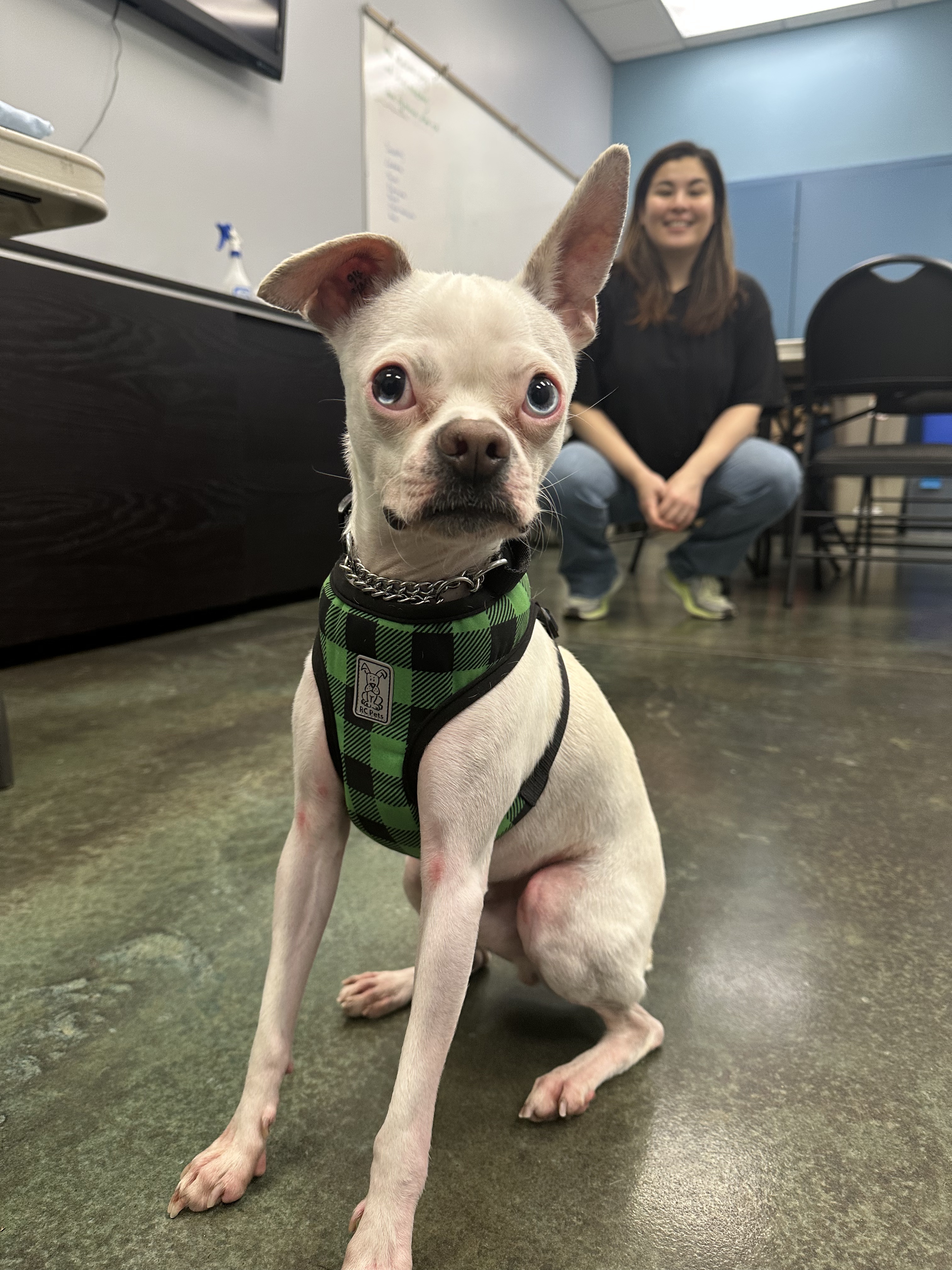
His mother was a Boston Terrier. His father, a Chinese Crested. He’s unique. Floppy ears. Black lips. Short, wiry hair. Big, Steve Buscemi eyes. He’s one of a kind.
Before he was Petey, he was Pickles, and before he was Pickles, he was Colton. Colton was born in a drug house and passed off to an elderly man with cognitive impairments who couldn’t care for him. Eventually, he was abandoned.
But Colton’s story doesn’t end there.
One fateful day, a good samaritan found him wandering the streets near 41B St and Delta Port Way in Ladner—the middle of nowhere. They brought him to the shelter, where his painful past was uncovered. His original owner came forward, explaining that he simply couldn’t care for Colton anymore. With what we hoped was regret and remorse, they chose not to claim him. Instead, they left him behind. Colton was now Pickles. The shelter rebranded him because, apparently he’s like a piglet… pickles?
But Pickles was struggling. At the shelter, the trauma consumed him. He barked incessantly, jumped against the walls of his kennel, and snapped at staff members in frustration.
One day a family arrived to meet him— but they brought children with them, and for Pickles, that was too much. His fear and anxiety overwhelmed him, and he shut down. He avoided the kids and kept his distance, and the family realized that he wasn’t the right fit for them. The shelter staff was left with heavy hearts, unsure what would come next for Pickles.
Pickles’ behavior was becoming more unpredictable, and the staff had tried everything they could, but nothing seemed to help. They began discussing behavioral euthanasia. It seemed like there was no way out for Pickles, no way for him to escape the endless cycle of fear and frustration.
Before that decision could be made, That’s when we walked in.
Our journey to adopt Petey wasn’t instant—but we were determined. After all, we fell in love with him right away. We visited him at the shelter for two weekends in a row—Saturdays and Sundays. Every time we saw him, we could feel the stress and anxiety, but we could also sense a happy, fun-loving guy. We saw potential. It was clear he just needed someone who understood him, someone who had the patience for him.
My wife and I are uniquely equipped to adopt him. But we also knew it wouldn’t be easy. The staff reminded us that it wouldn’t be easy, just in case there was a moment we thought it would. This kept us grounded and it helped us prepare for our future together.
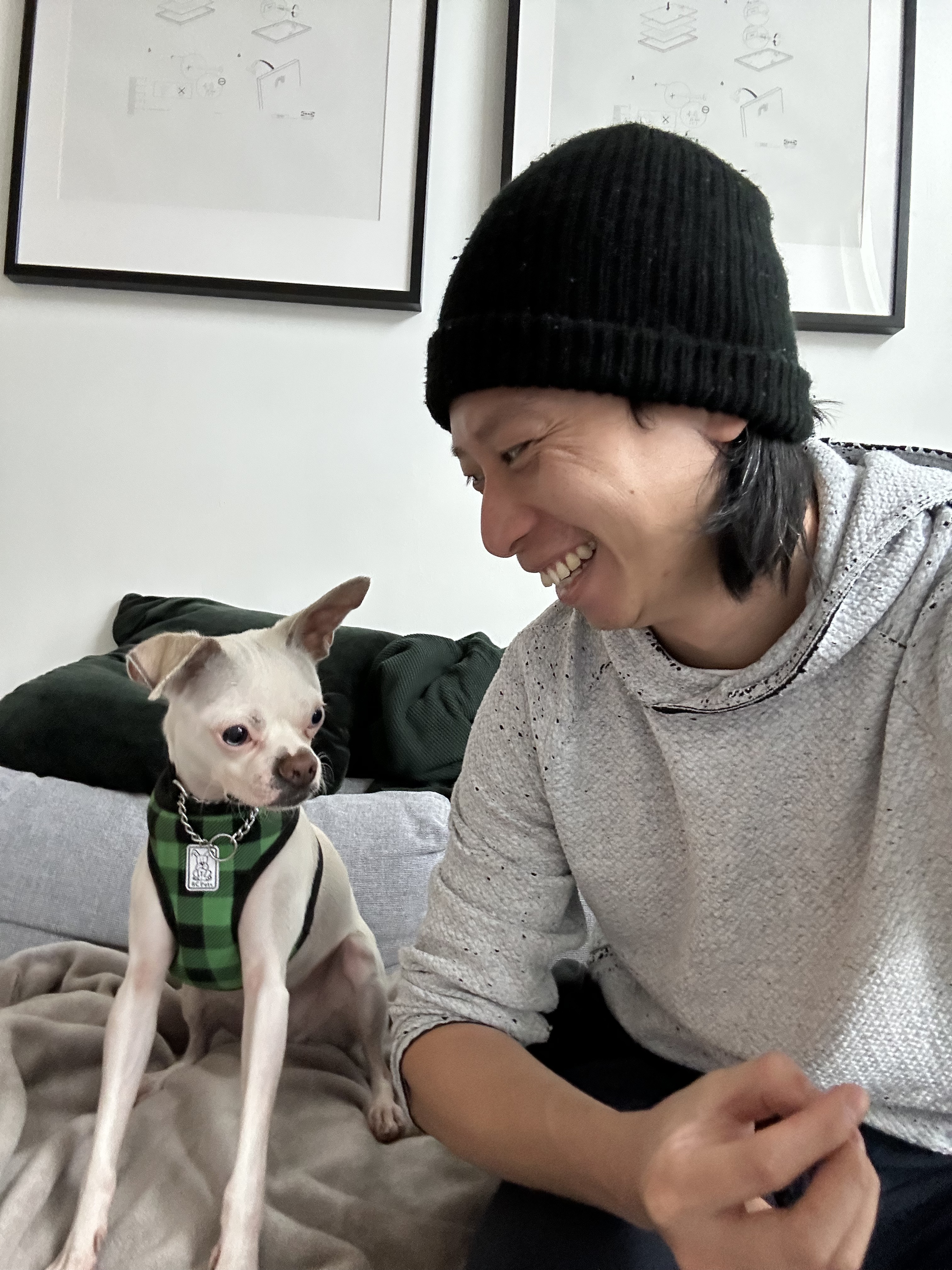
After those weekend visits, we brought him home for a 4-hour trial run on a Thursday afternoon, just to see how he’d settle in. It was clear he was ready for a change. For my wife and I who lost our old dog, Michael only a year ago, just having a dog in our apartment felt like our home had been given new life. The visit went so well. He played. Cuddled with us. And went for a couple of walks.
While initially, the shelter recommended that it would benefit Petey to have a couple of home visits before being fully adopted, seeing how well he did with us, they made plans to streamline our process. We were hoping to bring him home in two weeks for the Christmas holidays, as that will be when we will both have time off from work to get him settled.
Then we returned to the shelter the following Saturday, two days after his home visit, thinking it was just another playdate. But the staff had other plans. They could see how he was struggling at the shelter, how miserable he was in comparison to how well he was doing with us. They asked us straight up, “Can you take him today?”
We weren’t necessarily ready for him that day. We had plans that weekend and we still needed to proof the house for him. But hearing that he was struggling in the shelter, there was no way we could leave him there for another day let alone another week for our convenience.
And just like that, Petey came home with us.
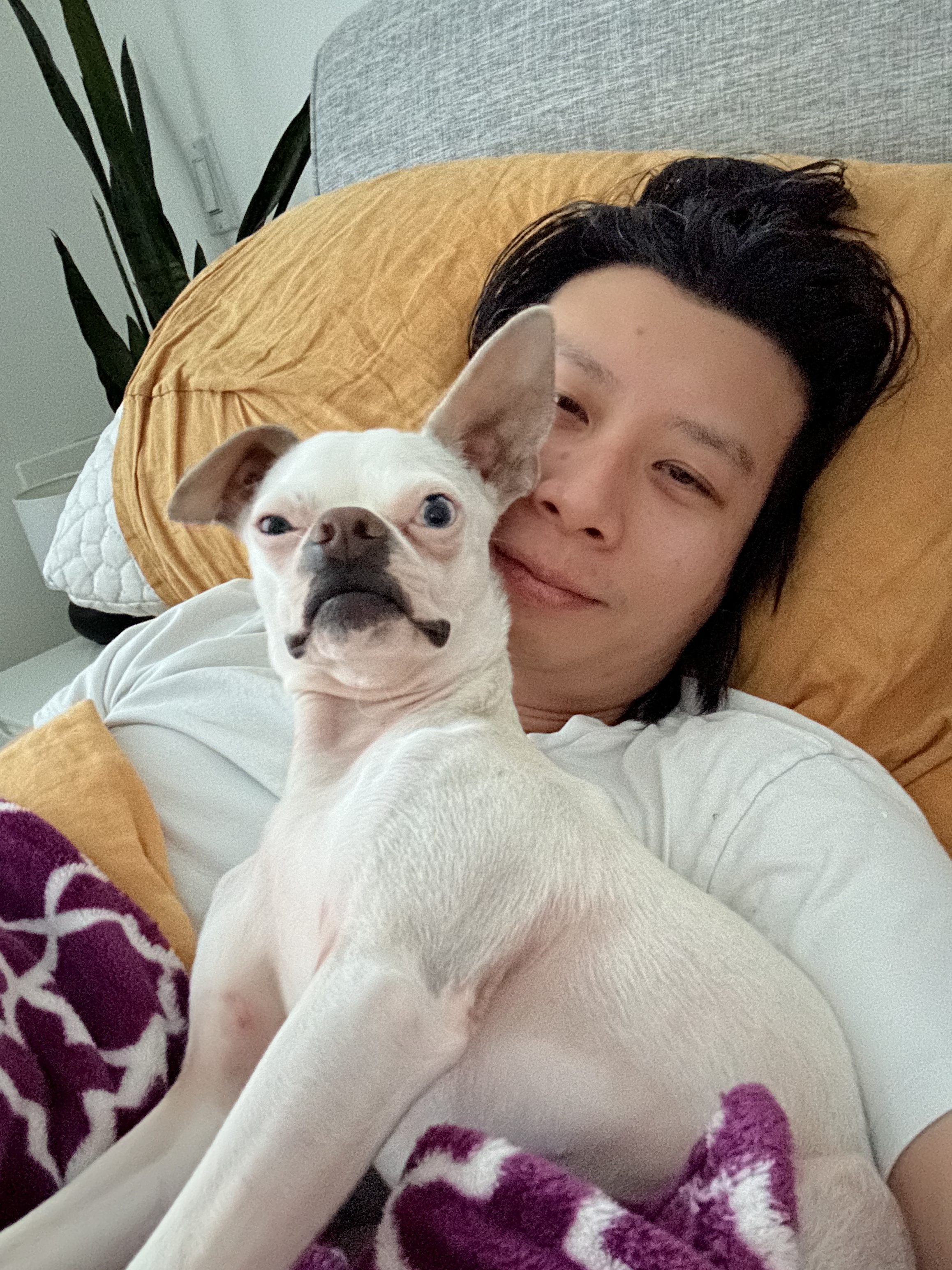
From the moment he entered our home, it was as if everything clicked. He knew he was in his new home. Many rescue dogs are nervous or even standoffish when they first meet their new owners, but not Petey. Perhaps guided by the spirit of Michael, he was immediately comfortable, curling up in our laps and making himself home. We knew we needed to train him and there was a lot of work ahead, but one thing was clear: he knew he had found his family.
This is Petey’s story. A dog who escaped a dire situation, and now, he’s ready to take on the world… but first, he needs to get over his trauma. This is the start of his journey to being the best dog he can be.
Stay tuned for more updates on Petey!
Join my YouTube community for insights on writing, the creative process, and the endurance needed to tackle big projects. Subscribe Now!
For more writing ideas and original stories, please sign up for my mailing list. You won’t receive emails from me often, but when you do, they’ll only include my proudest works.
Before we talk about the events in Hang the DJ, let’s flashback to when this episode was first released: December 29, 2017
On September 25, 2017, Prince Harry and Meghan Markle made their debut as a couple at the Invictus Games in Toronto. Their relationship broke new ground for the British royal family, sparking discussions on cross-cultural relationships and the challenges of maintaining privacy in the spotlight.
Meanwhile, dating apps surged in popularity, with a Stanford study revealing that 39% of couples are meeting online on platforms like Tinder and Bumble. The Tinder Gold’s “Likes You” feature allowing users to see who already swiped right on them, pushed the app’s popularity even further.
At the same time, Bumble expanded beyond romance into professional networking and friendship with Bumble BFF and Bumble Bizz. Yet, the rise of digital matchmaking wasn’t without critique. Studies highlighted its impact on mental health, with terms like “ghosting” and “breadcrumbing” capturing the emotional toll of algorithmic dating.
In 2017, Elon Musk and Mark Zuckerberg clashed over the future of artificial intelligence, with Musk warning about AI’s potential existential risks and advocating for proactive regulation, fearing AI could evolve beyond human control. Zuckerberg on the other hand was optimistic about AI’s potential to improve lives, emphasizing that responsible innovation would outweigh its risks.
The idea that reality could be a simulated construct gained significant media coverage in 2017, partly due to some high-profile endorsements. Elon Musk and other prominent figures suggested that the odds of us living in a “base reality”— the original, unaltered reality from which all other realities might stem — are minimal, given the rapid advancement of simulations and AI.
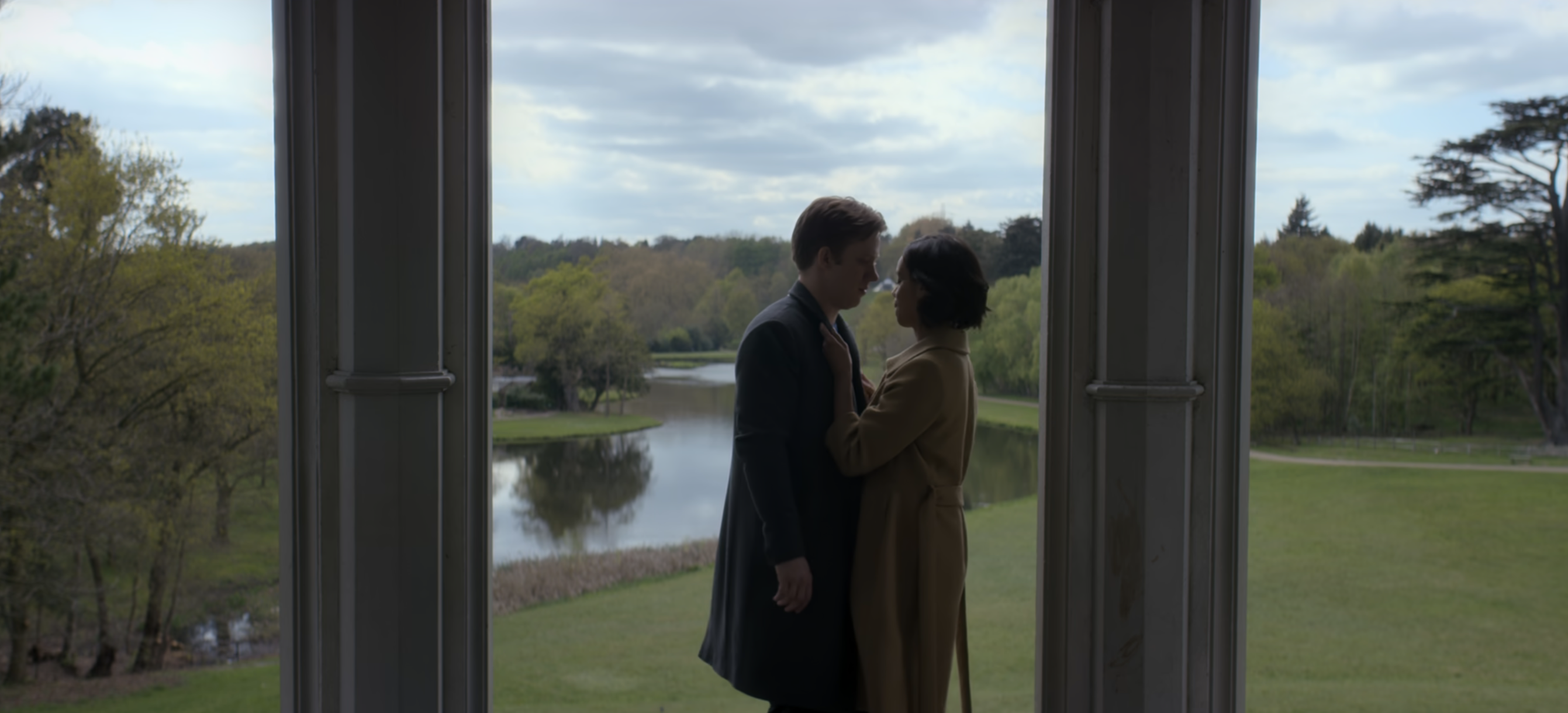
And that’s what brings us to this episode of Black Mirror, Episode 4 of Season 4: Hang the DJ.
As Frank and Amy navigate the rigidly controlled world of The System, their budding connection forces them—and us—to question the purpose of algorithms in matters of the heart. While The System claims to optimize matches and ensure “perfect” relationships, it also strips away autonomy, leaving users trapped in a cycle of dictated romances.
So we ask: Can technology truly understand the complexities of human connection? At what point does relying on algorithms to find love begin to undermine the very nature of intimacy and self-discovery? Are we, in our quest for compatibility, sacrificing the serendipity that makes relationships meaningful?
In this video, we’ll explore three key themes from Hang the DJ and examine whether similar events have happened—and if they haven’t, whether or not they are still plausible. Let’s go!
Data and Dating
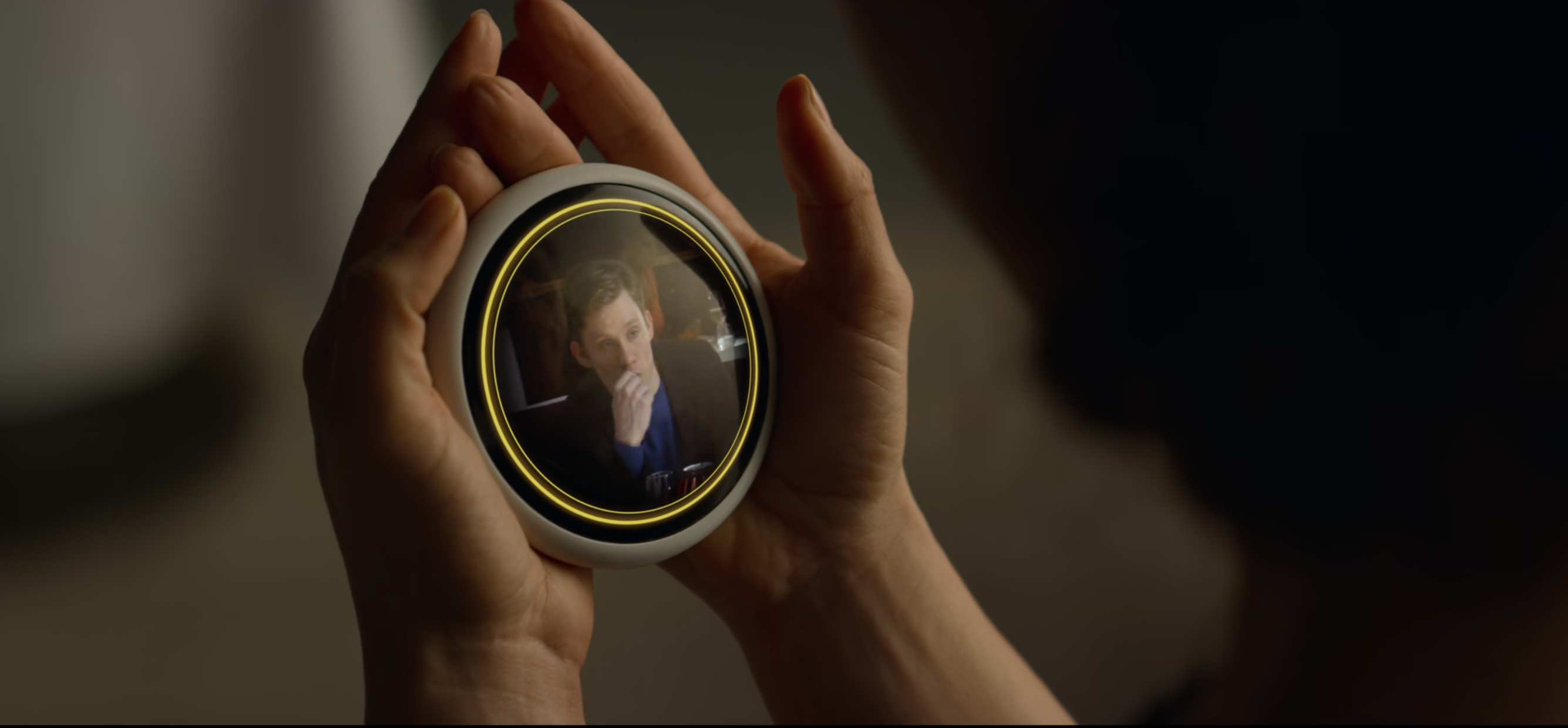
Hang the DJ unfolds within a seemingly idyllic yet tightly controlled dating system, where Frank and Amy are paired together for a pre-determined length of time, 12 hours. Their compatibility, like that of all users, is calculated through an extensive series of timed relationships, generating data to improve the algorithm. The goal? To find each user their ideal match.
The collection of emotional experiences and connections aims to reduce love to a science, yet it simultaneously raises doubts about the role of choice in human connection.
The evolution of dating apps like Tinder has sparked debates around fairness, bias, and authenticity in matchmaking. Tinder’s once-secretive algorithm, “Elo score” ranked users by perceived attractiveness and desirability, sparking allegations of discrimination. Critics noted that minority users often received lower scores, reducing their visibility to potential matches—a practice accused of perpetuating systemic biases.
Relying on behavioral tracking, these platforms analyze user actions such as swiping patterns and response times to improve match recommendations.
Research shows that women swipe right only 30% of the time, and 20% reject over 80% of male profiles. In a sample of 100 male profiles, just one was liked by more than 80% of women, while 38 were universally disliked. These statistics highlight the competitive nature of app-based dating, with women often feeling overwhelmed by message volume (54%), while men report frustration from receiving few responses (64%).
So how do you fight against an artificial intelligence that is giving you a disadvantage on the dating market? You use AI, of course. Tools like Rizz AI and Wing GPT help craft profiles and provide conversation tips. For example, Rizz AI is a chatbot that generates conversation starters or witty replies.
Photo-analysis platforms like PhotoFeeler suggest improvements to profile pictures, boosting user engagement rates. However, these systems only prioritize surface-level appeal, reinforcing beauty standards at the expense of authenticity.
The line between trust in humans and reliance on technology is increasingly blurred, especially as dating and intimacy evolve into processes mediated by digital tools. With online dating becoming more unpredictable and concerns about safety growing in the wake of movements like #MeToo, technology has stepped in to provide checks and balances.
One notable area is consent, where apps like We-Consent and LegalFling offer clear, timestamped records of agreements, securely stored on blockchain.
Did she consent to intercourse? With technology now there is indisputable proof. But while these tools simplify the logistics of consent, they leave little room for the emotional complexity that often accompanies these situations.
Swiping apps and algorithmic matchmaking have left many feeling overwhelmed, uncertain, and even distrustful. Concerns about rejection, compatibility, and navigating the nuances of communication have led to a growing demand for tools that address these anxieties directly.
The anxiety extends beyond the initial stages of dating. Maintaining communication in a relationship can also be daunting, leading couples to turn to apps like Maia, which provides voice-guided emotional check-ins, offering real-time support during tense moments.
Then there are apps like Smitten that incorporate mini-games like “Lie Detector” or compatibility quizzes to break the ice and create memorable interactions. These playful elements mirror trends in broader tech—like how Duolingo gamifies language learning—and can make dating feel approachable.
Much like Spotify’s approach to curating playlists based on your listening patterns, dating apps analyze your preferences—whether it’s swiping habits or skipping songs—to refine their suggestions over time.
However, just as Spotify occasionally suggests a song that doesn’t resonate, dating algorithms can misfire, presenting matches that feel disconnected or are derivatives.
In Hang the DJ, AI takes the concept of algorithmic matchmaking to an extreme. Our surrendering to algorithms reflects the growing trust—and trepidation—we place in technology to shape deeply personal experiences. Because of AI’s relentless ability to learn and curate, we may indeed find ourselves echoing the sentiment: Hang the DJ, for the algorithm knows better than we do, and will no longer take requests.
Expiration Date
Because every relationship in Hang the DJ comes with a set expiration date, instead of living in the moment, the characters are often consumed by the knowledge of how and when it will end. For Frank and Amy, this creates vastly different but equally isolating experiences.
Frank endures a long-term relationship that feels like a prison sentence, with no connection or joy to sustain it. Meanwhile, Amy is caught in a revolving door of short-lived partnerships. By imposing strict limits, the system denies its participants the ability to fully engage, leaving them waiting—not for love, but for the clock to run out.
This theme mirrors modern dating dynamics, particularly the incorporation of time-sensitive features in dating apps. For instance, apps like Happn, Hinge, and Tinder employ mechanisms such as expiring matches, boosts, or time-sensitive notifications to create urgency.
Happn’s location-based model even introduces real-world encounters into the mix, encouraging users to act swiftly before potential connections vanish. Similarly, Tinder’s “Boost” feature amplifies a profile’s visibility for a limited window, leveraging scarcity to drive engagement. Additionally, eHarmony introduced an AI-driven feature that suggested optimal times for users to communicate.
These tools aren’t implementing anything innovative per se, after all, human behavior is influenced by deadlines. For example, studies show that time constraints in speed dating foster initial attraction by prioritizing first impressions.
Albeit they are manufactured for drama, reality shows like Married at First Sight and Love is Blind are interesting samples of these experiments as they test the concept of expedited relationships. However, success rates vary.
Across 17 completed seasons of Married at First Sight, 69 couples have been matched. On “Decision Day,” 38 couples (55%) agreed to stay married. However, over two-thirds of those couples later divorced, filed for divorce, or publicly announced their separation. By August 2024, only 11 couples remained married, resulting in a long-term success rate of 15.9%.
The “seven-year itch,” backed by U.S. Census Bureau data, highlights that marital dissatisfaction peaks around the eight-year mark. About half of all first marriages end in divorce, and roughly 46% of marriages don’t last 25 years. On average, couples who divorce separate after seven years of marriage and finalize the divorce about a year later. For those who remarry, it typically happens around four years after their previous marriage ends.
During the COVID-19 pandemic, divorce rates spiked as couples grappled with the challenges of extended time together. In early 2020, divorce consultations increased by 50%, underscoring how prolonged proximity and external pressures can escalate conflicts and make relationships feel stifling.
Interestingly, studies on short-term sexual relationships suggest the awareness of a time limit reduces emotional attachment but can intensify physical intimacy. A survey by SELF magazine asked over 2,000 single women aged 18 to 64 about their experiences with casual sex. The results showed that 82% had at least one casual encounter, and only 19% expressed regret about it.
Modern relationships are often shaped—and strained—by invisible deadlines. These pressures, whether from dating apps, cultural milestones, or societal expectations to marry by a certain age, intensify the tension between savoring the present and bracing for the end.
Such time-bound systems can guide us toward action or trap us in hurried choices that lead to regret. Dating apps, for instance, don’t just facilitate connection—they frame it, shaping how and when we fall into or out of sync with others. Meanwhile, the fear of impermanence and unmet milestones feeds a cycle where love and time feel forever at odds.
Dangerous Devotion
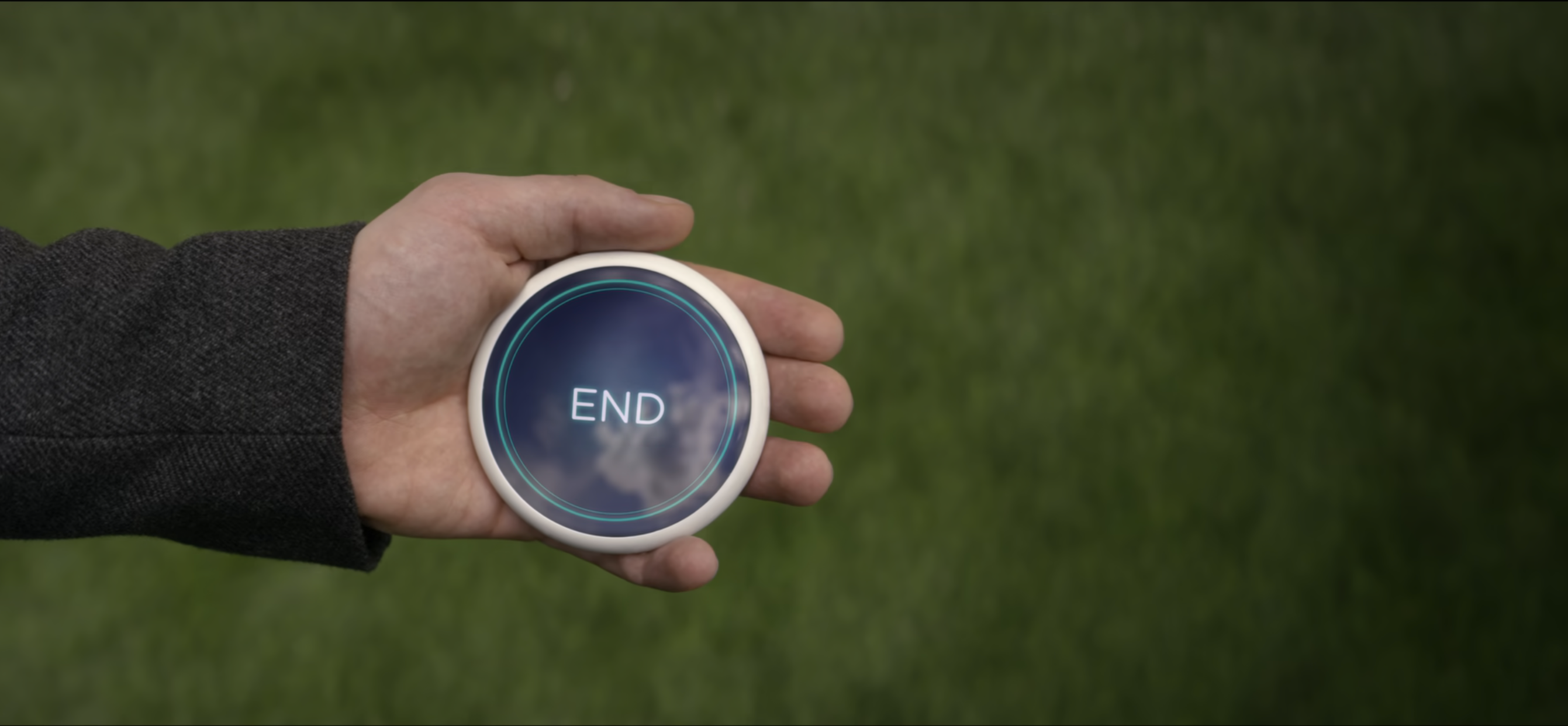
In Hang the DJ, the matchmaking System promises a 99.8% success rate.
As other couples leave the System in blissful unions, the contrast deepens Frank and Amy’s growing skepticism about the algorithm’s efficacy. Their shared frustrations eventually lead them to rebel against the rigid rules, culminating in their decision to challenge the System’s authority and flee. Perhaps concluding the final test to demonstrate their compatibility.
In modern relationships, we are often encouraged to surrender to a process—whether guided by a system, a coach, or a higher power. Before making a vow in marriage, we first commit to the process itself. However, this openness also exposes us to risks, making us susceptible to bad actors who may exploit our trust, accumulate power, and cause harm.
Among the most notable relationship coaches and frameworks is the Gottman Method, developed by Drs. John and Julie Gottman. This method emphasizes communication, conflict resolution, and building trust through tools like the “Sound Relationship House,” which consists of seven levels: building love maps (understanding each other deeply), sharing fondness and admiration, turning toward each other for support, maintaining a positive perspective, managing conflict constructively, making life dreams come true, and creating shared meaning through rituals and goals.
Contrasting this research-backed methodology are controversial figures like Andrew Tate and Karla Elia. Tate’s teachings promote hyper-masculinity and dominance, often criticized as toxic and harmful, while Elia’s advice on TikTok advocates for transactional relationships that prioritize financial support over emotional connection by addressing personal wants on the first date. The rise of these figures is partly fueled by algorithms on platforms like TikTok and YouTube, which favor engagement over content quality.
Cults like NXIVM and OneTaste exploit these same vulnerabilities under the guise of empowerment. NXIVM’s promises of self-improvement concealed abusive practices, while OneTaste’s focus on “orgasmic meditation” led to allegations of manipulation and exploitation.
Similarly, the Twin Flames Universe preyed on its followers’ desire for love, encouraging obsessive behaviors in pursuit of “destined soulmates.” These examples underscore how systems of control can distort genuine emotional connections, much like the matchmaking System in Hang the DJ.
When Frank and Amy are given a second chance at romance, they decide to avoid looking at the expiration date, allowing their relationship to flourish organically.
However, Frank, consumed by curiosity and doubt, breaks the promise. In doing so, he alters their timeline, turning what might have been a chance for something meaningful into a doomed, shortened experience.
Technology increasingly governs how people commit to higher powers by reinforcing accountability through data and automation. However, this reliance on technology often creates pressure to maintain consistency, with lapses leading to feelings of neglect or failure.
This episode paints a picture of love reduced to data points. In the real world, dating apps already deploy algorithms to analyze preferences, calculate compatibility, and influence decisions. Innovations like simulations, gamified matchmaking, and AI companions hint at a future where love feels both eerily orchestrated and profoundly uncertain. Yet, unlike the utopian undertones of Hang the DJ, where rebellion against the system sparks genuine connection, real-life algorithms often lack the nuance to capture human complexity.
As we inch closer to that future, the question lingers: will these tools guide us toward deeper intimacy or imprison us in an endless loop of swipes and time limits? But perhaps, as the episode reminds us, defying the rules and trusting our humanity may still lead us to our most meaningful connections.
Join my YouTube community for insights on writing, the creative process, and the endurance needed to tackle big projects. Subscribe Now!
For more writing ideas and original stories, please sign up for my mailing list. You won’t receive emails from me often, but when you do, they’ll only include my proudest works.
 Elliot Chan