Before we talk about the events in Crocodile, let’s flashback to when this episode was first released: December 29, 2017
On October 1, 2017, avid gambler, Stephen Paddock fired from his room in Mandalay Bay Casino, killing 60 people and injuring over 400 concertgoers, marking the Las Vegas shooting as the deadliest mass shooting in U.S. history. Although his motives remain unknown, eyewitness accounts and hotel surveillance footage played key roles in reconstructing events and tracking Paddock’s actions.
In February 2017, the Delphi Murders shocked Indiana when two teenage girls, Abigail Williams and Liberty German, were found dead following a hike. Liberty had managed to capture a photograph and audio recording of a man they encountered on the trail just before the tragedy, leaving behind crucial evidence that became central to the investigation.
One notable case involving the importance of witness testimony and technology was the 2016 Philando Castile Shooting, which gained national attention when Castile’s girlfriend, Diamond Reynolds, livestreamed the aftermath of the shooting on Facebook. Her video testimony went viral, contributing to the debate about police brutality and racial profiling. While Officer Jeronimo Yanez was ultimately acquitted, the case illustrates how digital witnesses can influence public discourse and investigations.
And that’s what brings us to this episode of Black Mirror, Episode 3, Season 4: Crocodile.
According to critics and the creator of Black Mirror, Charlie Brooker — the title holds two significant meanings. Originally, the episode’s concept revolved around a virtual safari, where some passengers experience a serene ride while others are attacked by a crocodile, leaving them traumatized. This reflects how different people carry their past experiences through life, even though they are going through seemingly similar events.
The title also refers to “crocodile tears,” symbolizing feigned remorse while continuing on a destructive path. This duality captures the episode’s central theme of guilt and deceit, where technology and memory tracking uncover hidden truths, showcasing the devastating consequences of evading accountability.
In this video, we’ll explore three key themes from Crocodile and examine whether similar events have happened—and if they haven’t, whether or not they are still plausible. Let’s go!
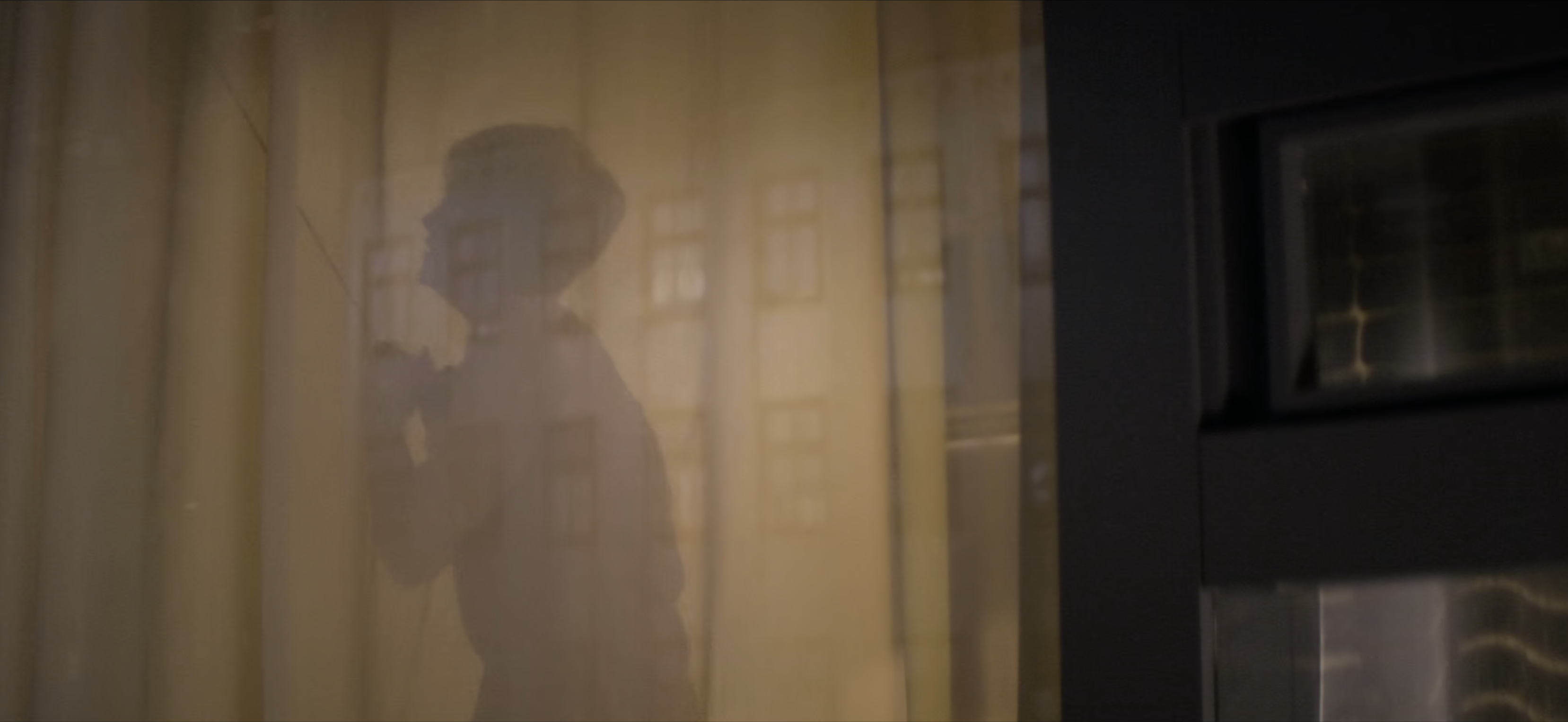
The Illusion of Escape
In “Crocodile,” the episode opens with Mia and her boyfriend Rob navigating the aftermath of a tragic accident. What begins as a night of reckless fun turns into a nightmare when they accidentally kill a cyclist. Panicked and desperate to avoid prison, they make a chilling decision—to hide the body and move on with their lives.
Years later, Mia has built a successful career and family, but the weight of guilt lingers just beneath the surface. When Rob reappears, intent on confessing to clear his conscience, Mia’s instinct for self-preservation takes over, leading her down a darker path. The illusion of escape, so carefully constructed through denial and deceit, begins to unravel as Mia resorts to increasingly desperate measures to cover her tracks.
According to the National Highway Traffic Safety Administration, from 2017 to 2021, an average of 883 cyclists per year were killed in police-reported traffic crashes in the U.S.
The conversation around a tragic cycling accident immediately brings to mind the death of Columbus Blue Jackets player Johnny Gaudreau and his brother Matthew, who were struck by a drunk driver, 43-year-old Sean Higgins on Aug 29, 2024. According to records obtained by NBC Philadelphia, Higgins had a lengthy history of unsafe driving.
While culprits like Higgins stayed at the scene of the crime, many didn’t… resulting in a great effort to find the suspect and bring them to prosecution.
Hit-and-run incidents significantly contribute to fatalities among vulnerable road users. In 2021, 23% of cyclist deaths involved a hit-and-run driver. Pedestrians are even more at risk, with 62%.
In February 2021, Robert Maraj, the father of rapper Nicki Minaj, was killed in a hit-and-run accident in Long Island, New York. The driver, Charles Polevich, fled the scene. In an attempt to evade responsibility, Polevich hid his car in his garage. Despite his efforts, police were able to track him down using surveillance footage and he was arrested and later pleaded guilty to charges related to leaving the scene of a fatal accident.
According to numerous studies, it is estimated that only 8-10% of hit and run cases are solved. With the number of hit-and-runs increasing in the US annually by 7.2% since 2009.
The Vorayuth Yoovidhya hit-and-run case gained widespread attention in Thailand in 2012 when Yoovidhya, heir to the Red Bull fortune, fatally struck a police officer with his Ferrari.
After fleeing the scene, he avoided prosecution for years, fueling public outrage over his wealth and privilege. The case was reopened in 2020, leading to an eventual arrest warrant. In April 2022, Yoovidhya was reportedly apprehended, underscoring how wealth and influence can delay but not necessarily prevent accountability.
Yes, while the wealthy and powerful can use their status to evade justice, what about those less fortunate? They must act quickly, devise elaborate plans to outsmart technology tracking them, and weave intricate lies without becoming ensnared in their own deception.
In 2018, Chris Watts murdered his pregnant wife, Shanann, and their two daughters in Colorado. Initially, he reported them missing and made public pleas for their return. However, inconsistencies in his story led investigators to suspect foul play. Watts eventually confessed to the murders and was sentenced to life in prison without parole.
Similarly, Jodi Arias was convicted of murdering her ex-boyfriend, Travis Alexander, in 2008. Arias initially denied involvement, then claimed self-defense after photos and DNA evidence placed her at the scene. Despite her manipulation of the narrative, she was convicted of first-degree murder in 2013.
Although it might seem impossible for anyone to evade the law after a crime as gruesome as murder, according to the 2017 FBI’s Uniform Crime Reporting (UCR) data, approximately 62% of homicides in the U.S. are solved. Which means that 38% of cases remain unsolved, but advances in DNA and forensic technology can still lead to convictions in cases years later.
The Golden State Killer case, which had been cold for over 40 years, was finally solved in 2018 with the arrest of Joseph James DeAngelo. Between 1974 and 1986, DeAngelo committed at least 13 murders, 50 rapes, and over 100 burglaries across California.
In 2018, investigators uploaded DNA from the Golden State Killer’s crime scenes to GEDmatch, a public genetic database used by individuals seeking to trace their ancestry.
Using this database, authorities were able to identify distant relatives of the killer. By building a family tree and cross-referencing with other details (such as locations where crimes occurred), they eventually narrowed the search down to Joseph DeAngelo.
His arrest was a landmark moment in forensic science, demonstrating how advancements in DNA technology can solve even the longest-standing cases. DeAngelo later pleaded guilty and was sentenced to life in prison.
Just like in Crocodile, where Mia’s actions lead to more crimes in an attempt to cover up the initial one, real-world cases show that the more someone tries to escape responsibility, the more entangled they become. Each new lie or action increases the risk of leaving behind evidence.
Yes, while there may be a 40% chance of getting away with murder, a more precise way to frame this is that there’s a 40% chance of getting away with it today. Advances in forensic science, like DNA technology and digital surveillance, continuously reduce the window of opportunity for criminals to evade justice, meaning that over time, the likelihood of getting caught increases significantly.

Layers of Investigation
In Crocodile, Shazia, an insurance investigator, is on a mission to establish who’s responsible for an accident involving a man and a pizza vending machine. Using the “Recaller” device, which retrieves memories from witnesses, she goes deeper into their recollections, unearthing details about the seemingly minor incident.
Like digital forensics, authorities use a range of advanced technologies to catch suspects trying to evade justice.
The first is surveillance footage from CCTV cameras, especially in urban areas, highways, and near businesses. This tool is critical in capturing vehicles or individuals fleeing crime scenes.
After the twin bombings during the Boston Marathon on April 15, 2013, authorities combed through hours of footage from cameras near the race’s finish line. A breakthrough came when two brothers were spotted placing backpacks at the scene just before the explosions. The FBI released images of the suspects to the public, which helped confirm their identities.
According to the Insurance Information Institute (III), dashcams provide clear, indisputable evidence, helping to resolve conflicts quickly. In Russia, where fraudulent claims are prevalent, dashcam use is widespread, reducing fraud by over 50%
For example, some scammers deliberately throw themselves onto car hoods or cause rear-end collisions, hoping to extort money from the driver or win a fraudulent insurance claim. Dashcam footage serves as critical proof to defend against such scams.
Installed on police vehicles or fixed locations such as traffic lights or toll booths, Automatic License Plate Readers (ALPRs) are a powerful tool for law enforcement, allowing them to scan and record the license plates of passing vehicles.
A routine stop at a gas station in Indianapolis quickly escalated into a frantic hunt when a car thief sped off with a six-month-old baby still in the back seat. As panic set in, law enforcement scrambled to track the stolen vehicle. Using automatic license plate readers (ALPRs), officers were able to trace the car’s movements across the city. Hours later, the vehicle was found abandoned, and to everyone’s relief, the baby was safely reunited with the family, unharmed.
Law enforcement agencies frequently rely on cell phone data and GPS tracking to pinpoint the whereabouts of suspects and connect them to crime scenes. Phone records provide critical timestamps, while GPS tracking logs exact locations, creating a digital trail that’s nearly impossible to erase.
The case of Timothy Carpenter centers around a series of armed robberies that took place in Michigan between 2010-2011. Carpenter was convicted largely based on cell tower location data, which tracked his movements and placed him near the scenes of the crimes. This data was obtained by law enforcement without a warrant, leading to significant legal debates regarding privacy rights and the Fourth Amendment.
Not only can law enforcement scan your license plate or track your cell phone signals, they have the capability to recognize your face. In China, facial recognition technology has become widespread and integrated into daily life, making it a critical tool for catching criminals.
A famous case occurred in 2018 when a man wanted for economic crimes, identified as Mr. Ao, was caught at a Jacky Cheung concert attended by over 60,000 people in Nanchang.
Facial recognition cameras at the event identified him as a suspect as he was entering the stadium, leading to his immediate arrest by local police. The use of this technology in public spaces, combined with China’s vast network of surveillance cameras, has enabled authorities to catch fugitives even in large crowds.
The list of tools available to investigators is growing, and many of them weren’t even originally designed for law enforcement. These are platforms already in use and accessible to the public.
In 2015, a Canadian woman named Nathalie Blanchard was on long-term disability leave due to depression, which her insurance company was covering. However, when she posted pictures of herself vacationing in sunny destinations, attending parties, and engaging in leisure activities on her Facebook profile, her insurer became suspicious.
Her insurance provider, Manulife investigated her claim and subsequently cut off her benefits, citing her social media posts as evidence that her disability was not as severe as claimed. Blanchard sued, stating that these activities were part of her doctor’s advice to improve her mental health. But this case showed how insurers are using every means in their arsenal to investigate fraud claims.
Alibis crumble, liability expands, and the more layers an investigation uncovers, the harder it becomes for criminals to evade justice. Whether through digital records, forensic analysis, or social media investigations, law enforcement are using every technique available to identify, locate, and apprehend suspects.

The Witness Effect
When Shazia uses the “Recaller” on Mia, her past crimes come dangerously close to being exposed. In a desperate bid to silence anyone who could implicate her, Mia kills the investigator, her husband, and her infant child. However, her downfall comes when she overlooks Codger, the family guinea pig, whose memories are later harvested by authorities to uncover the truth.
The Recaller brings to mind a certain machine used during investigations — the lie detector test — polygraph machines. Invented in the 1920s the polygraph test has been a staple of modern investigations and played pivotal roles in television crime shows.
But unlike the “Recaller”, polygraphs are unreliable because they measure physiological responses like heart rate and perspiration, which can be triggered by emotions such as anxiety rather than deception. This leads to false positives, where truthful individuals are flagged as deceptive, and false negatives, where liars go undetected. Courts often exclude polygraph evidence due to these issues.
Much like polygraphs, photographic memory, aka “eidetic memory,” is a controversial concept. While some people claim to have the ability to recall images, sounds, or objects in great detail after only brief exposure, scientific evidence supporting the existence of true photographic memory is limited.
Most researchers agree that while some individuals may have exceptional memory skills, they don’t possess a literal photographic memory. Many people who claim or appear to have “photographic memory” usually focus on specific areas they’ve practiced or are interested in, like detailed visual scenes, numbers, or structured information like music or maps.
One well-known person who claims to have photographic memory is Stephen Wiltshire, a British architectural artist. Wiltshire, who is on the autism spectrum, demonstrates his ability by memorizing vast cityscapes after brief observations, then accurately reproducing them in intricate detail.
In a famous example, he viewed the skyline of Tokyo from a helicopter for a short period and then created an enormous, precise drawing of the entire landscape on a large canvas without further references.
In Crocodile, we see Shazia opening a bottle of beer and playing some background music during her interview to help activate the witness’s sensory recall and jog their memories. While this tactic may seem odd, there has been numerous evidence of investigation using this approach.
The reason this approach is effective is because sensory experiences often evoke emotions. A song might remind you of a significant life event, such as a first dance or a breakup, because it carries emotional weight, making the memory more vivid.
The Hillsborough disaster occurred on April 15, 1989, during an FA Cup semi-final match between Liverpool and Nottingham Forest at Hillsborough Stadium in Sheffield, England. A crush in the overcrowded standing pens resulted in the tragic deaths of 97 people, with hundreds more injured. This disaster, caused by poor crowd control and inadequate safety measures, became one of the worst stadium tragedies in British history.
During a re-investigation years later, investigators employed sensory recall techniques to help survivors and witnesses retrieve memories of that day. Survivors were encouraged to focus on sensory details like sounds, smells, and specific visual imagery, helping clarify the chaotic events. For instance, auditory triggers such as the crowd noise or the sound of the stadium were used to aid witnesses in piecing together a timeline of the disaster.
If we think of ourselves as walking, talking cameras, with memories as data stored in a personal database, we might seem like surveillance devices open to unrestricted access by authorities. Although we’re not machines (yet), we carry multiple recording devices wherever we go, and legal precedents for accessing this personal data are already beginning to emerge.
In a high-profile case involving the FBI and Apple in 2016, the FBI sought access to the encrypted data on the iPhone of Syed Farook, one of the San Bernardino shooters.
Without Apple’s assistance, the FBI faced difficulties in bypassing its security features, including a setting that would erase the phone’s data after too many incorrect password attempts.
Apple refused to create a backdoor or unlock the phone, arguing that it would compromise the security of all iPhone users, creating a precedent for future cases and potentially weakening encryption standards worldwide.
While our memories can never be fully reliable… We may all soon be equipped with a little dash cam of our own such as the Meta Ray-Ban Smart Glasses. And what happens then?
In 2013, a bystander wearing Google Glass was able to record part of a fight in New Jersey. The video, though not high quality, provided crucial evidence in the case, demonstrating the potential future use of wearable technology. Although Google Glass never became widely adopted, this case highlighted the possibilities of using real-time recording devices to assist in investigations
While mind-reading devices may be a long way in the future, modern technology—such as surveillance cameras, digital footprints, and increasingly sophisticated forensic tools—has made it nearly impossible for criminals to evade detection. The presence of witnesses, be they human or technological, often plays a critical role in uncovering the truth.
Crocodile warns us that each layer of investigation can cut through even the most elaborate cover-ups. One might feel they’ve escaped, yet every step adds another thread to their web of lies. As each layer is peeled back, small traces—the faintest breadcrumbs—are left behind, drawing closer to the truth and the eventual unraveling of their deception.
Join my YouTube community for insights on writing, the creative process, and the endurance needed to tackle big projects. Subscribe Now!
For more writing ideas and original stories, please sign up for my mailing list. You won’t receive emails from me often, but when you do, they’ll only include my proudest works.
 Elliot Chan