Indoor Cycling Training, Rouvy: Build Your FTP Workout — Project: FTP Builder (Part 3)

This is part three in the series. Read part one / part two

Hi, I’m Elliot, and I’m here to improve my cycling skills. To achieve this, I’m embarking on a project I call FTP Builder, inspired by the Build My FTP workout I’ll be taking on in Rouvy. This series will be told in five parts. This is Part 3, entitled: The Workout


Rouvy’s Build My FTP workout is a structured training plan designed to boost your FTP over 4 weeks. It includes various intervals that target different aspects of your fitness like endurance, strength, and power. 

During each workout, I can expect a warm-up to get my muscles ready and my heart rate up. This usually means starting at a moderate pace and gradually increasing the intensity.

Then there’s the intervals. This is the heart of the workout. I’ll do several high-intensity intervals where I’ll push myself to hold a specific wattage for a set amount of time. These intervals are tough but this is where the gains happen.

Some segments of the workout require me to maintain a consistent power output for longer periods. These are called steady efforts and they simulate the sustained effort I’ll need during a race or a long ride, helping me build the stamina to keep up high wattages over time.

Finally, each session wraps up with a cool-down phase. This helps lower my heart rate and start the recovery process for my muscles.

Now, let’s find out how I did:

Week 1: Getting Used to It

I was excited to get started on this workout, but that feeling didn’t last long. The first one was rather short, but the next two were not. 

This week was all about adapting to longer, high-intensity workouts. Anything over 40 minutes felt like a grind. I’m used to more frequent, but shorter rides on the indoor bike. Holding the required power for that duration wasn’t easy. I was pretty tired by the end of the week, especially since I was also doing some high-intensity run training at the same time.

I’m not too sure what I’ve gotten myself into trying to fit this project inside my training for an upcoming sprint distance triathlon. I guess I’ll find out.

Week 2: Squeezing It In

With three long workouts this week, I had to alter my schedule to fit it all in. I had to do them early in the morning, after work, or after another workout. They were tough, and most of the time, I couldn’t even hold the required power. By the end of the week, I was pretty exhausted.

Any excitement I had for this project was gone… these workouts are painful. But I knew that the hard work will pay off when I’m at the start line and I’m confident that I’ll have the strength to climb those hills. So I stayed positive and committed to the process. 

Then, something unexpected happened. 

Week 3: The Crash

Maybe I was doing too much and the universe decided I needed a break. I started this week by crashing my bike while riding to work.  

While going down a hill just outside of my place, I was fidgeting with my jacket with my right hand and I accidentally pulled too hard on the front brakes with my left. My momentum sent me over the handlebars and I literally tackled the pavement at 20 km/hr with my right arm. It happened so fast that I was genuinely confused when I picked myself up from the road. 

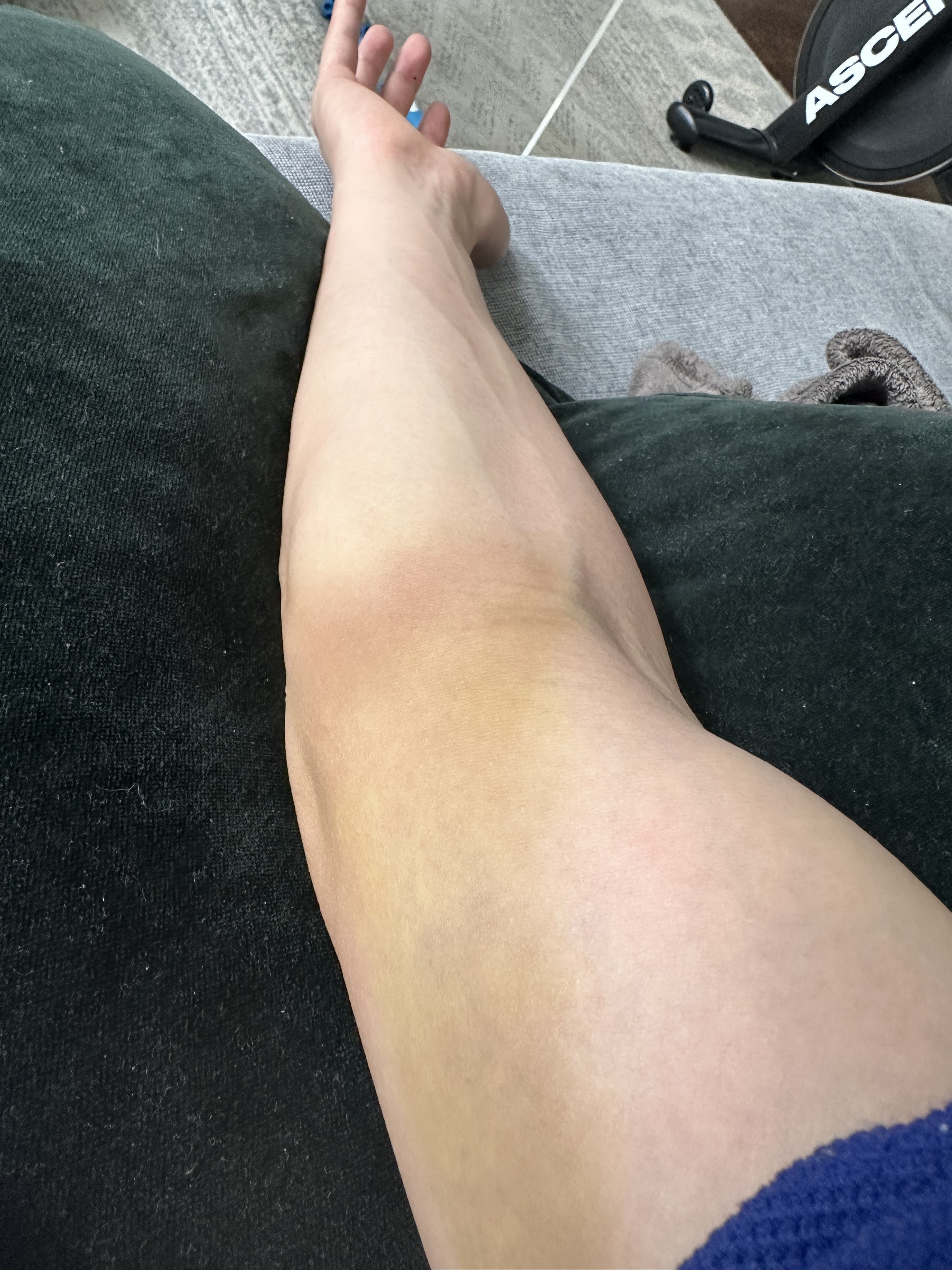
My elbow hurt a lot and was completely swollen. It took a couple of days before the bruise even appeared. I didn’t have much mobility, but at the time, I didn’t think it was that bad and that it would only set me back a few days. I was wrong. This week ended up being a complete write-off.
Week 4: Recovery and Return

After a few days off, I went to the physio for an assessment to see how much I should push myself in preparation for my triathlon race in three weeks. He assured me I’d be fine, but my elbow might take 4-6 weeks to heal completely. The only way I could injure it further was if I fell off my bike again, so all my exercises would be done indoors, which was the plan with the whole Rouvy thing.

Returning to workouts was a bit of a struggle while trying to deal with the lingering pain in my arm. You don’t realize how much you rely on it sometimes. Simple turning motions and loading bearing were the toughest. However, my legs felt fresh, which was a good sign that the project was having some positive results before I got injured. 

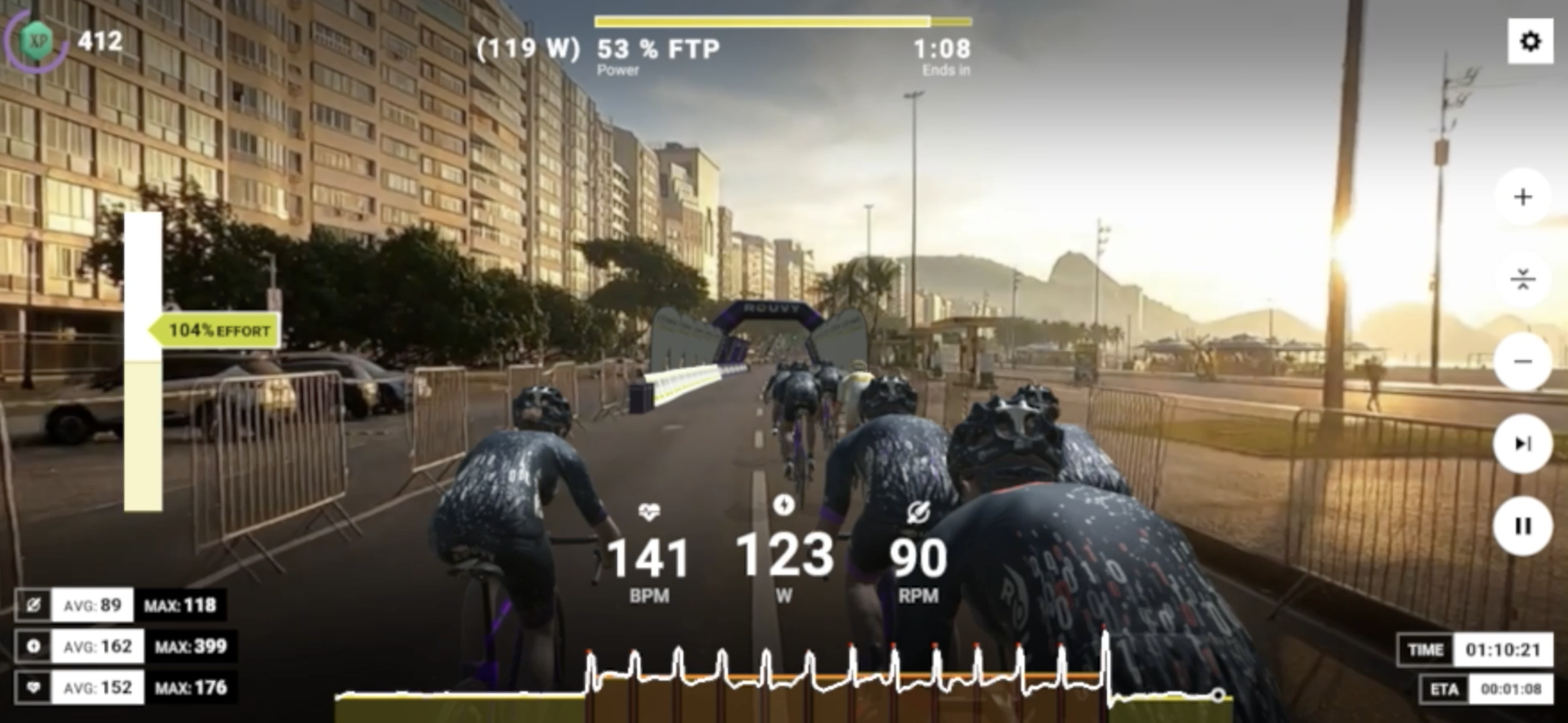
While the workouts were still long and holding the watts was tough, I surprisingly managed to get through them. Holding myself up with my arm for over an hour was a bit challenging, but it actually helped get the blood flowing, and my arm felt better after the workouts. Though getting injured never feels good, this one came at a good time to help me regroup.
Week 5: Another Setback

Although my right arm was still stiff and achy, I was grateful that the injury wasn’t worse, considering how unpredictable a crash can be, and that I still had the ability to train from home. Yes, the workouts on Rouvy were still tough — maybe even harder now that I was in recovery mode. Holding the watts for long durations was so painful it dulled everything else. But a short burst of power, such as sprinting felt good, and I could tell I was getting stronger, but the week 4 workouts were a doozy. But I was conquering them. I was so close to finishing.

But then… with only two more workouts left to go —just as I was wrapping up the last bit of training in preparation for my triathlon, I crashed again during a practice ride outside.

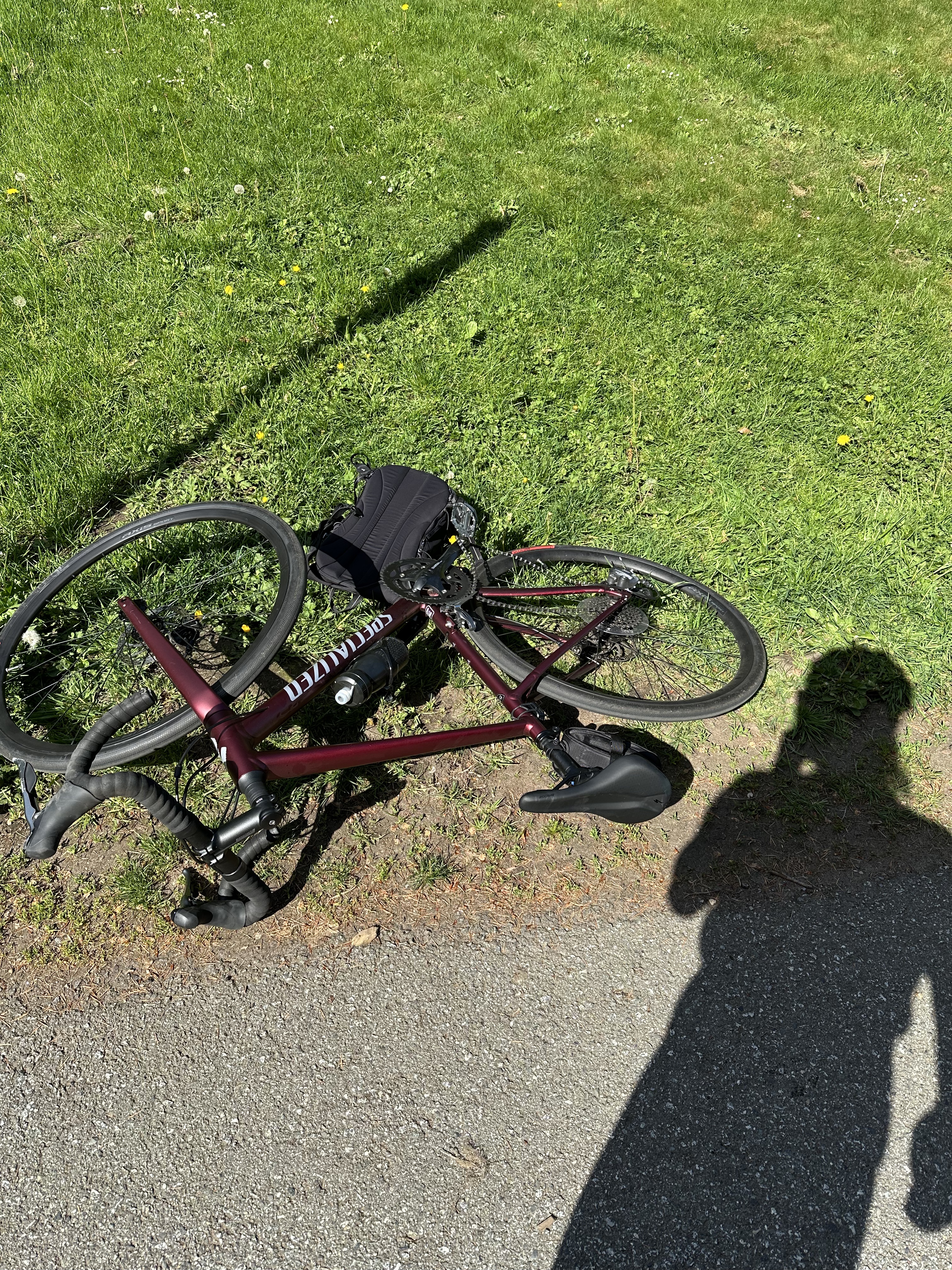
That’s two crashes in under three weeks. This time, it just felt like a lapse in focus. I was doing laps on a local hill, and on the third lap of a decent that day, I got distracted for a moment, and when I came to, I was heading towards the curb. I don’t know how that happened, but I put a lot of blame on the fact that my arm wasn’t healthy enough to return, at least not strong enough to take the risk that I took. If I was in full strength I think I could have steered myself away, but my right arm just couldn’t respond in time. 

This time I scratched up my road bike and the other side of my body. More critically, this crash really affected my mental state. I started this project wanting to improve my cycling skills and in the end, I feel like I regressed. 
If you recall, after visiting the physio for the first time, the only concern was getting into another crash. It goes to show that if you tell me not to do something, you can almost guarantee I’ll do it. If my right arm was 80% recovered, the fall probably took me back to 65%.

Overall, I’m okay, and my bike is okay, but my confidence took a hit. I worked so hard through this training block, wanting to do well in this race, set a new personal best for my time trial, and build up my FTP. I keep replaying my two crashes in my head, even though the memories are all foggy and fragmented. It sucks, because I feel like I’d be in better shape mentally and physically if I hadn’t done this project at all. But, that’s the wrong way to think of it — accidents happen, and it’s a lesson that is probably more valuable than improving my FTP. 

Reflecting on everything now. 

I don’t want to blame my indoor training for my hubris, but over the last few months, due to various circumstances including weather, I made a lot of progress in my indoor cycling fitness and strength and improved my FTP. However, I haven’t done enough training handling the bike outside. Maybe that’s the cause of my two crashes. My comfort on the bike indoors hasn’t translated to my abilities outdoors. Or maybe I just lost focus at critical moments. My race is next week. I have a couple more workouts left in Rouvy, and then we’ll see what happens.

To be continued… 

Join my YouTube community for insights on writing, the creative process, and the endurance needed to tackle big projects. Subscribe Now!

For more writing ideas and original stories, please sign up for my mailing list. You won’t receive emails from me often, but when you do, they’ll only include my proudest works.

When Creative Writing Takes on a Life of Its Own: The Tale Grows in the Telling

When J.R.R. Tolkien started working on The Lord of the Rings [Amazon], he thought it would be a straightforward sequel to The Hobbit [Amazon]. What began as a continuation of Bilbo Baggins’ adventures turned into an epic saga filled with new races and vast, unexplored lands.

George R.R. Martin experienced something similar with his A Song of Ice and Fire [Amazon] series. He initially envisioned a trilogy, but as he wrote, the story expanded into a massive, sprawling narrative with countless plots, rich histories, and a large cast of characters. It’s a story he has yet to finish—come on, George!

These legendary authors show us that sometimes, no matter how well we plan, our stories have a mind of their own. As we pour our thoughts onto the page and let our creativity run wild, something magical and sometimes maddening happens—the tale grows in the telling.

But what does that mean, exactly? It’s when your story expands beyond your initial vision, which often stems from a character, an event, or a theme. This organic growth can be a sign of your creativity flourishing, but it can also lead to a narrative that feels unwieldy and unfocused.

When you want a story to have a structured hero’s journey, a neatly tied-up beginning, middle, and end, and a fast-paced narrative, letting your story grow in the telling can be a bad thing. 

But I love Tolkien and Martin. Creating something as expansive, rich in characters, and full of unpredictability as their worlds is what I aspire to do. It’s all about finding the right balance—allowing the tale to grow in the telling while staying the course and not getting too sidetracked. Tolkien and Martin definitely got sidetracked, telling stories about characters that don’t even influence the main plot but add another layer that the audience wasn’t previously invested in. 

For example, while the main story of A Song of Ice and Fire focuses on the battle for the Iron Throne and the threat of the White Walkers, Martin decides to split A Feast for Crows and A Dance of Dragons, allowing the events in each book to happen simultaneously. This allowed Martin to introduce a whole batch of point of view characters that branched off from the original story. This brought in characters such as Aegor Rivers. 

While Aegor was a great topic for discussion in online forums, with all his backstory, his role in the Blackfyre Rebellion, his founding of the Golden Company, and all his personal vendettas and ambitions. But does he really impact the main plot? Does his story even matter in the context of the current struggle for the throne or to any of the other characters that we spent 3 books getting invested in?

Perhaps he didn’t belong in A Song of Ice and Fire. If Tolkien had written it, maybe he would have stuck him in the Appendices. Either way, as a writer, it’s all about deciding what you want to do with extraneous details that don’t impact the plot. Think, director’s cut or deleted scenes for a movie. To make an informed decision, the first thing you need to do is understand key aspects that can expand as your story develops. 

Here are five common areas that will grow as you write: 

  1. Characters As you write, your characters may take on new dimensions. They might develop unexpected backstories, acquire new traits, or form relationships you hadn’t planned. A minor character might suddenly demand more attention, becoming central to the plot. In “A Song of Ice and Fire,” Theon Greyjoy starts as a relatively minor character, but as the series progresses he becomes a significant player in Westeros.
  2. History The world you’ve created has a past, and as you write, you become an archaeologist digging up new discoveries. You might find yourself exploring the origins of a society, the lineage of a royal family, or ancient events that shape your current narrative. Tolkien delves deep into the history of Middle-earth, especially with the tales of Númenor and the ancient conflicts between Sauron and the free peoples. This rich history provides a backdrop, but it’s also a rabbit hole.
  3. Subplots New subplots can emerge organically as you write. These secondary storylines can add depth to your story, providing additional layers of intrigue and conflict. The storyline of Brienne of Tarth’s quest to find Sansa is a compelling B-story to “A Song of Ice and Fire.” Her journey and personal code of honor compliments the political and military strategizing of the main plot. A palate cleanser between major events.
  4. Themes As your story evolves, themes can deepen or shift. You might start with a simple exploration of love but find yourself delving into themes of sacrifice, betrayal, or remorse. While the initial theme in “The Lord of the Rings” might be the fight against evil, deeper themes such as the corrupting influence of power, the importance of friendship and loyalty, the dangers of industrialization on the natural world, and the possibility of redemption (as seen in characters like Gollum) emerge.
  5. Settings The settings of your story might expand, with new locations coming into play. A single city could become a sprawling world with diverse regions, each with its own culture, unique history, political dynamics, and conflicts. “A Song of Ice and Fire” begins in Winterfell but soon expands to include the Wall, King’s Landing, the Free Cities of Essos, and places beyond the Narrow Sea. 

As you can see, these additions made the two epic sagas more captivating and engaging. It opens up more questions for the audience, enticing them to learn more. The key is finding that balance between intriguing and overwhelming. You must stick up for what you want to hold and at the same time not be afraid to cut when you need to. 

But even when you cut, it doesn’t mean it needs to be deleted forever. Still we can learn from Tolkien and Martin. 

Tolkien’s world-building in “The Lord of the Rings” laid the foundation for The Silmarillion [Amazon], a compendium of myths and legends that detail the ancient history of Middle-earth. Similarly, Martin’s extensive lore in “A Song of Ice and Fire” led to companion books like Fire & Blood [Amazon], which chronicles the history of the Targaryen dynasty from its inception in Valyria to its conquest and rule over Westeros.

In addition to “Fire & Blood,” Martin expanded his world with A Knight of the Seven Kingdoms [Amazon], a collection of three novellas following the adventures of Dunk (Ser Duncan the Tall) and his squire, Egg (the future King Aegon). Set nearly a century before “A Game of Thrones,” these stories provide a glimpse into a different era of Westeros.

And Tolkien had his fair share of companion novels as well including Beren and Lúthien [Amazon] and The Children of Húrin [Amazon], both of which were published posthumously. 

What is written is never wasted. What is written can stand the test of time. So, when you trim your work, when you prune the gardens, don’t just throw away the discarded bits. They may be beautiful flowers worthy of a different venue, a different vase. 

Extract subplots or character backstories that don’t fit your main narrative and develop them into standalone short stories. These can provide additional context and depth to your main work. Compile them as a collection or publish them independently. Short stories are also a great way to attract a new audience or re-engage old ones. 

Use the expanded history and settings as lore to enrich your world-building. This can serve as background information that deepens the reader’s immersion. Build a Wiki for your world and open it up for dialogue, that is what good history does. 

When the tale grows in the telling, it can lead to some of the most beautiful and unexpected moments in your writing. It’s a dance between structure and spontaneity, between planning and discovery. Embrace this growth, shape it, and let it enhance your story.

Having your world unfurl freely, as Tolkien and Martin did, allows you to create from a place of passion and authenticity. Even if the audience’s expectations aren’t fully met, the creative satisfaction you gain from exploring your story in depth can be invaluable. In the end, it’s your creative journey. Trust yourself, trust the process, and remember that every twist and turn is part of the adventure. Happy writing!

For more writing ideas and original stories, please sign up for my mailing list. You won’t receive emails from me often, but when you do, they’ll only include my proudest works.
Join my YouTube community for insights on writing, the creative process, and the endurance needed to tackle big projects. Subscribe Now!

Time Trial: Rouvy vs the Real World | Project: FTP Builder (Part 2)

This is part two in the series. Read part one.

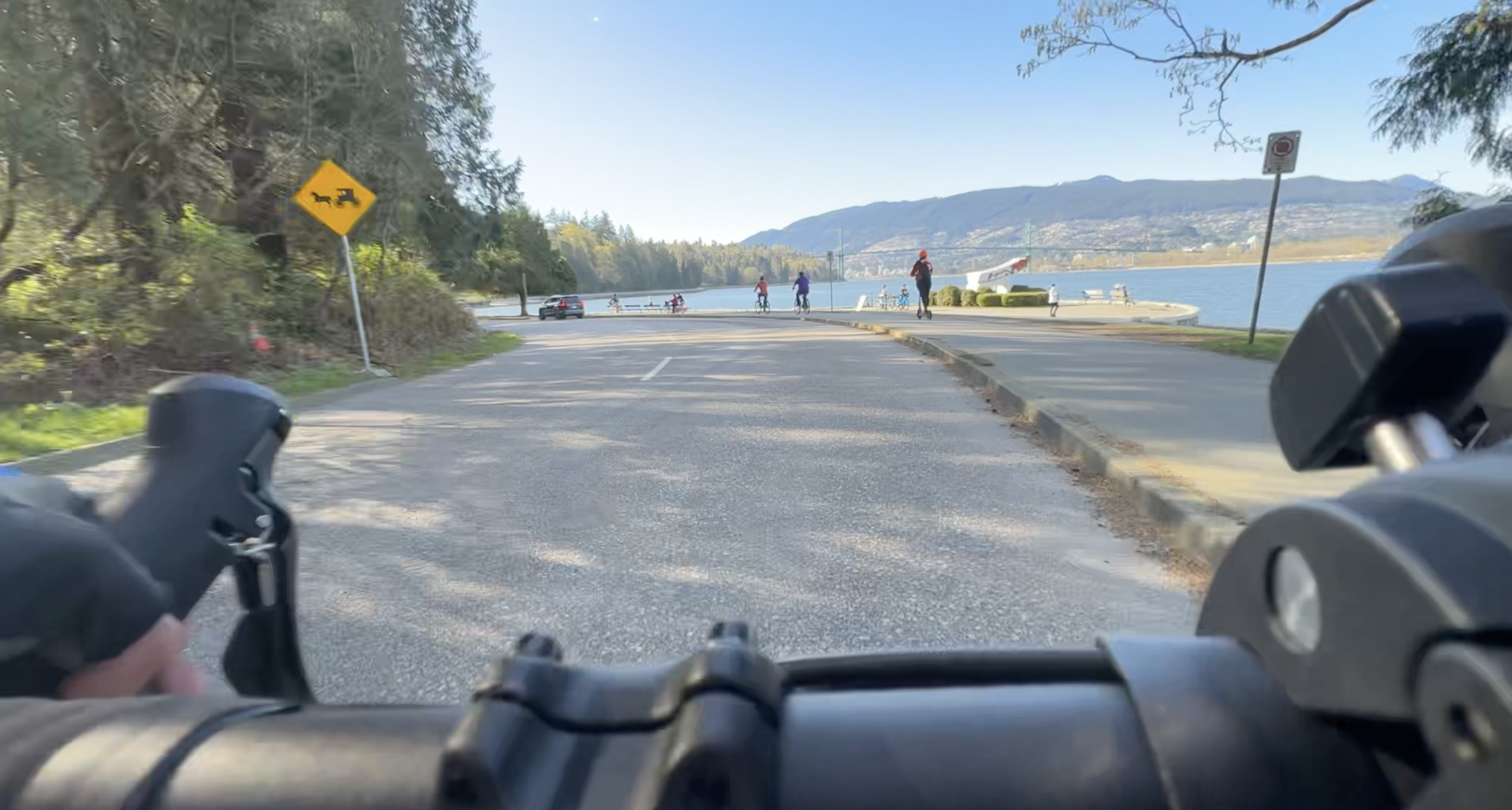
As a part of the process of gauging my current cycling level, I decided to do a time trial ride on one of Rouvy’s courses and compare it with the same route in real life. For this experiment, I chose the iconic Stanley Park loop in Vancouver, British Columbia.

Stanley Park is a beloved destination for cyclists in Vancouver. The loop around the park is about 10 kilometers of scenic beauty, featuring coastal views, a hollow tree, and glimpses of the city skyline and the Lion’s Gate Bridge. It’s one of my favorite outdoor spots in the city and just another reason why it’s so great to live in Vancouver. . 

And it’s perfect, because for my Olympic distance triathlon later this year, I will be doing four loops of this course, so this is very appropriate training for me. 

So let’s get started.

The Virtual Ride: Stanley Park on Rouvy

I decided to start with the virtual ride on Rouvy.

I’ve taken the Stanley Park loop many times before, but doing it virtually was new. My first impression was a good one, the virtual representation was impressively accurate. As I pedaled, I recognized all the turns along the way leading in, and for the first time, I didn’t have to look over my shoulder while cutting across the road. 

One major advantage of riding on Rouvy is that I didn’t have to worry about traffic. There were no cars to navigate around, no tourists stepping into the bike lane, and none of the usual park hazards like potholes, speed bumps, or horse droppings. The virtual course was smooth and uninterrupted, allowing me to focus entirely on my performance. 

Additionally, I didn’t have to worry about the big hill’s challenging incline or my handling on the big descent. The effort was consistent and controlled, which made it easier to maintain my target power output at about mid 180s, all the way until I reached the hill, where I began pushing it up to the mid 220s. With all that I ended up completing the course in 16:38.7, which is an average speed of 32.5 km/hour.

Not bad, but there is definitely room for improvement, and I can’t help feeling that I might have held back a little. 

I do love all the data I get right in front of me on my virtual rides. You see, I don’t have a power meter on my road bike, and I can’t just magically appear at the start line at Stanley Park, I’ll need to ride about 10km to get there, so all of that will play a factor in my performance in real life. 

But hey, no excuses.

The Real-Life Ride: Stanley Park in Person

A few days later, I took my bike to Stanley Park to ride the loop in real life. The experience was, as always, invigorating. It’s so nice to get away from the desk and the screens and be outside. However, going all-out on a time trial came with some challenges.

To start, I had to deal with traffic along the first half of the ride. Navigating around cars that were clearly there to do some sight seeing added an extra layer of complexity. I happened to choose a Friday afternoon for this ride, so really it’s my fault.

Additionally, my front chainring was making an annoying sound, which was a constant distraction as I entered the park and started to accelerate.

As I continued, I encountered other riders who were out for a casual ride but were blowing past me effortlessly. This was somewhat demoralizing, especially when I was trying to push as hard as I could, taking this time trial as seriously as I could.

Yes, I was attempting to do this familiar course as quickly as possible, but riding in the real world means being aware of my surroundings and the potential hazards. Other riders, pedestrians, parked cars, little bumps in the road, I’m not skilled enough to just bury my head and push power. 

In the real world, I cannot just step off my bike and lie down in bed. I had to gauge how hard to push myself because I didn’t want to blow up halfway and still needed to get home.

Then came the hill. This is the most challenging part of this course, but it was also the section that made this loop so enjoyable. I both look forward to it and dread it. 

Here was where I could really put down some effort and make a difference in time, as I usually take this part as lightly as I could to conserve energy. This time, I caught a couple of causal riders on my way up, which gave me some confidence as I headed towards the decent. Even though this was the fastest I’ve ever done the decent, at the end, another rider just flew past me. It goes to show that I had a long way to go. 

Still nothing beats the rollercoaster feeling of soaring down that hill. I love it. It’s such a nice rush and — it’s free, all it cost was the power to get up. 

In the end, I finished the Stanley Park loop, exactly where the Rouvy course started at just under 21 minutes. 20:58, if I’m not mistaken. 

That’s a difference of 4 minutes 20 seconds between Rouvy vs the real world, which to be honest, is pretty good!  

I thought with all the factors of the real world, that my time would be much slower. 

I’m pretty glad that Rouvy has a virtual course that is local to me as well. Since I will have to do this Stanley Park loop 4 times for my Olympic distance race at the end of the summer, I’m happy that I will have it accessible to practice, and that I can use the real world vs indoor experience to gauge where I am in my training.

If you live close to a Rouvy course, I really recommend you giving this benchmark test a try. 

Both Rouvy and real-life rides have their unique advantages. Rouvy is great for its convenience, detailed data analysis, and consistent training conditions, making it perfect for structured workouts and tracking fitness. 

On the other hand, riding outside provides a richer experience and there is something to be said about physically moving through space and seeing the world pass by. And it’s important to experience the thrill of travelling over 30 km/hr in real life.

Now that I have my benchmarks, I’m ready to move to the next phase of this project, which is actually going through the workouts. Like I mentioned before, I will be doing the Rouvy FTP Builder workout, which will last 4 weeks. At a glance, it seems pretty hard, but I look forward to it and hopefully, it’ll all be worth it and in the end, I’ll be fitter and more capable on the bike. 

Stay tuned! Thanks for joining me on this ride—if you want to follow along on this journey, hit subscribe and check out this playlist right here. 

For more writing ideas and original stories, please sign up for my mailing list. You won’t receive emails from me often, but when you do, they’ll only include my proudest works.

Join my YouTube community for insights on writing, the creative process, and the endurance needed to tackle big projects. Subscribe Now!