In September 2023, I participated in my first sprint-distance triathlon in Vancouver’s Stanley Park. The race comprised a 750m swim starting from Second Beach, followed by a 20k bike ride—two laps around Stanley Park—and concluding with a 5 km run to Burrard Bridge and back to Second Beach.
Before training for this race, I had close to zero experience with all three disciplines. I had swimming lessons when I was a kid, but I was only good enough to save myself from drowning… temporarily. That’s about it. Like many, I came into the sport most nervous about the first leg of the race: the swim.
However, my cycling history wasn’t much better. I didn’t grow up with a bike; I learned to ride one at the age of 13 while hanging out with schoolmates. My most vivid cycling memories involve biting off more than I can chew—whether it’s renting a bike on vacation and venturing too far up a volcano or commuting too far in the city and finding myself needing to navigate a sketchy, heavy-traffic route home. Naturally, I associate cycling with near-death experiences. But I was really more concerned about the mechanical aspect of the sport.
Finally, there is the run. I’m not particularly fond of running; I used to jest that the only way to get me to run was by giving me a bus to chase. Running for anything more than a quick sprint didn’t appeal to me, and I certainly didn’t take it seriously. Before registering for the triathlon, I had only participated in one 10k race—that’s the extent of my running experience.
So, that was my background before the triathlon. Not only was I a novice in the sport, but I was essentially a beginner in all three disciplines. I found a certain charm in that. I didn’t have to pick favorites; there was a wealth of learning in each of them, and learn I did. In my rebellious manner, I learned through making mistakes. While, yes, there were errors, there were also some small wins along the way.
Today, I’m going to share three things that went right during my training and race, and three things that went wrong.
The first thing to go right is that…
I gave myself a lot of time in training
As mentioned, the race took place over Labor Day weekend in September, and I registered for it in March, providing me with a little over 180 days to prepare. It took about a week or two to find my comfort zone on the bike and a couple of months to control my breathing technique in the swim. Not only that, it gave me time to recover from pushing my body like I have never before. The sudden training led to shin splints, sidelining me from hard running for a week in March.
Having enough time on my hands also let me join a few smaller races in between. I did a 10k in April, a 5k in June, and another 10k in August. These races were great for getting used to the mindset of competing with others, which is tough to simulate in regular training. It helped me figure out how I’d respond when someone faster passes me—would I speed up? I wanted to practice the mental side of things too, and that required real-life experience.
I’d say, if you are starting out. Give yourself as much time as possible. Commit to it early on and just make a year out of it.
Now let’s talk about something that didn’t go well:
Going too fast on the swim during choppy water
Everyone told me to go easy on the swim. I heard that advice, and I was planning to follow it. The only issue was, I wasn’t exactly sure how slow I should go, and I didn’t know what might happen if I didn’t follow the advice correctly. Sometimes there’s only one way to find out.
On race day, the water was unusually choppy. I had practiced swimming the race course three times before the event, and each time, I felt quite comfortable. However, on that particular day, the conditions were wild.
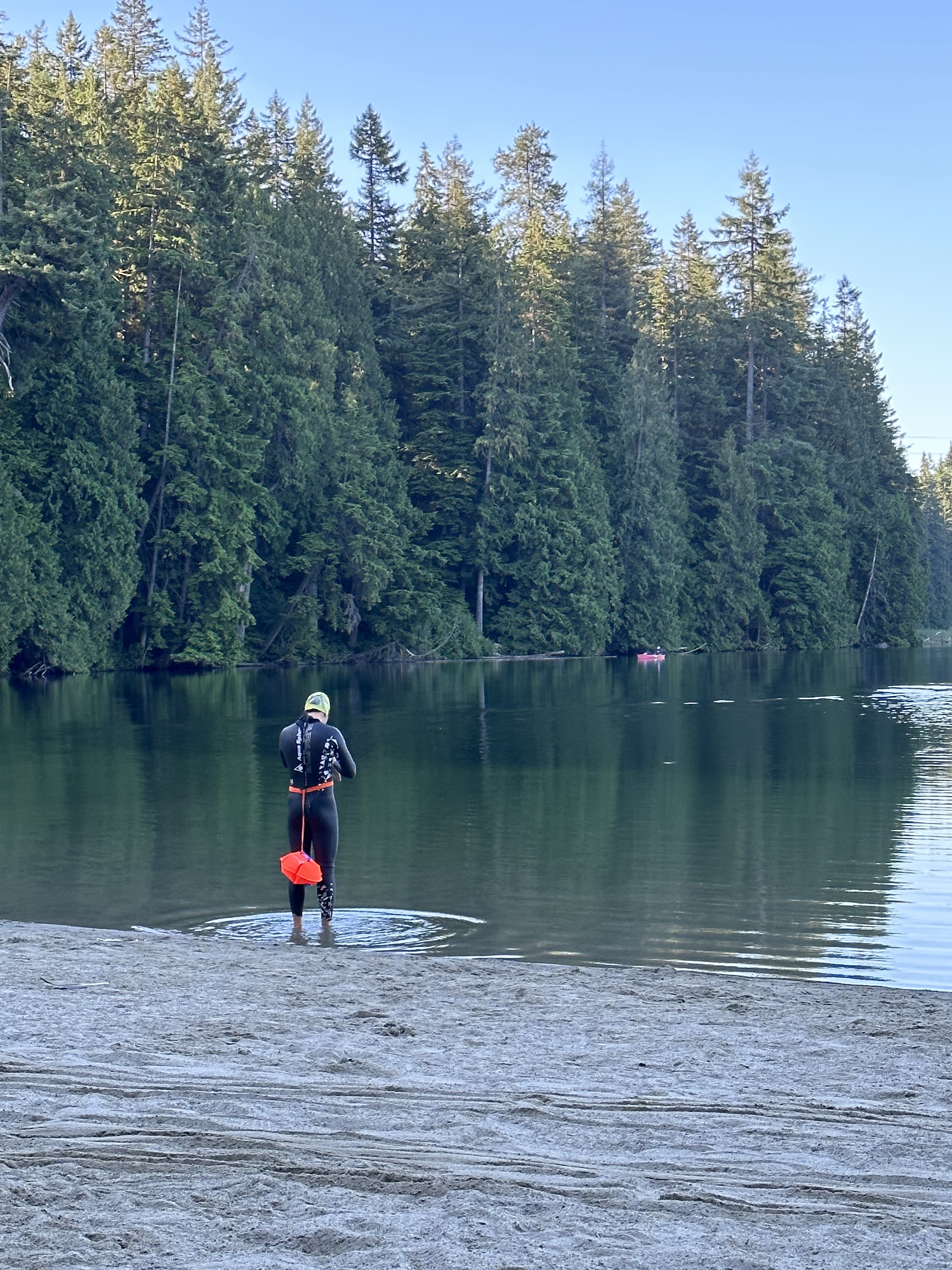
Still, I wasn’t discouraged. When the race began, I joined the group at the starting line and just went for it. The first 200m went well, and I felt great keeping up with everyone. But things changed at the first turn; there was a bottleneck, and a wave hit me, making me swallow a lot of salt water. Despite people swimming around me, I had to keep moving, but getting around the corner was tough with the waves beating on me. I got exhausted and struggled to breathe. This was the result of starting too fast; I didn’t have the energy to recover.
After making the turn, I was now swimming with the waves hitting me from the side I usually breathe on, my left side. It was a critical moment in the race, and I thought about stopping many times. But I remembered all the hard work to get to this point. Quitting after just a 300m swim wasn’t okay. I had to keep going. It was a struggle, but eventually, I turned back toward the beach, and the waves helped propel me forward. The worst was over, and I made it through.
Now for something that went right… and this is a big one:
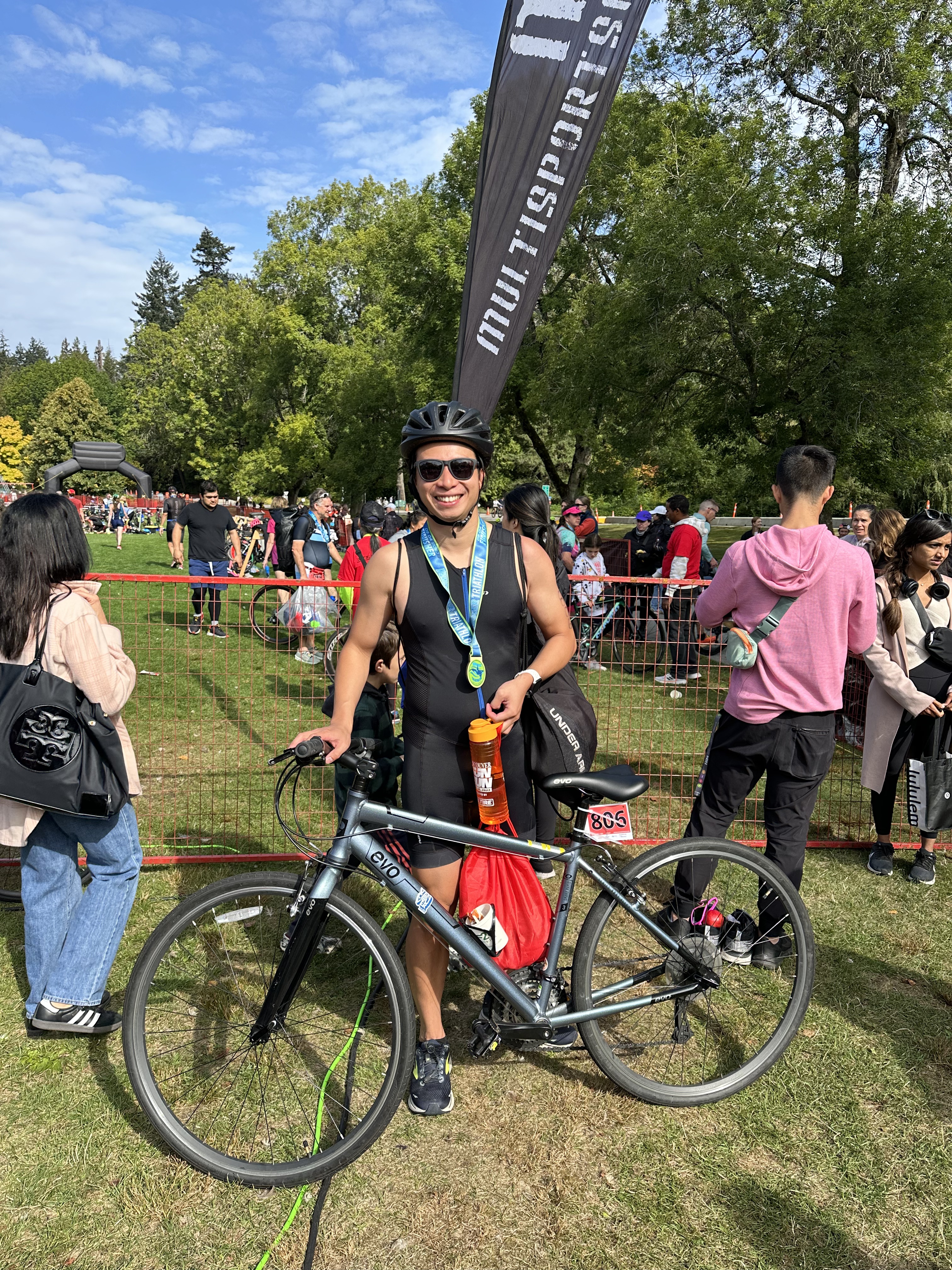
I finished the race
That was the only goal I had going in. Finishing the race. Getting that benchmark time and having a better sense of what needed improving.
Many things could have gone wrong and stopped me from finishing. The tough swim was one worry, and my bike falling apart was another. I also had the fear of getting disqualified in my mind.
During the race, there were times when things could go wrong. I saw someone crash on the bike course, which affected me mentally, and the first kilometer of the run was painful, and I had to adjust a lot. The interesting part was figuring out how to balance everything rather than just pushing hard all the way to the finish.
Something that went wrong that I didn’t anticipate or practice was:
Racking my bike…
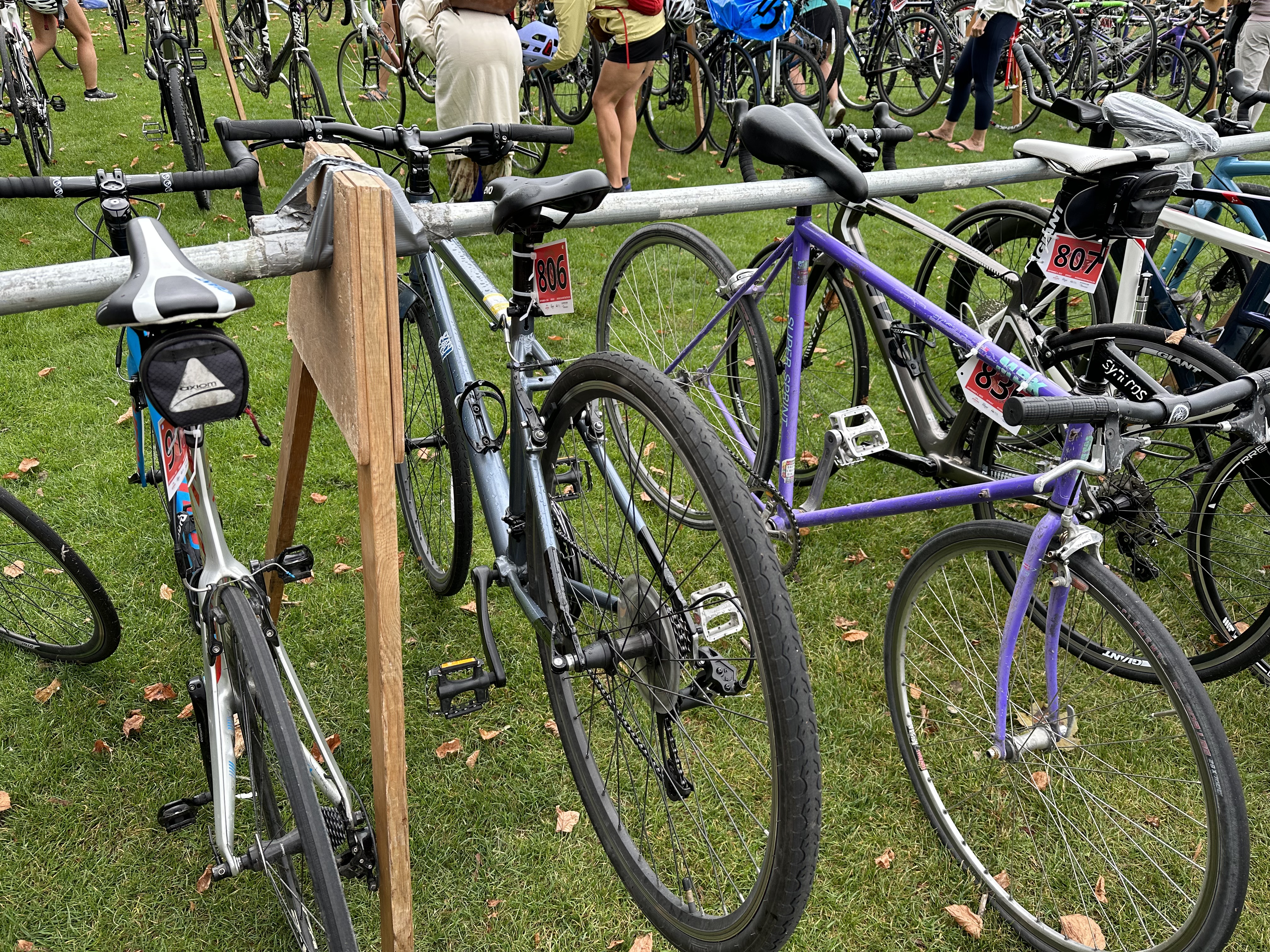
Returning to transition after the cycling portion of the race, I had to put my bike back onto the rack. I had so much trouble getting it on. First off, not that this was a problem, but I noticed that my bike saddle was crocked when I got to the race. I’m not sure how it got damaged. It might have been because of a crash a few weeks before (I’ll get more into that later).
Anyway, I recall standing there, grappling with my bike, rolling it over my wetsuit and attempting to get it back onto the rack. Not only did I waste 10-20 seconds doing that, but I also expended a considerable amount of energy. To add to the chaos, I entered through the wrong side of the rack. Once I finally managed to rack my bike, scratching up my new shifter in the process, I had to run around to put on my running shoes. My transition 2 was not impressive.
Sticking with another thing that went wrong:
My bike itself…
Look, I still think I made a good decision getting the bike I did because I was close to getting an even worse bike.
I didn’t want to invest in a pricey bike only to discover that I wasn’t fully committed to the sport.
This is a $500 hybrid bike, also the nicest bike I’ve owned so far. I pushed this bike to its limits during training, and a few components began to show wear, with the shifter being the most notable. Approximately a month before the race, every time I hit a bump, the left shifter would unexpectedly drop gears, which became super annoying.
My initial plan was to complete my first two races with this bike and then upgrade to a road bike. I’m honestly relieved that it managed to hold up and get me through the race. Because a week after, I noticed a clunking sound every time I pedaled. It turned out that the freewheel had broken.
I must have pushed it too far during the race itself.
This little bike had a lot of action in a short amount of time and I’ve paid a lot since to maintain it. But after my first race, I decided to retire it from racing and purchase an entry-level road bike to take over. As for my old one, I use it as a commuter bike and it’s great for that. Despite not everything going perfectly, and a few stressful days, I wouldn’t change a thing.
Something that went right from beginning to end was my pleasure for
Tracking progress
I got into this sport because it’s not just about fitness and gear; it’s also analytical. I enjoy tracking each workout, noting improvements or areas to work on. Using this data helps me adjust my effort and tweak my plan. Seeing myself get better gradually—swimming, cycling, and running longer and faster over time on a spreadsheet—brings me an abnormal amount of joy.
Second only to enjoying a beautiful summer day outdoors, observing my progress is my favorite aspect. It’s incredibly motivating to reflect on the beginning and recall how challenging it was to swim 200 meters. I vividly remember that version of myself, and it’s astonishing that in less than a year, I’ve gained so much more confidence in the sport.
Without a doubt, if I hadn’t tracked my progress in some way, it would have been harder to remember where I came from and my commitment would have waned, and I likely would have given up, or at the very least, not signing up for another race.
That’s correct—I’m currently fully invested in triathlon as my recreational pastime. It’s been a welcome counterbalance to the extensive time I spend at a computer. I recommend it to most people with a sedentary job.
If you’re thinking about signing up for a triathlon and haven’t before, just know it’s a commitment. Starting with nothing, I spent at least $2000 getting ready for my first race, but the time I put into training made it worthwhile. It’s become a stress reliever I look forward to, and it broke up my day nicely.
It can become quite an obsession, but when you’re working on a novel like I am, it’s more pleasant to share that you’re doing a triathlon rather than writing a novel. Both are braggy lines you can boast about, but at least with the triathlon, you don’t have to bore people with the details of your dystopian fantasy.
Well, those are three things that I believe I did well and three things that didn’t go as expected when I signed up for a triathlon. If you’re feeling inactive, going through an existential crisis, or just frustrated with the world, consider giving triathlon a try. Above all, it has been therapeutic, and I think that’s a good thing.
For more writing ideas and original stories, please sign up for my mailing list. You won’t receive emails from me often, but when you do, they’ll only include my proudest works.
Join my YouTube community for insights on writing, the creative process, and the endurance needed to tackle big projects. Subscribe Now!
 Elliot Chan