Finding the time and motivation to write can be demoralizing. In 2023, I had a lot of trouble sitting down and putting pen to paper, even though I had a massive project I needed to make progress on. At the pace I was going – producing only two to three pages in a notebook per week – I realized that continuing in this manner would get me nowhere. It became clear that I needed to change my approach if I wanted to move on to the next phase anytime soon.
I had to get back to my roots and examine what I did before to succeed. In the past, I’ve shared my experience many times about working a little every day and that was the habit I needed to get back into. A 30-day writing streak proved to be the catalyst I needed to reignite my passion for writing and establish a sustainable routine. Write 1 page minimum every day. If I can do that, then there is hope.
Here’s a glimpse into my journey and the lessons I learned along the way.
1. Breaking Through the Resistance
Whether it’s battling writer’s block, self-doubt, or external distractions, the 30-day streak became my anchor through the tough times. Committing to writing daily forced me to confront obstacles head-on, transforming them from roadblocks into stepping stones. I know a lot of what I’ve written will be cut out in the editing phase, and that sucks, but I can’t worry about the tough parts in the future, I need to focus on the tough parts I’m going through now.
2. Excitement Rekindled
The monotony of daily life can dull the excitement that fuels our creativity. After working all day, I don’t want to spend another 30 min to an hour at my desk writing. If it’s not something I have to do, I’ll convince myself not to do it. But if it’s not a negotiation, then it changes my mindset — instead of dreading it, I can look forward to it. I find time to fit it in. I treat it like a meal. If I can’t cook for myself maybe I’ll order something, either way, I need to eat.
Embarking on a 30-day writing streak reignited that creative spark within me, because I don’t let the embers go out. Each day brought a new opportunity to explore ideas, even if they are as terrible as the food I cook for myself.
3. Momentum is Everything
Momentum played a crucial role in my writing streak. The initial days were challenging. When you are on day 4, and you give up, not a big deal, nothing was wasted. It’s really important to get through the first week with your streak intact. Once you do that, momentum picks up, and quitting ceases to be an option.
As I built momentum, the process became more natural and enjoyable. Momentum, I realized, is the key ingredient that propels you forward, making the act of writing a part of your daily routine.
4. Squeeze It In
One of the biggest challenges of a daily writing streak is finding time in a busy schedule. Squeezing in writing became a part of my day, but it’s not always easy. Things come up and it throws you off. You need to be flexible and prepared.
You won’t always get to write the same time every day. There will be mornings when you wake up late or evenings when you need to attend to some obligation. If you can get the writing out of the way as soon as possible, do that. If you can’t do that, then you will need to rely on your anticipation. Busy day tomorrow? Where are you going to eat lunch? It doesn’t matter, bring the notebook with you and write immediately after. Block off thirty minutes, that’s all you need to scribble some words on a page. If you commit to having the notebook with you, incredibly, you’ll find a way to make time for it.
5. Accountability Through Documentation
To ensure I stayed committed to my writing streak, I took an unconventional approach: filming myself. Creating a daily video log became a powerful accountability tool. Knowing that I had an audience, even if it was just future me, kept me honest and motivated to fulfill my writing commitment each day. The footage you are seeing now is me writing during the 30-day streak.
If you want to keep yourself accountable, you don’t need to film, there are other ways. You can take a photo, do it with a friend, post about it on social media, or just mark it on a calendar. I like filming because it’s relatively hands-off, I just set up the camera and let it run while I do the work. It doesn’t need to be fancy, and you don’t need to overthink it.
6. Don’t Kid Yourself
In the grand scheme of things, nobody needs me to write. It’s a selfish endeavor, driven by personal passion and a childhood dream. Acknowledging this fact eliminated any room for self-deception. If I want to write, I have to commit wholeheartedly, making it a daily habit for my own fulfillment. I can’t lie to myself and make myself feel righteous, and that all of this is for the benefit of humankind. No, this is for me. I want to do this. And that’s okay, but what’s not okay, is for me to keep bitching and being pissy that I have to do it. I don’t have to. I don’t have to find time for it. I’m choosing to. And any other attitude definitely doesn’t benefit anyone — not even myself.
So, I feel like I’m back on track. Things are happening.
Embarking on a 30-day writing streak proved to be a rejuvenating experience. A jump start I needed for my stalled vehicle. It pulled me out of a creative slump and instilled a sense of discipline in my day to day. If you’ve stopped doing something that you wanted to do, like writing, don’t hesitate—make it a habit, own it, and watch as the words and the days add up. That’s the best part.
For more writing ideas and original stories, please sign up for my mailing list. You won’t receive emails from me often, but when you do, they’ll only include my proudest works.
Join my YouTube community for insights on writing, the creative process, and the endurance needed to tackle big projects. Subscribe Now!
Before we discuss the events of San Junipero, let’s first take a look back to when this episode was released: Oct 21, 2016.
In 2016, consumer-grade VR headsets like Oculus Rift, HTC Vive, and PlayStation VR became widely available, making virtual reality more accessible to the masses.
In the same year, VR found applications in healthcare, particularly for pain management during medical procedures. This was often called “Virtual Reality Distraction” or “VR Distraction Therapy,” where VR headsets created immersive experiences to distract patients from pain.
Mobile dating apps became the dominant platform for online dating in 2016, making the dating process more convenient. The concept of casual dating and hookup culture gained popularity, with apps like Tinder associated with short-term, non-committal relationships.
However, Tinder and its algorithm faced criticism for allegedly perpetuating racial and gender biases in online dating, which raised concerns about fairness and inclusivity.
2016 was a notable year for global equality, with countries like Colombia legalizing same-sex marriage. However, in the U.S., debates on transgender rights and bathroom access intensified due to North Carolina’s “bathroom bill”.
Tragically, the Pulse nightclub shooting in Orlando, Florida on June 12, 2016, targeted the LGBTQ community, resulting in 49 deaths and numerous injuries, making it one of the deadliest mass shootings in America.
Brittany Maynard’s 2014 case continued to influence the euthanasia and right-to-die conversation as it inspired discussions on end-of-life autonomy. In June 2016, California’s “End of Life Option Act” went into effect, allowing terminally ill adults to request medical aid in dying, making California the fifth U.S. state to legalize physician-assisted suicide.
2016 marked a transition year, with technology becoming integrated into various aspects of life, offering opportunities and challenges. This year set the stage for a more connected and digital society, impacting dating, healthcare, and our ability to cope with loss.
And that’s what brings us to this episode of Black Mirror: Episode 4 of Season 3: San Junipero, an iconic episode that invites us to contemplate the implications of a digital afterlife.
In this video, we’ll explore 3 themes of this episode and determine whether similar events have happened — and if not, whether they are still plausible.
Til Death Do Us Part
The episode begins with Yorkie navigating the bustling Tucker’s nightclub, where she crosses paths with Kelly, who encourages her to dance. This encounter sets the stage for a deeper connection beyond the surface allure of San Junipero’s neon-lit nightlife.
The 1980s was an interesting time. While there was progress in the women’s rights movement, traditional gender roles still persisted in many areas. Women were often expected to balance a career with homemaking, and men faced pressure to conform to traditional masculinity. Those who didn’t conform to societal norms often faced stigmatization. This included individuals with alternative lifestyles, like the LGBTQ community.
The American Psychiatric Association declassified homosexuality as a mental disorder in its diagnostic manual in 1973, but the emergence of the HIV/AIDS epidemic in the 1980s sparked fear and amplified existing stigma.
While HIV and AIDS remain a concern, medical advances and a better understanding of the virus have improved the outlook for those affected. HIV today is no longer a death sentence, with approximately 39 million people globally living with the virus in 2022.
Acceptance is a major theme in this episode. Acceptance is also the final stage of grief. While Yorkie’s family never accepted her after she came out and after her accident, Kelly struggles to accept her husband’s death and the end of their marriage, despite her enduring love for him.
Aging, loss, injustice, and differing viewpoints are all factors we must accept. While we may start with denial, anger, and depression, we can’t grow without eventually finding a way to accept and live with these realities.
In the 1980s, mental health issues were not openly accepted, and individuals facing such challenges were sometimes viewed as weak or even dangerous. People often believed that those with depression could overcome it by “cheering up” or “snapping out of it.”
In the same vein, conversion therapy, also known as “reparative therapy” or “ex-gay therapy” aims to change the sexual orientation of a person who identifies as LGBTQ. It was based on the belief that like being depressed, someone’s sexual orientation was a choice and could be “cured.”
There is evidence now to suggest that genetics may play a role. Studies of identical twins have shown a higher likelihood of shared sexual orientation compared to fraternal twins.
Today, while not universal, many LGBTQ individuals experience greater acceptance and support from their families and social circles, with same-sex marriage legally recognized in much of the Western world.
In 2000, Vermont became the first U.S. state to introduce civil unions for same-sex couples, offering legal recognition and benefits but not full marriage rights. It took four more years before Massachusetts made history by legalizing same-sex marriage, granting equal rights and privileges to same-sex couples.
But the war for acceptance still continues. In 2023, the battleground is the education system, where acceptance and inclusion are key to a new generation of LGBTQ feeling safe. Across North America, protestors and counter-protesters clashed at the steps of suburban elementary schools over the teachings of gender and sexual orientation. Should such topics be excluded from school curricula, leaving such education solely to parents? One side demands it. But what if those parents hold intolerant beliefs, similar to Yorkie’s parents? Where can children find support?
Approximately 41% of transgender individuals have reported attempting suicide at some point in their lives. Additionally, the suicide attempt rate among LGBTQ adults is nearly 12 times higher than that of the general population. The rise of social media has enabled us to share messages, raise awareness, and learn from others, but it has also made it more challenging to find contentment in our own lives due to constant comparisons. Research conducted by the Pew Research Center revealed that about 60% of social media users in the United States experience feelings of inadequacy when they see others’ posts showcasing their accomplishments.
Social media feeds are filled with idyllic depictions of flawless marriages, dream vacations, picture-perfect families, and enchanting love stories, creating an endless popularity contest. However, it is crucial to recognize that the notion of a flawless life is a fallacy; such flawlessness does not exist in the real world.
And that is something we need to accept.
Ghosted
During their dance, despite their contrasting personalities, Yorkie and Kelly share a joyful moment. However, when Yorkie becomes overwhelmed, she leaves the dance floor, and outside, Kelly makes a sexual proposition to her, to which Yorkie declines by telling her that she’s engaged.
The following week, Yorkie returns, and in the restroom, Kelly once again propositions her sexually. This time Yorkie accepts.
But on the third week, Kelly is nowhere to be found at Tucker’s. Yorkie searches for her at the Quagmire, a BDSM nightclub, and bumps into Wes, the man Kelly had been avoiding. Wes, like Yorkie, expected Kelly to adhere to their relationship, but it becomes evident that Kelly has chosen to avoid the pain and complexity of such commitments by ghosting them.
Ghosting, which involves suddenly cutting off communication without explanation, became more prevalent in the mobile dating app scene, often leaving users hurt and frustrated. This phenomenon is emblematic of modern dating culture, where the ease of online connection and reduced face-to-face interaction can lead to less personal and sometimes inconsiderate approaches to ending relationships.
According to a 2023 Forbes study, 76% of participants have experienced either ghosting or being ghosted in a dating context. Nearly 60% of individuals report having been ghosted, while 45% acknowledge ghosting someone else.
After their intimate night together, Kelly experiences complex emotions. Her initial encounter with Yorkie at the nightclub was more about enjoying the moment and having fun. While she has developed genuine feelings for Yorkie, she also grapples with her internal conflict.
According to Business of Apps, as of 2022, over 337 million people worldwide are using dating apps. And not all of them are necessarily looking for a soulmate.
The dating app market is nearly a $5 billion industry that caters to diverse needs. For instance, Grindr is there for the LGBTQ community, Bumble empowers women to initiate conversations, and OkCupid lets users specify their intentions, whether it’s casual flings, short-term dating, or long-term relationships.
Time was referenced often in this episode, and does indeed play a crucial role in relationships and life. The intense passion in the early stages of romance are evolutionary mechanisms to help individuals form connections and reproduce, but they typically fade as relationships mature, causing us to question whether they were real at all.
In San Junipero, at midnight, those who are trialing the platform must return to their physical bodies. This serves as a metaphor for how we must confront the physical and mental challenges that come with aging, as well as our capacity for love. Kelly’s hesitation in forming deep emotional connections is partly due to the guilt she carries from her years of devoted love to someone she lost. Letting go of that love is a daunting prospect for her.
Meanwhile, Yorkie sees being with Kelly as a chance to finally experience the richness of life and love that had been withheld from her in her previous existence.
In this way, to love each other is to let their past lives die.
People now have the freedom to choose their experiences and relationships. Apps like Tinder popularized the concept of swiping right to like or left to dislike profiles, turning the search for potential matches into a game.
However, the fundamental human experience remains unchanged. We still grapple with the passage of time, knowing that every decision we make and every opportunity we miss may come back to affect us. And so, it raises questions: What if there’s something better out there? What if we never find something as good again? Dating apps are games, where we create our own characters and hope that the chosen one leads to a happy ending.
Second Life or After Life
At the end of the episode, Kelly faces a significant choice. Her decision centers around joining her late husband and daughter in the afterlife or staying in San Junipero with Yorkie and embracing digital eternity.
The Internet has made the preservation of memories complicated. For those still alive, managing their digital legacy is a growing concern, and various apps and platforms help them plan the distribution of their digital assets and online accounts after their passing. Services like Everplans and Cake offer such support.
Some people may choose to leave more than assets and accounts behind. They want to create digital versions of themselves. Technologies like Replika, an AI chatbot, engage in conversations with users, preserving their thoughts and stories for future generations.
But the notion of permanent existence in another world raises questions not just for the afterlife but for our present lives. Many living individuals now opt to spend time in entertainment realms, where they can create avatars that reflect their personality more than their physical appearance. This mirrors Yorkie’s born-again experience, transformed by the Tucker technology.
One popular form of this digital second life is the game with the namesake: Second Life, where players create avatars and explore a user-generated 3D environment with various activities, from socializing to designing virtual items. As of 2022, there are 64.7 million active users on Second Life.
Online platforms provide safe spaces for people to explore and express their identities, and LGBTQ+ communities on social media, games, and apps have shown to offer support and acceptance.
While the hype for the Metaverse had simmered down for consumers, industries are still bullish about its potential. We see this with technology companies like Nvidia designing “digital twins”, a virtual representation of a physical object for use in constructing automobiles, infrastructure, energy, and more.
The Metaverse is not going away, despite companies like Disney and Microsoft shutting down projects. In 2023, we saw Apple joining the market by announcing their headset, Apple Vision Pro. While it may seem laughable that we would be wearing those giant goggles all day, tech companies are betting that soon people will buy in.
The hope is by then, governments and policymakers will have a better understanding of the regulatory and ethical aspects of the Metaverse, especially concerning digital identity, data privacy, and virtual economies.
This leads to the topic of a second life as an afterlife. While digital immortality is not yet possible, it sparks debates, especially around a speculative concept called mind uploading. This involves transferring a person’s mental state, including consciousness and memories, from a biological brain to a non-biological or digital form.
There are a number of companies already embarking on this venture, such as Nectome and Alcor Life Extension. But as of 2023, there doesn’t seem to be any advancement beyond preserving the bodies and brains of the deceased.
If mind uploading ever becomes possible, its development will hinge on scientific progress, societal acceptance, and ethical frameworks, making it a complex and multifaceted journey.
James Hughes, American sociologist and bioethicist, raises a fundamental question: “The pursuit of digital immortality opens up a realm of ethical concerns. Who owns the digital copies of our minds, and what rights do they have?”
San Junipero is an emotional ride. The episode beautifully explores themes of love, identity, and the nature of existence. It’s known for its captivating blend of nostalgia, romance, and thought-provoking questions about life and death in a digital age.
While rewatching this episode, I was surprised by how moved I got at the end. Perhaps now, I have gotten older. The past few years have revealed the potential bleakness of the world. Although I have made many commitments, the fear is not that time will stop, but that I may squander it by clinging to something fleeting.
Join my YouTube community for insights on writing, the creative process, and the endurance needed to tackle big projects. Subscribe Now!
For more writing ideas and original stories, please sign up for my mailing list. You won’t receive emails from me often, but when you do, they’ll only include my proudest works.


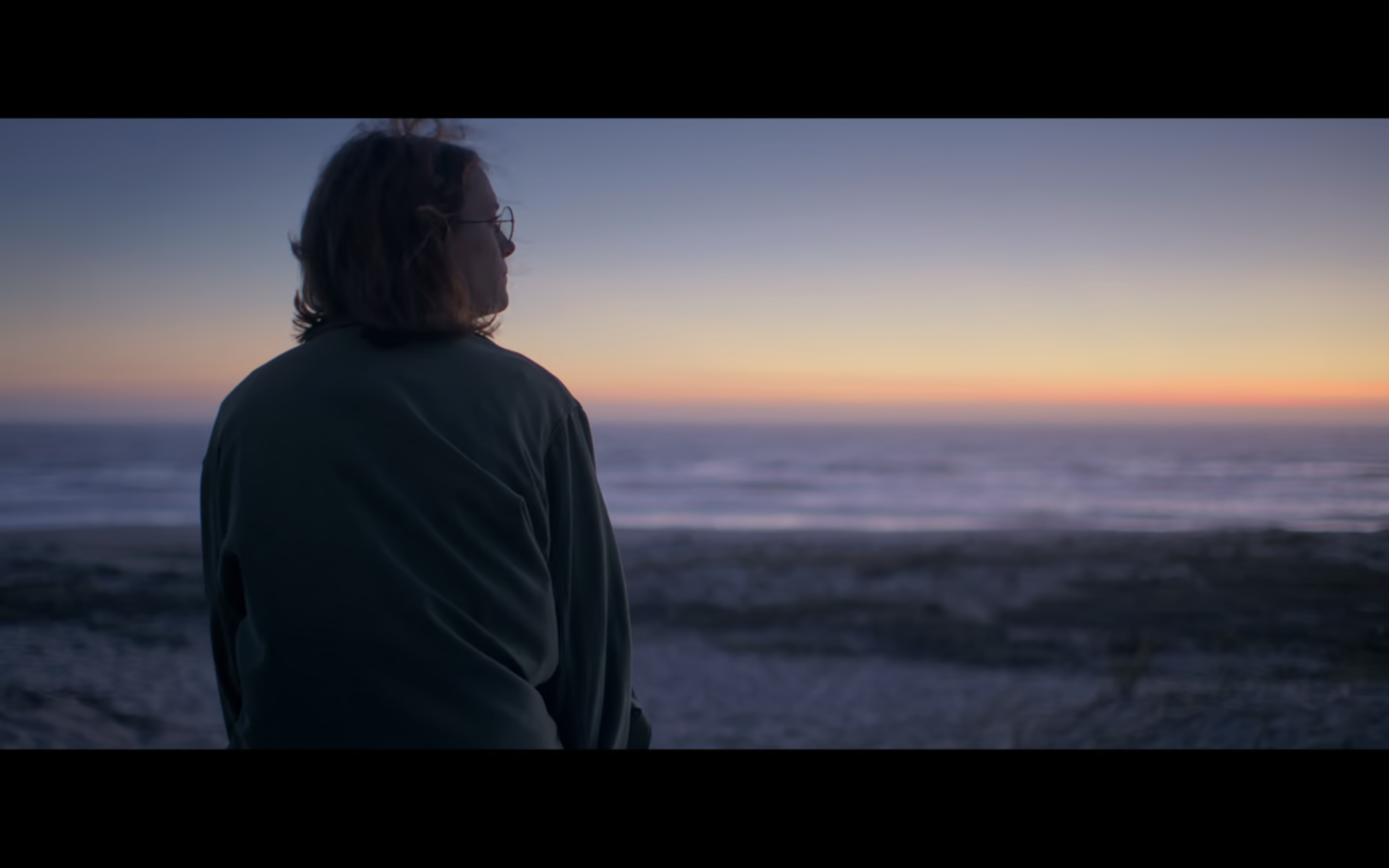

 Elliot Chan