DNF. It stands for Did Not Finish. In a race, those three letters haunt all athletes. In the creative world, not finishing carries the same weight of shame.
For many of us, creativity is something we often have to pursue in our personal time. We may steal moments early in the morning or stay up late into the night to work on our creative projects. The specific goals of these endeavors aren’t as important as the fact that we consistently dedicate time to them, with a focus on long-term progress.
However, life can unexpectedly consume our days and nights. Work, personal commitments, and unforeseen opportunities may arise, and we need to seize them. When this happens, time can slip away, and even when we do find time, we may lack the energy.
When the pandemic began, my schedule opened up in a way I hadn’t experienced since my school days. I felt like I had ample time to dedicate to my projects, and I made the most of it. I made significant progress on my novel, invested more hours in my video creations, practiced illustrating and animating, and honed my audio recording skills. I pressed down on the accelerator for three years.
But at the end of 2022, I fell into a bit of a depression. Personal struggles and painful childhood memories resurfaced, and I realized that during my free time, I was mostly sitting in front of a computer. I was rather working or laboring on my creative projects. My mind wandered into dark places, and I began to lose touch with myself. While I was writing my stories, I was also rewriting my own history, and it wasn’t a happy one.
During my darkest moments, I believed the only way to escape the pain was to complete my creative work. But there’s no such thing as truly finishing your work. The goal is consistency, doing a bit each day. There’s no destination; the journey continues. My healthy creative habit had become distorted, and I expected something grand to emerge at the end.
There was a moment when I recognized I needed to step away from the computer. It wasn’t that I wanted to stop working on my projects, but I had to balance that intense effort with other aspects of my life, including confronting my troubled memories.
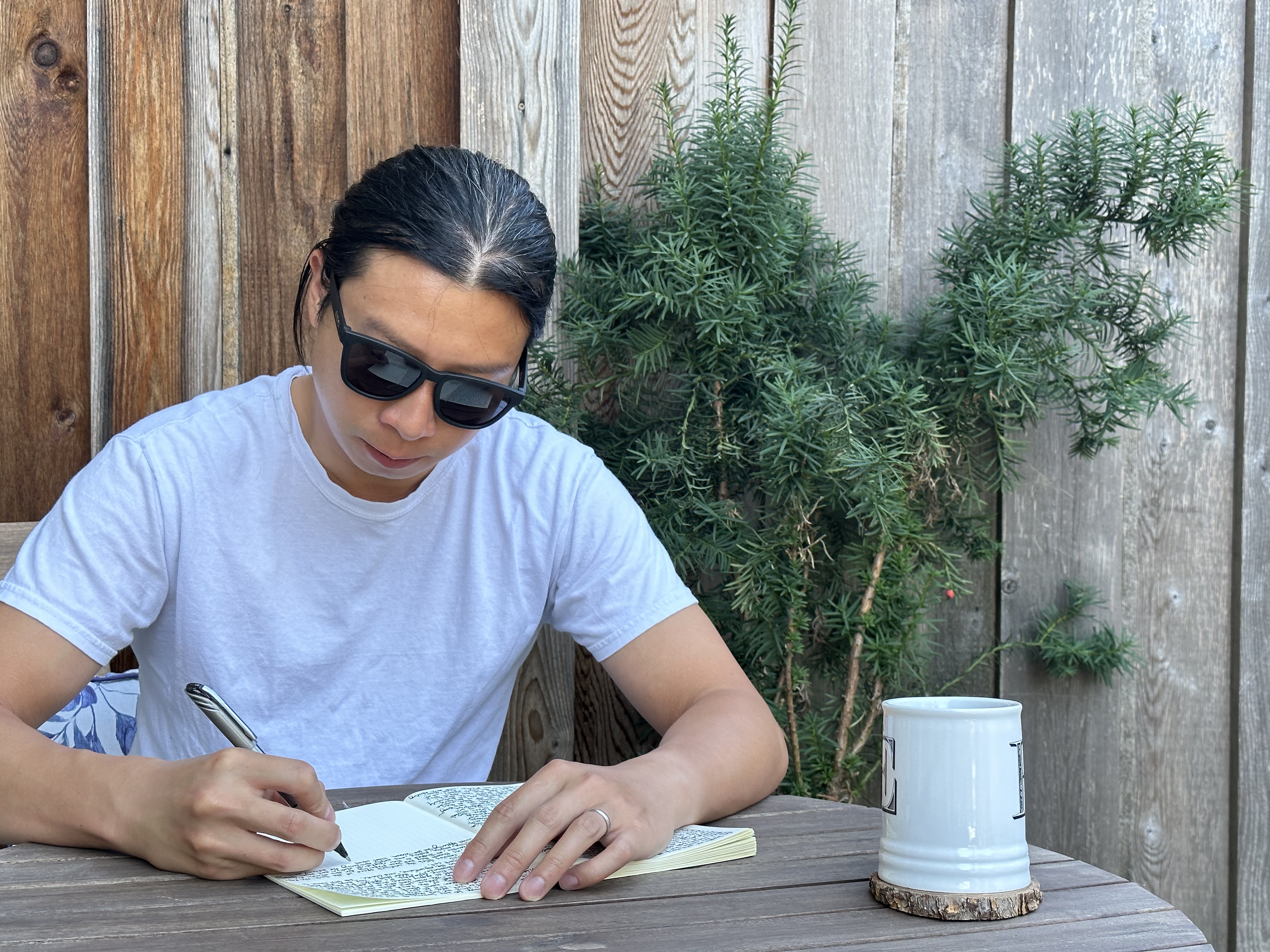
Around this time, I had also become quite inactive. I’d stopped playing hockey since the beginning of the pandemic, and I wasn’t sure where to go next. I love hockey, but it was a time-consuming sport with a rigid schedule. Additionally, as a goalie, it was one of the most stressful positions.
I needed something I could control, something I could pick up on my own terms. My wife is a marathon runner. And endurance sports intrigued me. Surely it was a better alternative than self-harm. But I’d convinced myself that I wasn’t an endurance athlete. I labeled myself a quitter, and that is the theme of this narrative.
There were many mornings when I woke up and my wife was already out for her run. She would be gone for hours on end. I wasn’t sure if I could do that. But still, I needed something to replace hockey. So I kept thinking. I might not want to run every day, but what about adding cycling and swimming to break the monotony? For a few weeks, I contemplated attempting a triathlon, even though I had minimal, negative experiences with running, cycling, and swimming in the past.
As I considered these new challenges, my old, self-limiting stories were retold over and over in my head. I told myself, “Look at all those bad experiences; you don’t want to do that. Plus, with your history of quitting, you’ll just give up anyway, so why start?”
The more I repeated those stories to myself, the more I realized before I could finish my projects, I needed to rewrite my life. What would the next ten years hold for me? Would I become a bitter writer, endlessly struggling at my desk and resenting my creative work? Or would I seek new experiences?
I remember a passage from Haruki Murakami’s memoir, “What I Talk About When I Talk About Running.”[Amazon]
“Some writers who in their youth wrote wonderful, beautiful, powerful works find that when they reach a certain age exhaustion suddenly takes over. The term literary burnout is quite apt here. Their later works may still be beautiful, and their exhaustion might impart its own special meaning, but it’s obvious these writers’ creative energy is in a decline.
This results, I believe, from their physical energy not being able to overcome the toxin they’re dealing with. The physical vitality that up till now was naturally able to overcome the toxin has passed its peak, and its effectiveness in their immune systems is gradually wearing off. When this happens it’s difficult for a writer to remain intuitively creative.
The balance between imaginative power and the physical abilities that sustain it has crumbled. The writer is left employing the techniques and methods he has cultivated, using a kind of residual heat to mold something into what looks like a literary work—a restrained method that can’t be a very pleasant journey. Some writers take their own lives at this point, while others just give up writing and choose another.
If possible, I’d like to avoid that kind of literary burnout. My idea of literature is something more spontaneous, more cohesive, something with a kind of natural, positive vitality. For me, writing a novel is like climbing a steep mountain, struggling up the face of the cliff, reaching the summit after a long and arduous ordeal. You overcome your limitations, or you don’t, one or the other. I always keep that inner image with me as I write.”
Inspired, I bought a bike, got a community pool pass, and signed up for my first sprint triathlon.
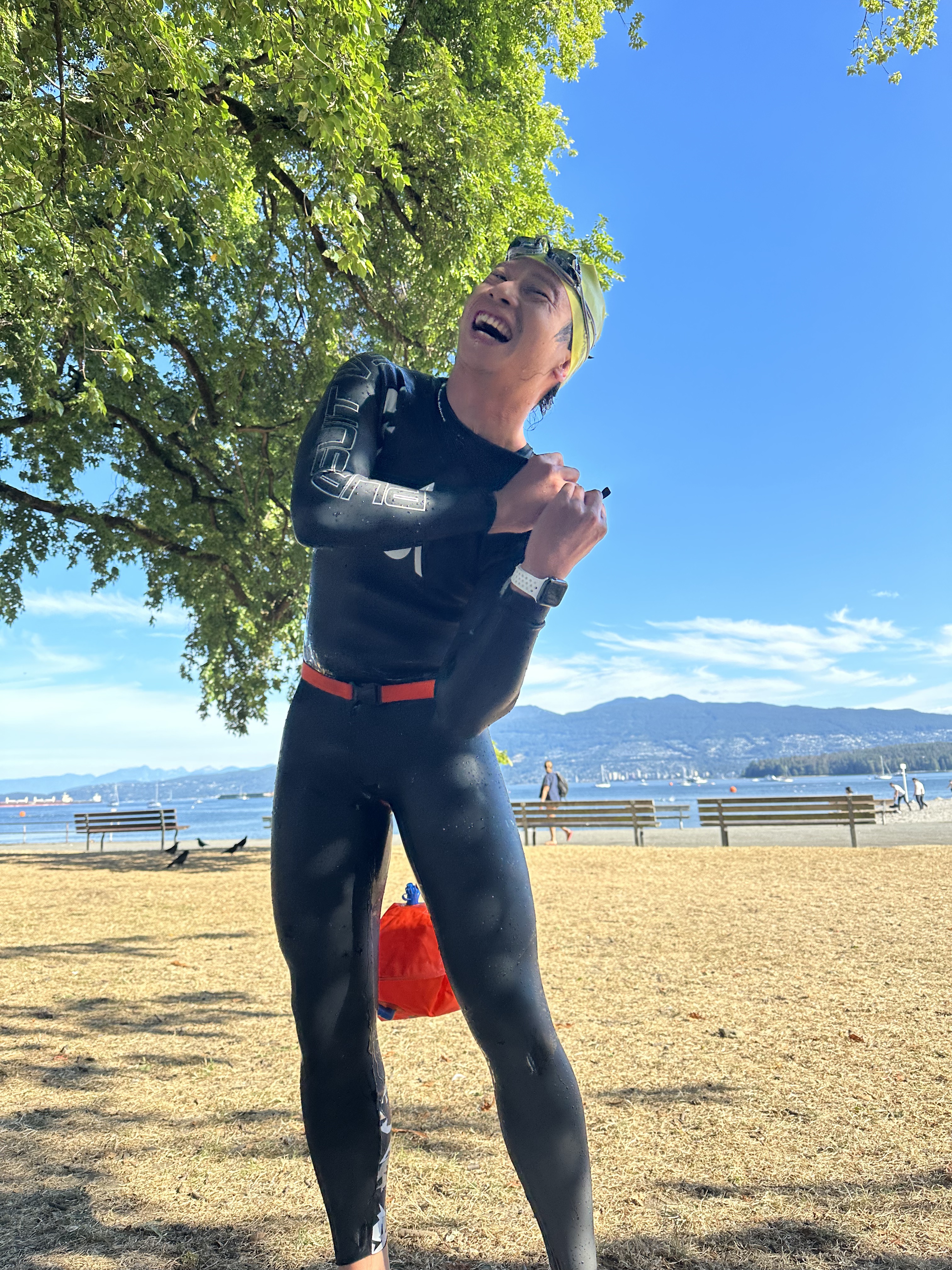
I eased up on my creative projects and made room for training, which turned out to be a rejuvenating addition to my day. Knowing I had a run, bike ride, or swim to look forward to made sitting at my desk more bearable.
Creative writing, too, is like a triathlon – it involves writing, editing, and publishing— three different disciplines. I saw threes in everything. A story is structured with a beginning, middle, and end. I find all the metaphors in this sport reassuring. As if this was meant to be. By temporarily pausing my projects, I can reflect on my life, much like a swimmer surfaces from the water to sight where he is going and where he has come from.
Creativity is so subjective. There are no clear winners or losers. There are no rankings you can compare with others. And I think that is a blessing.
While I do need to be evaluated and ranked to feel some sense of accomplishment, I don’t have to put that burden on my creative work. I can put that on something a little more objective — like athletics. My competitive energy, I can direct towards my sports. My creative energy, I can protect and keep for my art. While this spreads my energy across a wider surface of my time, I’m also happier this way. This is the new story of my life. I don’t have to be a writer locked up in a room, hammering away at a manuscript that maybe nobody will read and feel angry about it. I can write freely. And then go run freely.
I do feel guilty for not dedicating as much time to my projects as I did last year, similar to the guilt I feel for not spending more time with friends, or the guilt I feel for not having travelled to Japan yet. However, I remind myself that this guilt is just a story as well.
We are on a journey of healing, much like climbing a mountain or training for a race. Every day, we confront our limitations, whether we’re writing or standing at the starting line. Guilt is a toxin that can deplete our energy, so we must incorporate various disciplines in our lives to keep it at bay, enabling us to focus on what matters.
I might not be great at everything I do, but with this mindset, I’m able to do more and keep at it. I’m not going to be a professional athlete and I might not be the next best seller. But nobody can stop me from trying. I pursue it all now little by little. My athletic triathlon and my creative triathlon. Each time I sit down to write, I’m excited. Each time I go out to swim, bike or run, I’m energized.
The dread of the DNF is gone. Because finishing is no longer the goal.
Join my YouTube community for insights on writing, the creative process, and the endurance needed to tackle big projects. Subscribe Now!
For more writing ideas and original stories, please sign up for my mailing list. You won’t receive emails from me often, but when you do, they’ll only include my proudest works.
 Elliot Chan