Not ‘if’ but ‘when’

ShakeOut_BC_2013_Poster_DCH_Protect

Formerly published in The Other Press. Oct. 16 2012

British Columbia prepares for ‘the Big One’
By Elliot Chan, Contributor

Vancouverites sure are a whiny bunch. There’s never not something for us to complain about: it’s always raining, the traffic is bad, and it costs way too much to live here. We could go on and on, but it’s not until tragedy comes along that things are put into perspective.

For years now, citizens of the Pacific Northwest have been warned about “the Big One,” an impending catastrophic earthquake with no equal in recent history. Caused by the Cascadia subduction zone, an area off of the west coast where two tectonic plates meet. The movements of both plates force one beneath the other, causing tension to build up beneath the earth. When the tension is finally released, it will generate the most devastating of earthquakes, known as a megathrust.

There have been 15 megathrust earthquakes recorded in human history; the most recent being the 2011 9.0 magnitude in Japan. The Japanese were recognized for their earthquake preparations, but after watching their coastal towns get wiped away by tsunamis, we must turn the lens on ourselves and ask how properly equipped we are for a disaster of equal or greater proportion.

Give us 100 years and we still won’t be able to build an earthquake-resistant city. What we can do is apply our knowledge and preparation and create a system that will lessen the effects. Mitigation, preparedness, response, and recovery are the four pillars of earthquake readiness.

The Shake Out

The first Great British Columbia Shake Out was held last year on January 26, in memory of the earthquake that struck BC on the same day in 1700. The Shake Out is a province-wide earthquake drill, where participants practice and demonstrate safety procedures. Possibly receiving publicity from the ominous nature attached to the year 2012, the Shake Out has enjoyed a surge in exposure for its second outing. The British Columbia Shake Out will take place on October 18 at 10:18 a.m. So wherever you are at this time, take a moment to test your reaction and comprehension of a safe earthquake protocol.

Douglas College is amongst the 18 post-secondary institutions participating in the drill this year. A committee of local, provincial, and federal governments, as well as private sectors and non-governmental organizations are responsible for organizing the Shake Out. This committee is in charge of spreading earthquake awareness to the apathetic masses. Although they are unable to predict when a damaging earthquake will strike, experts agree that there is a 1/3 chance of one hitting in the next 50 years, the same odds as contracting a heart disease (stroke, diabetes, etc.) So, along with eating healthy, getting plenty of sleep, and exercising, we must also be prepared for earthquakes.

Captain Brock Henson, the Emergency Program Officer of Saanich, informed The Other Press that on the 18th, over 100 different drills will be conducted by different organizations and first response agencies. Speaking on behalf of the fire departments, Henson stated that these earthquake procedures include getting the fire truck out of the hall, insuring that communications are running, and inspecting the building for safety and capability for operation. From there, many untraditional emergency drills will be conducted.

The Quake

The severity of earthquakes is one of the many things Vancouverites neglect, though I can’t blame them. We can’t necessarily live our lives anticipating disaster, but it’s reckless to be ignorant—especially after we’ve been given extensive warning.

Earthquakes are nature’s most violent fits. The best strategy is far from heroic: the drop, cover, and hang on for dear life method.

Common myths advise you to seek safety beneath a doorway or run outside. In the occurrence of a megathrust, however, these methods are regarded as unsafe. In many modern buildings, doorways are no more soundly structured than any other part, while it’s been proven that falling objects inside buildings more often injure people than the buildings themselves.

If you are in a room without any immediate shelter, do not flee. Instead, crouch down in the corner for stability and cover your head and face. If you happen to be outside, quickly find an open area without power lines or buildings. If you are driving, pull over and remain inside the vehicle. The key points to remember during an earthquake are: if you are inside, stay inside; if you are outside, stay outside; and avoid anything that may break or fall.

Cody-under-desk

The Aftermath

So you survived the upheaval, but the crisis is far from over. After the noise and quiver of the first shake, be ready for an aftershock that could occur anywhere from minutes to days after. Until then, follow the safety procedure and exit any building, assuming it is damaged. Any structure built before 2005’s strict earthquake code or ones that haven’t been subjected to seismic upgrades are seriously at risk of collapsing. Vancouver has over 8,000 buildings considered vulnerable, should a seismic attack hit.

Expect to be on your own without any emergency response for the next 72 hours after an earthquake. Electricity and telephone reception, both landline and cellular, will most likely be down. If communication has not been completely severed, Henson wants people to refrain from making phone calls. For those who need to communicate, sending text messages is the best means for contacting others.

Different areas of the Lower Mainland will suffer different consequences following the earthquake. Congested areas like downtown Vancouver will be isolated, as all bridges will be closed. Don’t consider driving or traveling far either, as the city will be one big construction site—what else is new though?

Although, the Lower Mainland is not a high-risk tsunami zone, coastal areas should still be avoided. All the while, Vancouver Island and Northern BC should take tsunami precautions. Waves have been known to hit land within minutes after the initial shock. The best way to prepare for such a crisis is to be knowledgeable about your surroundings. After an earthquake, experts estimate that citizens only have 10 minutes to get to higher ground, preferably 15 metres above sea level.

In the Lower Mainland, communities in Richmond, Delta, and the Fraser Valley built at sea level will be at the greatest risk. The soft, swampy foundation will cause flooding and soil liquefaction. Mitigation is the main defense; from there, the city can only hope that the structural standards and regular dike inspections are protection enough from the inevitable.

In all the scenarios, it is important to locate proper necessities, both medical and sustenance. No one should be complacent when it comes to survival gear. Take an afternoon and go stock up with a friend, a co-worker, or a family member. Preparation for an earthquake may seem tedious, but it is your responsibility to ensure as much as possible has been done to prepare. Miracles are not a reality, but earthquakes are. So don’t be surprised if tomorrow the globe stammers and whiny ol’ Vancouver is left speechless.


How are you, really? The complexities of small talk

images

Formerly published in The Other Press. Oct. 16 2012

It’s not the size that matters

By Elliot Chan, Contributor

Small talk doesn’t need to happen, but it does. Often overwhelmed by the awkward silence between two people, small talk manifests itself in various occasions from waiting in line for coffee to mingling at a social gathering. Since it’s too strange to smile at someone and not say anything, we might as well try to perfect the skill. Properly conducted small talk will make a big impression, but there’s the possibility that negative repercussions will leave you looking like either an obnoxious rambler or a disregarding jerk.

While some of us have busy lives and are eager to get things done, others are lonely and starved for human contact. The key is being able to identify which is which. So before you ask someone how he or she is doing, ask yourself if you even care. A simple “Good morning,” or “Hello,” might sound drab and boring, but it’s a polite way of putting the conversation onus on the other person.

Some people prefer entering a conversation with “How are you doing today?” and most of the time it’s harmless, but every so often you’ll find someone who just isn’t doing well and wants to vent. Sure, you might’ve helped that person relieve some stress, but they also murdered a chunk of your day. Is it worth it? If you don’t want to know how someone’s weekend was, don’t ask. If you don’t really care how their family is doing, don’t inquire about them. To avoid exiting a conversation early and leaving the person feeling rejected, it is important to understand what you want out of the small talk.

There’s nothing wrong with the classics. Talking about the weather has become a cliché or a bad habit, but why should it be that way? Why can’t we just embrace the topic? After all, despite all the science in the 21st century, weather is still an uncontrollable factor in our lives. It’s fascinating! Shouldn’t we talk about that? And since so few of us are ever correct about it, shouldn’t we take in everybody’s opinion? If even the professionals can’t get it right, then it seems like a very harmless conversation to have

Well-constructed small talk can be a very enjoyable experience. It doesn’t need to have a compelling anecdote or a passionate rant; it only needs to be mutual.

The No Hockey League

Formerly published in The Other Press. Oct. 16 2012

NHL players keep busy during lockout
By Elliot Chan, Contributor

There was a moment in early September when the sun was shining, the school year was full of optimism, and hockey was the furthest thing from my mind. Now, as the days are getting shorter and the NHL lockout continues on, the absence of hockey can no longer be ignored. Desperate to find my fix, I resorted to the Internet and found a sketchy website *shiver in shameful disgust* streaming European hoc

Photo by AP Photo/Petr David Josek.

key. Over a hundred NHL players have crossed the frozen pond, abandoned the Players’ Association, and found themselves dressed as billboards with skates.

At a glance, it seems as though the European leagues are the main benefactors of the lockout. After all, they did fetch such top players as Alexander Ovechkin, Evgeni Malkin, Claude Giroux, Rick Nash, Jamie Benn, and most recently Tyler Seguin. But delving deeper and looking at some stats, it is strange seeing so few recognizable players on the top of the scoring list. It seems as though NHL players are taking a paid vacation overseas and occasionally fitting some hockey games into their schedule. Some consider the motive to play abroad as disrespectful; one of those was long time CBC sports commentator, Don Cherry, who claimed on Twitter that it is understandable for Europeans to go play in their homeland, but millionaires should not go abroad and take jobs from players trying to make a living.

Not all players jumped the fence. Those that stayed found comfort on Twitter. Pictures and tweets began surfacing of players exploring new hobbies and vocations. Others simply showcased their neglected hockey gear. It’s clear that some players are dealing with the lockout better than others, but nobody wants the season to commence more than Pittsburgh Penguin’s captain, Sidney Crosby. After suffering a concussion injury in 2010, Crosby has missed 101 regular season games. Considered the best player in the league at the time of his injury, most hockey fans anticipate him to be back in full form. Needless to say, the lockout is just another unlucky addition to Crosby’s fortunate career. Because of that very reason, many expect Crosby to really mull over the decision to play overseas, despite polar opinions from management and fans. Should the resolution of the lockout eat away the 2012-2013 season, expect to see more great players taking roles on foreign teams.

As days fall off the calendar and negotiations on the collective bargaining agreement continues, the season opener has been pushed back to October 25, best-case scenario. Worst-case scenario is that I might have time to spend with my family, to finish my homework, and to pick up extra shifts at work. Yikes!

‘Traffic’ detours through Vancouver

Joyce Wieland executing O Canada (1970). Photo Credit: Bob Rogers

Formerly published in The Other Press. Oct. 10 2012

By Elliot Chan, Contributor

The first two floors of the Vancouver Art Gallery are currently closed due to renovation, but up on the third we find the metaphorical construction of an art form. An ambient of drills and saws could be heard as the escalator took me up to their latest exhibit. An uneasy sensation passed through me; I’d arrived in a cold artificial world. This well-traveled exhibit garnered its name from the concept of everyday human transition: Traffic. There couldn’t be a more suitable name to portray conceptual art, a form that took us down an eerie route of change, arriving at an evolved form of life with mass media and mechanics.

Various Montreal intersections were captured in grey-scale photographs, a work by Françoise Sullivan showed the physical form of a city morphing with the culture. Along the way, we saw more photographs, not only of landmarks, but also of people and household furniture. A piece by Suzy Lake called “Snapshots of real life conversation” showed multiple shots of a young woman, each picture displaying a different expression, seven of which are mysteriously circled by a thick felt marker. In “La Table Ronde” by Robert Fones, a circular table was photographed over the course of a month, presenting the accumulation and depletion of clutter.

The use of language plays a significant part in conceptual art as well, and is of course expressed throughout the exhibit.

Further down another corridor, we found a repetition of a sentence written out in cursive. The statement, made by artist Brian Dyson, said “I will not make any more boring art,” with the word “boring” crossed out with an “X.” Another artist, John Baldessari created the same piece, but chose to leave the word “boring” uncrossed.

Upon a white wall and within a painted acrylic square was the bold phrase “Get Hold of This Space.” The minimal piece by Gordon Lebredt was no Matisse, but it was a well-organized conceptual idea, which allowed it to take liberty of a wall better suited for a picture of a beach.

Television monitors were scattered all around the exhibit as well. In one piece called “Internal Pornography” by Lisa Steele, three televisions were set up beside each other, each showing a different channel. One channel showed a concerned a woman lying in bed, pensively discussing subconscious thoughts; another displayed the lower region of a nude woman drawing and cleaning an illustration of her inner female organs on and off her skin.

Although some pieces were disturbing and no doubt controversial, others simply suggested introspectiveness.

A black and white photograph by Garry Neill Kennedy entitled “School Photo”showed a bleak looking fourth grade class from 1972. The caption beneath it read “This piece is related to my involvement of attempting to remember all the people I’ve ever known. I was transfixed by the idea and wondered if such a task could ever be accomplished.“

Conceptual art stems from ideas, rather than actual products, and are then created and displayed. The “idea” per se is inside the paintbrush, the camera lens, and the sculptor. When looking at a piece, one must see beyond it and ask the question of “why?” instead of the question of “how?”—or “what?” for that matter. It is the artist’s concept and not their intention; the result is as unpredictable as traffic itself.

The exhibit, Traffic: Conceptual Art in Canada from 1965-1980 will be on display at the Vancouver Art Gallery until January 20, 2013.  In addition, At the Intersection of Painting and Photography by Ian Wallace will arrive at the end of October.

What: Traffic: Conceptual Art in Canada from 1965-1980

Where: The Vancouver Art Gallery

When: Now until January 20, 2013

Guitar’s golden girl ‘Glows’

Arts_Glow

Formerly published in The Other Press. Oct. 10 2012

Kaki King’s new album
By Elliot Chan, Contributor

4/5

Considered by many as one of the best guitarists in the world, Kaki King confirms it with her sixth full-length album, Glow. Katherine Elizabeth King, a.k.a. Kaki King, returns to her roots with an instrumental collection that will be available on October 9. Displaying all her imaginative musical talent, Glow has the potency to transport listeners to other parts of the world, proving that even without lyrics, music remains a universal language.

With assistance from ETHEL, a string quartet based out of New York, Kaki King achieves a dynamic range, where one song can have a distinct feel of the Orient (“Bowen Island”) and another have a rich Irish sound (“King Pizel”). Some songs soundtrack the cacophonies of urban hustle and grind, while others evoke a tranquil imagery of somewhere far, far away. Very few artists are able to create settings the way King does.

In contrast to her 2010 album JuniorGlow lacks King’s vividly haunting vocals. Although her classical acoustic ability remains stunning, it is a shame that she did not contribute some of her poetic styling into her new works.

That is not to say she’s simplified her music though; on the contrary. Glow’s content is far more complex than any verse-and-chorus song around. But I am a sucker for lyrics; the added dimension of words is usually what makes a song memorable. Nevertheless, the album is King in her element; there is nothing she can’t do with six strings.

If busy students need a reason to explore new music, consider Glow to be a studying companion.

Kaki King will also be performing at the Rio Theatre next Tuesday, October 16. Tickets are only $20 at the door!

The punk rock pension

Formerly published in The Other Press. Oct. 2 2012

Green Day grows old in three chords
By Elliot Chan, Contributor

old-in-punk-rockPunk: Green Day was once the genre’s semi-questionable idol. After 24 years, eight studio albums, and one Tony award-winning musical, it’s hard to distinguish which anti-establishment act they stand for today.

So it should be of note that on September 22, three days before the release of their ninth album, ¡Uno!, frontman Billie Joe Armstrong ended a set in Las Vegas abruptly when a LCD monitor at the back of the venue signaled them to wrap-up 20 minutes early. Armstrong was outraged, smashing his guitar after a cuss-filled tirade and claimed that he was mistaken for Justin Bieber. Whether he made the statement out of anger, intoxication, or humour, the fact was that the aging rocker was concerned with usurping artists and the fading limelight.

Song titles from ¡Uno! such as “Nuclear Family,” “Carpe Diem,” and “Sweet 16” all hearken the adolescent golden years. The daunting prospect of time weighs heavily on these unruly musicians, and it translates to the music. Such can be heard on “Kill the DJ,” their second single off the album, which adapts a danceable beat intended for the dominant pop-loving demographic.

Over the years, Green Day’s persona has evolved from angsty shenanigans to political objectors; but their music is a reflection of what they are. So what exactly are they now?

Meanwhile, mainstream America is having an obsession with trilogies. From films to books to albums, producing a series in three parts has recently gone from risky business venture into guaranteed success. But Green Day does not see their new collection as another commercial bandwagoner. ¡Uno! released on September 25,¡Dos! is set to release on November 13, and the final installment ¡Tré! will be available on January 15, 2013, apparently taking inspiration not from the contemporary, but from the classic Van Halen trilogy, Van Halen III, and III (1978–1998).

While other aging punk bands (such as Bad Religion and Rancid) try to sustain solely on their organic style, Green Day dares to explore new avenues. After all, they were the band to create the critically acclaimed rock opera American Idiot back in 2004. They are not afraid to veer from convention, but conforming is what they’ll have to do now to endure the ride over the hill.

But many genres allow artists to survive well into their sonority seniority. Look at 71-year-old Bob Dylan, who released his 35th album Tempest just this month.

Should they make the attempt, Green Day would not be the first artist to jump genres to avoid extinction. For example, Kid Rock, despite what you might believe, was smart enough to go from rap to country in order to find an accepting (and yes, existing) audience.

Over the years, Green Day’s persona has evolved from angsty shenanigans to political objectors; but their music is a reflection of what they are. So what exactly are they now? A day after the incident in Vegas, Armstrong checked himself into rehab for substance abuse. In a statement afterward, the band apologized to the promoters and any fans that had been offended. It was punk rock suicide.

The bad press and concert cancellations are devastating blows, but nothing new in the music industry. After all, the ‘live fast, die young’ mentality only works for those committed to dying young. The band is faced with a midlife crisis. If Green Day is aiming to be the Rolling Stones of punk rock, than something’s gotta give. Otherwise, expect an early retirement plan for those prolific punk rockers.

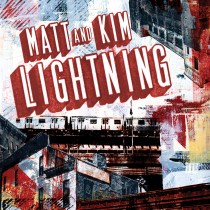
‘Lightning’ strikes, but it’s not ‘Grand’

ARTS_Lightning

Formerly published in The Other Press. Oct. 2 2012

By Elliot Chan, Contributor

3/5

If the fleeting moments of summer could be captured on an album, then Matt & Kim have done the job. The indie-pop duo’s fourth album, Lightning, came out on October 2—just in time to help you cope with the looming monotonous seasons ahead.

Those familiar with Matt Johnson and Kim Schifino’s earlier works will know their music arouses the body, forcing you onto your feet, and percolating the senses to dance. You could resist it, but sitting still through a whole song is like holding in a sneeze, something they’ve managed to accomplish yet again on this album.

…their music arouses the body, forcing you onto your feet, and percolating the senses to dance.

In fact, Matt & Kim bring all the elements we love back into their new album. That said, their lack of risk-taking can’t be ignored. There is something about Lightningthat just didn’t spark me the same way their last album Sidewalks (2010) did. I feel like I am arriving at the same party, with all the same people, and talking about all the same things.

Regardless of the party’s familiarity, if you let loose, then you’ll have a good time. But the songs are not all fun and games; most of the lyrics derive from nostalgia. Their eighth track, “I Wonder” contains such savory lines as, “Maybe (maybe) I’ll learn all I need to know from bottles and their broken glass/ Maybe (maybe) these streets were my teachers and I sat in back of class.” Then there is their harmonized finale, “Ten Dollars I Found,” which has a melancholy overtone as they begin fading out: “I’ll buy the next round, with 10 dollars I found.”

Like the memories of summer, Lightning is short and sweet, containing 10 songs and, as usual, just surpassing 30 minutes.

All-inclusive adventure

Formerly published in The Other Press. Sept. 24 2012

A diary of a domestic male in the Dominican

A satirical article, by Elliot Chan, Vacation Aficionado

HUMOR_Dom-Rep

Looking for some adventure and excitement when it comes time to travel? Not us! Our intrepid travel writer Elliot Chan takes on exotic locales from the unique perspective of a scared sheltered suburbanite.

The Dominican Republic is one of those countries that travel guides suggest you get a shot before entering. I don’t mean a tequila shot; I mean the doctor needs to pump medicine in you so you don’t die. So you’ll excuse me if I sound a little wary when calling it paradise. To me, there is nothing heavenly about potentially dying from Malaria or another contagious epidemic.

Regardless, I tried to be in good spirits. With my wallet, passport, and iPhone 4 tucked into my travel pouch hidden beneath my breeches, I headed out of the terminal to the charter bus. Then came my first fright. A local man dressed in what appeared to be bus driver garb calmly approached me and asked for my bags.

I nearly wet myself in terror!

Here I was, barely off the plane and already getting mugged. Fortunately for me, I watched a ton of Bruce Lee movies before I left to learn self-defence. However, before I could karate chop him, a fellow tourist, who was a white male between the age of 25 and 40, stopped and informed me that the robber dressed in fake bus driver clothes was actually the bus driver. “Oh,” I said, and then handed him four more bags to carry.

The culture shock was stunning. Hotels in the Dominican cannot compare to the ones in Vancouver. I mean, Best Western is awesome, but the place where I stayed was the Hyatt to the power of 10. I explored the swimming pools, veranda chairs, and even the buffet table. I loved the attempts to incorporate exotic Dominican culture, such as the make your own sundae bar!

On the third day after waking up from a hangover, a friendly man approached me and asked if I was interested in taking a city tour. “Is it safe?” I asked, puffing my chest out in a burly manner. He nodded his head, smiled, and gestured to the bus with 20 other tourists. “Well, when in Rome,” I said, thinking that I should have gone to Rome instead.

It was a long bumpy ride into the city. I sat beside a cute German girl, who exhausted all of the English that she knew during our exchange. It turns out that someone had accidentally given her a book of English sex phrases instead of a dictionary. The rest of the bus ride was filled with an awkward silence.

When we arrived in the city, the guide beckoned us off and suggested that we explore. Once the locals caught the scent of my Axe body spray and the sight of my sunburnt skin, they swarmed me. One after the other, drones of merchants harassed me. I bought authentic bracelets for all of my friends. I’m sure that they’ll be excited to hear that it’s a traditional accessory—at least, that’s what the merchants told me.

Afterwards, I stumbled back to my hotel room in agony. I had the itchiest bug bite on my left ankle and I scratched at it till it started to bleed. My sunburnt nose and shoulders were also peeling, which led me to believe that maybe it was a sign. That perhaps the shedding of my skin was a metaphor or a symbol for my spiritual growth. I took a moment and soaked the epiphany in.

Then I ordered room service and an in-room movie, which was Ocean’s 12.

The troll toll

Formerly published in The Other Press. Sept 24 2012

How to avoid trolls on the Internet

By Elliot Chan, Contributor

Opinions_trollA virus has struck the Internet. It is too late for a firewall, it is too late to do a full computer scan, and it is too late to unplug and re-plug your modem. Trolling is officially an epidemic in our online communities. If you have made a sincere comment or left a genuine opinion, a troll is not far away, hunched over their computer, preparing a patronizing reply.

Go to your computer and scroll down any comments list. You don’t have to go far to uncover the markings of a troll. They are ruthless, senseless, and ignorant creatures. Feed them enough negative reinforcement and soon they’ll be insulting your religion, your ideals, and even your mother. Like a junkie getting high off narcotics, trolls get a euphoric sensation from your aggravation. Stop, accept that they exist, and let their antagonizing words fade into the ether.

Although trolling is widespread, the websites that allow users to create their own aliases (Twitter, YouTube, etc.) are more commonly subjected to their antics. So until the day a law is made requiring all computer users’ identification to post comments, we must fend for ourselves. But how can we? The World Wide Web is such a vulnerable place. There are the mean streets of Facebook, the terrifying ghettos of Twitter, and the dark alleys of Reddit. How do we protect ourselves during our online explorations?

Remember, trolls are human beings. That is, they are bored, vulgar, and insecure human beings. That statement alone should make you feel better. But if you still feel victimized by their existence, try this option: kill them with kindness. You’d be surprised how effective positivity can be when following their curt comments. Kindness is troll kryptonite. Give them respect, but don’t linger long—they won’t return it.

As bullying continues in our physical world, cyber-bullying will survive in the virtual one. The Internet will always be home to intolerance, profanity, and slander. But the website universe is vast; there is room for the passive surfers, the gracious Googlers, and the tepid browsers. After all, you don’t need to frequent the Internet that often anyways. The best way to avoid trolls and the temptation of becoming one is to explore the real world. Go out tonight, grab a drink with friends, and laugh over the fact that someone somewhere is unable to terrorize you through a computer screen.